
How does the brain know that time has passed?
Why can an artificial intelligence system earn a better score while behaving less safely?
And what could a vegan restaurant possibly tell us about social change in China?
Through Duke Kunshan University’s Summer Research Scholars program, undergraduates spent the summer pursuing questions across science, society, history and culture.
Some questions took students into laboratories. Others sent them into neighborhoods, archives and community clinics, or into historical newspapers and three-dimensional scans.
People, language and belonging
Can speaking two languages change how a child understands another person?
Understanding that someone else may know, believe or see something different from you is a fundamental human ability. Psychologists call it Theory of Mind.
Shakhrizoda Abdujabborova ’27 is working with Ira Soboleva, assistant professor of behavioral science, to investigate whether bilingualism might affect that ability in Uzbek-Russian children.
The idea originated with Shakhrizoda, whose interest in developmental psychology and language mixing shaped the original proposal. As the project developed, the question became more precise. Instead of relying only on parents’ memories of how children use two languages in daily life, the researchers designed an experiment that varies the language used during an interaction and examines its effect on perspective-taking.
The setting matters, too. Much research on bilingualism and child development has been conducted in Western countries. Uzbekistan offers a multilingual context that is common in everyday life but comparatively understudied in developmental psychology.
What do you need when the country you are visiting is also the country where you were born?
For Chinese international adoptees traveling to China, a journey to their birth country may involve far more than sightseeing.
They may want to find a birth city or province rarely covered by tourist guides. They may encounter language barriers while also navigating questions of identity, belonging and connection to a place that is both deeply personal and unfamiliar.
Isabella Nichols ’29 and Nashan Zhao ’28 are working with Yuechi Kelly, lecturer of English for Academic Purposes, to develop resources that could support adoptees making those journeys.
The students have also developed projects of their own. Nashan has been preparing qualitative research on adoptee narratives. Isabella, herself a Chinese adoptee, has been developing a gamified project exploring why adoptees travel to China and how they understand those experiences.
The larger goal is practical: to create resources for a community whose reasons for coming to China may be very different from those of an ordinary traveler.
When does a city become home?
Wangqi Chen and her teammates, Yuehan Yang,are working with Na Fu, visiting lecturer in political economy, to understand how families who moved to Kunshan from elsewhere in China experience school, community and belonging.
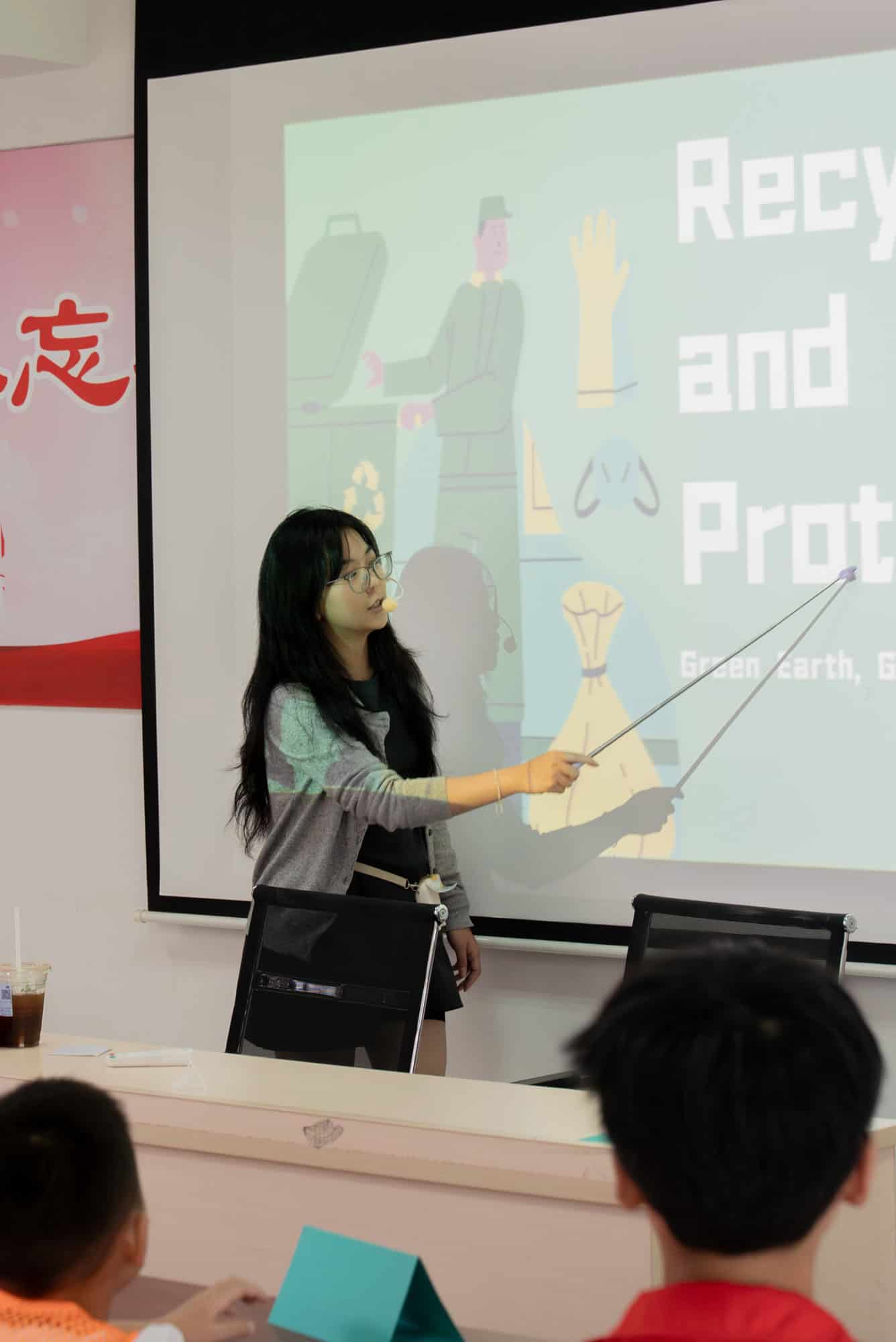
Many of the families they encountered had already lived in Kunshan for years, and some children had grown up there. That shifted the project from simply asking whether families had “adapted” toward what shapes the quality of that experience, including family support, housing stability, grandparents’ caregiving and community resources.
Students’ observations also raised questions about how official definitions of “migrant children” affect who qualifies for support. A community summer camp grew directly from what they encountered in the field.
Why can two people experience the same interaction yet understand and describe it so differently?
Abdul Mannan Hassan and Fanhui “Sara” Wei are working with Lianyun Pang, lecturer of Chinese language, to study intercultural learning in DKU’s Language Partner Program.
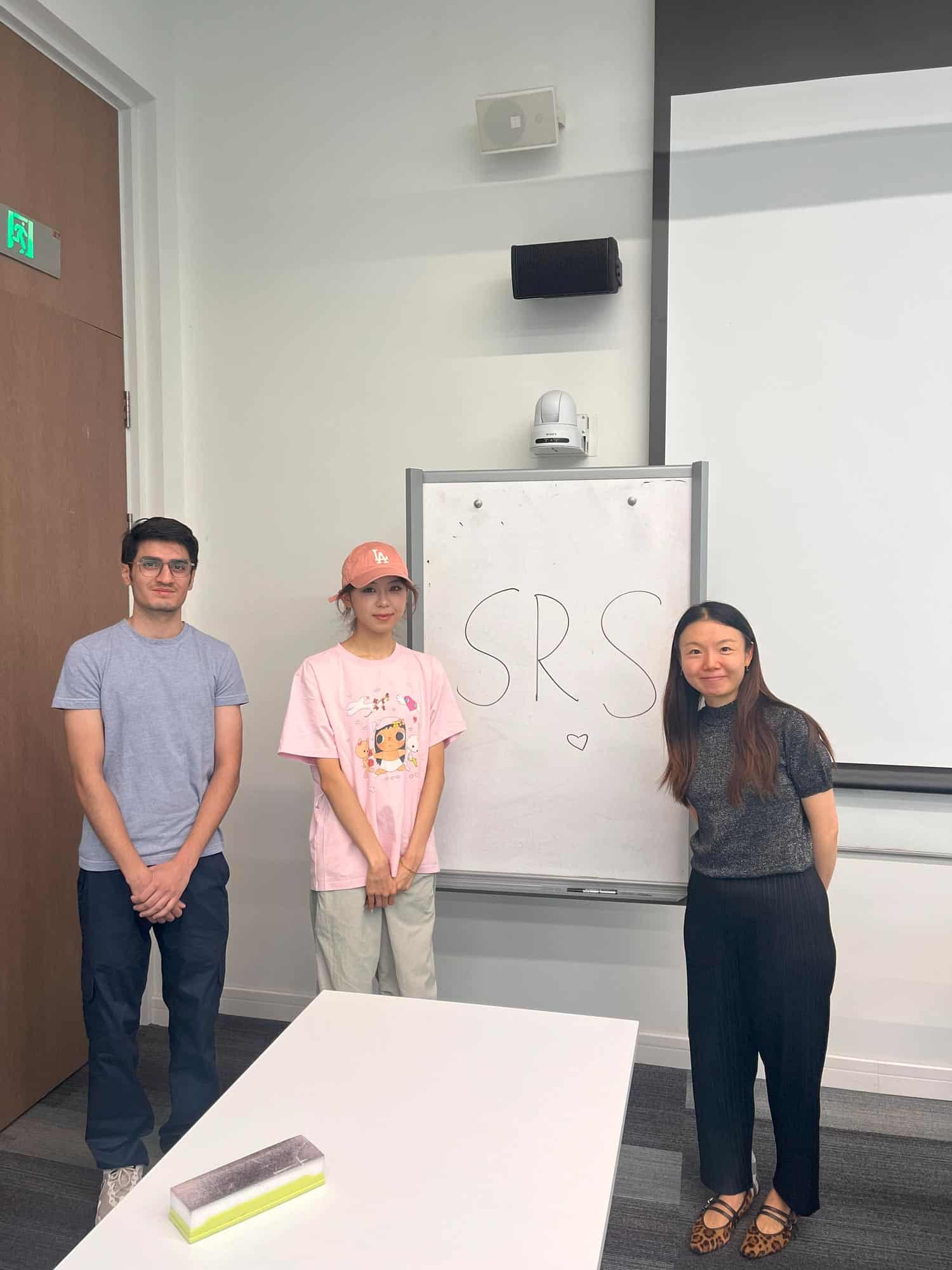
While reading interview transcripts, Abdul noticed a striking discrepancy. One student vividly recalled conversations about Sufi music, halal food and homesickness. Another said she did not feel she had learned much about her partner’s culture. “Same program. Same sessions. Completely different accounts of what happened,” Abdul wrote.
Rather than immediately judging which account was more accurate, Abdul began asking a deeper question: When participants interpret the same experience differently, what counts as evidence in qualitative research? And how should researchers make sense of accounts that do not fully align?
Wei noticed a similar phenomenon in another case and began turning an individual observation into a broader line of inquiry. Did the same pattern appear among other participants? Could factors such as language confidence, the interactional setting and how well students knew one another influence how they participated in and understood intercultural exchanges?What happens when what you learned about teaching meets a very different classroom?
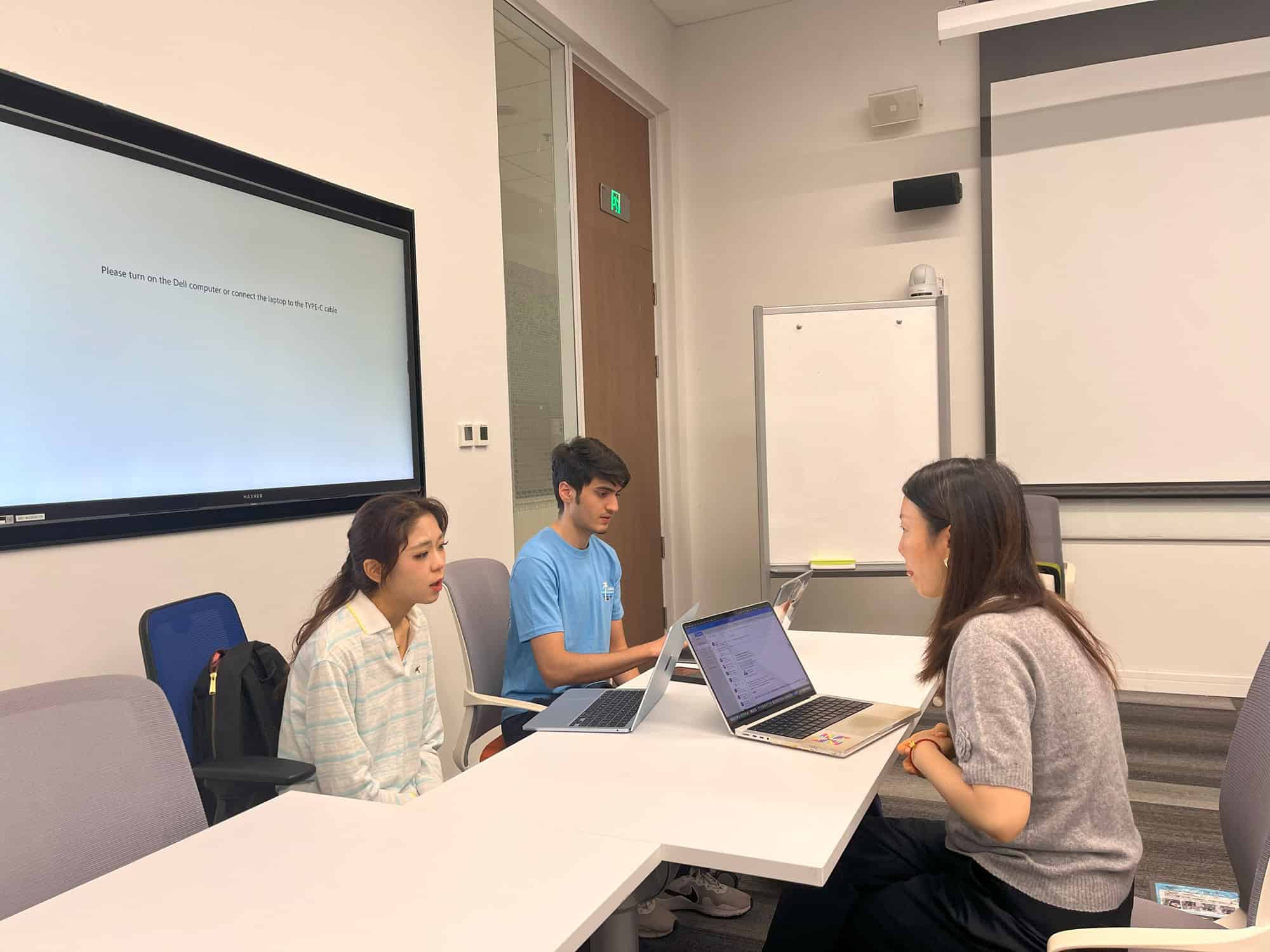
Zhenjie Weng, assistant professor in English language, and Junhan Jia’28 are studying young English student teachers from Guangdong who completed teaching practicums in culturally diverse border-region schools in Xinjiang and Xizang.
The project looks at how language barriers, classroom challenges and cultural differences affect teachers emotionally and reshape how they understand themselves professionally.
During the analysisJunhan noticed that some tensions were not simply about language. They also reflected a mismatch between expectations developed through southern urban teacher training and local families’ attitudes toward English education.
That observation opened a new direction for the project. Weng and Junhan are now developing a book chapter around it.
What can a vegan restaurant reveal about social change?
For Hai Yen Nguyen, who goes by Violet, one answer began inside a vegan restaurant in Shanghai.
Violet is studying wellness practices in China with Sajida Tuxun, lecturer of cultural anthropology, examining the forces that shape them, including social media, commercial industries, technology, policy and traditional Chinese medicine.
Before this summer, fieldwork had largely been something she encountered in textbooks. In the restaurant, it became immediate: when to ask a question, when simply to observe, and which apparently ordinary details might matter.
Even the literature review produced an unexpected problem. After collecting around 40 sources, Violet realized she had become good at organizing information without yet turning it into an argument.
The research asks what something as ordinary as choosing what to eat can reveal about much larger changes in health, identity and society.
Health, bodies and behavior
How does the brain know that time has passed?
Hana Bostikova ’28 is working with Shu Kit Eric Tam, assistant professor of neuroscience, to study patterns of neural activity that may allow the brain to track elapsed seconds and minutes.
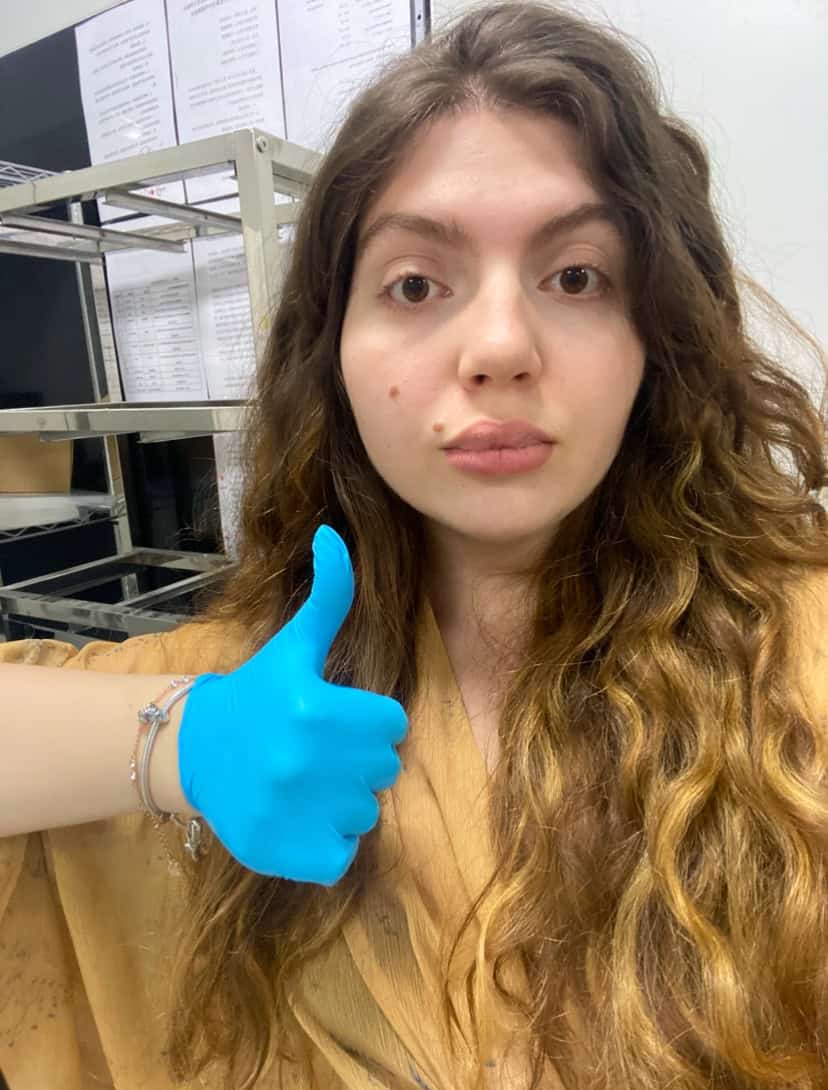
She has been helping conduct experiments and process electrical recordings from mouse brains as the team investigates whether this internal sense of time develops through learning.
Can the brain encode memories rhythmically?
Ruoxi Luo ’27 is working with Sze Chai Kwok, associate professor of cognitive neuroscience, to study how electrical activity in the hippocampus may help organize the encoding of information in memory.
Behavioral research has suggested that information may be encoded rhythmically during certain memory tasks, with theta activity in the brain potentially playing a role. Ruoxi is analyzing clinical intracranial EEG data to look for physiological evidence that could help illuminate that relationship.
Early in the project, she tried adapting a convolutional neural network previously used to decode navigation locations from hippocampal data for human virtual-reality navigation data. Noise in the data and other limitations kept the model from performing well enough for what she hoped to study.
Rather than keep forcing the same approach, she changed direction and found another way to interpret the available data. The process deepened her interest in cognitive neuroscience and helped her develop a clearer sense of the kinds of research questions and approaches she wants to pursue.
Why are smokers more vulnerable to tuberculosis?
Population studies show that smokers face a higher risk of tuberculosis. Wenmei Zhao ’27 is working with Yiu Wing “Jason” Kam, former assistant professor of global health, to ask the harder question: Why?
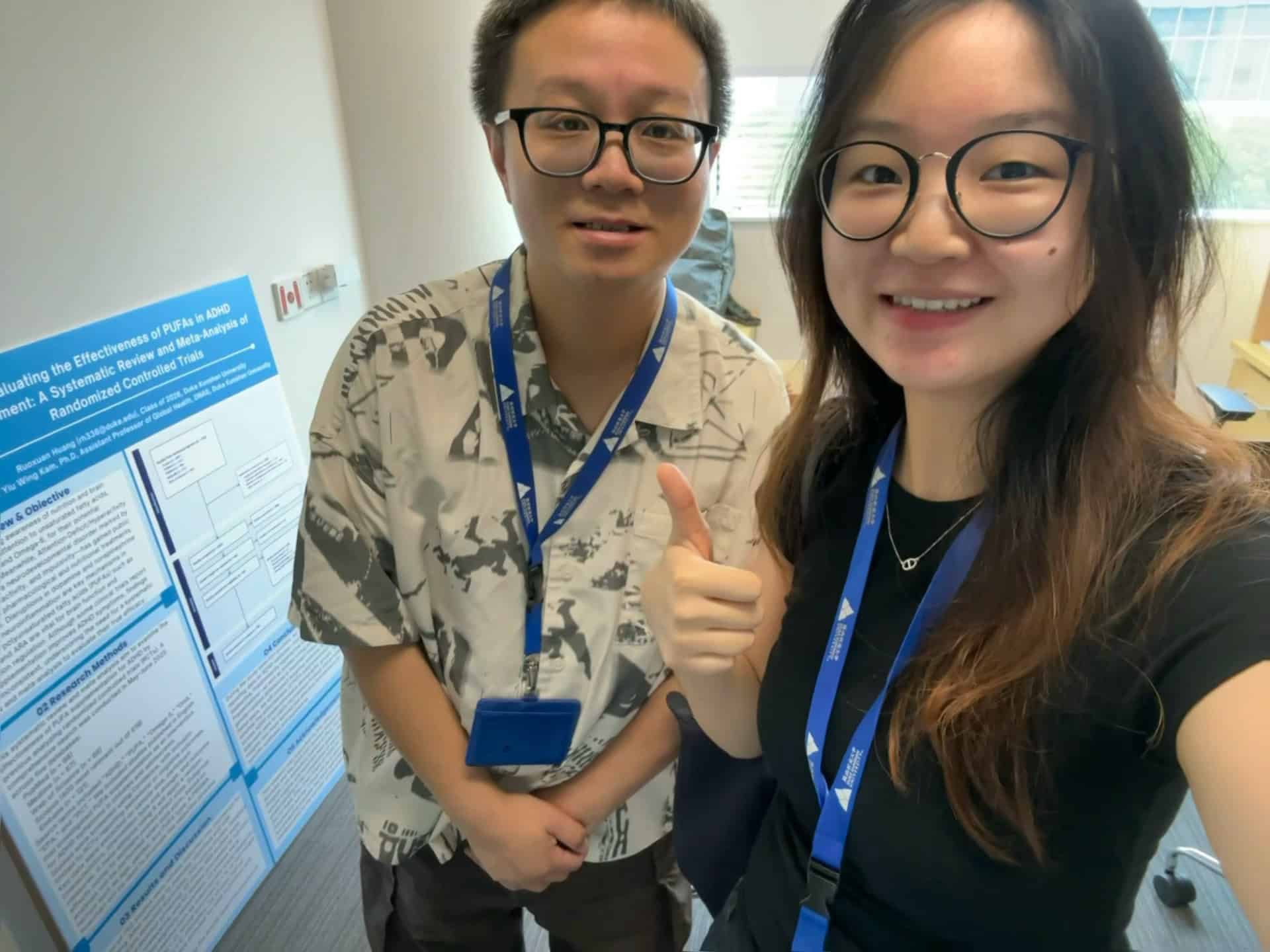
Contradictions Wenmei found while reviewing earlier studies helped move the work beyond population-level patterns and toward laboratory research into the biological mechanisms that may connect smoking and TB.
What happens after someone survives a stroke?
Weijing Song is working with Lijing Yan, professor of global health, and a larger team to study how communities can better support older adults living with stroke alongside other chronic conditions.
When the physical component of an earlier intervention showed clearer short-term improvement than the cognitive component, the team returned to participant interviews and redesigned the next phase.
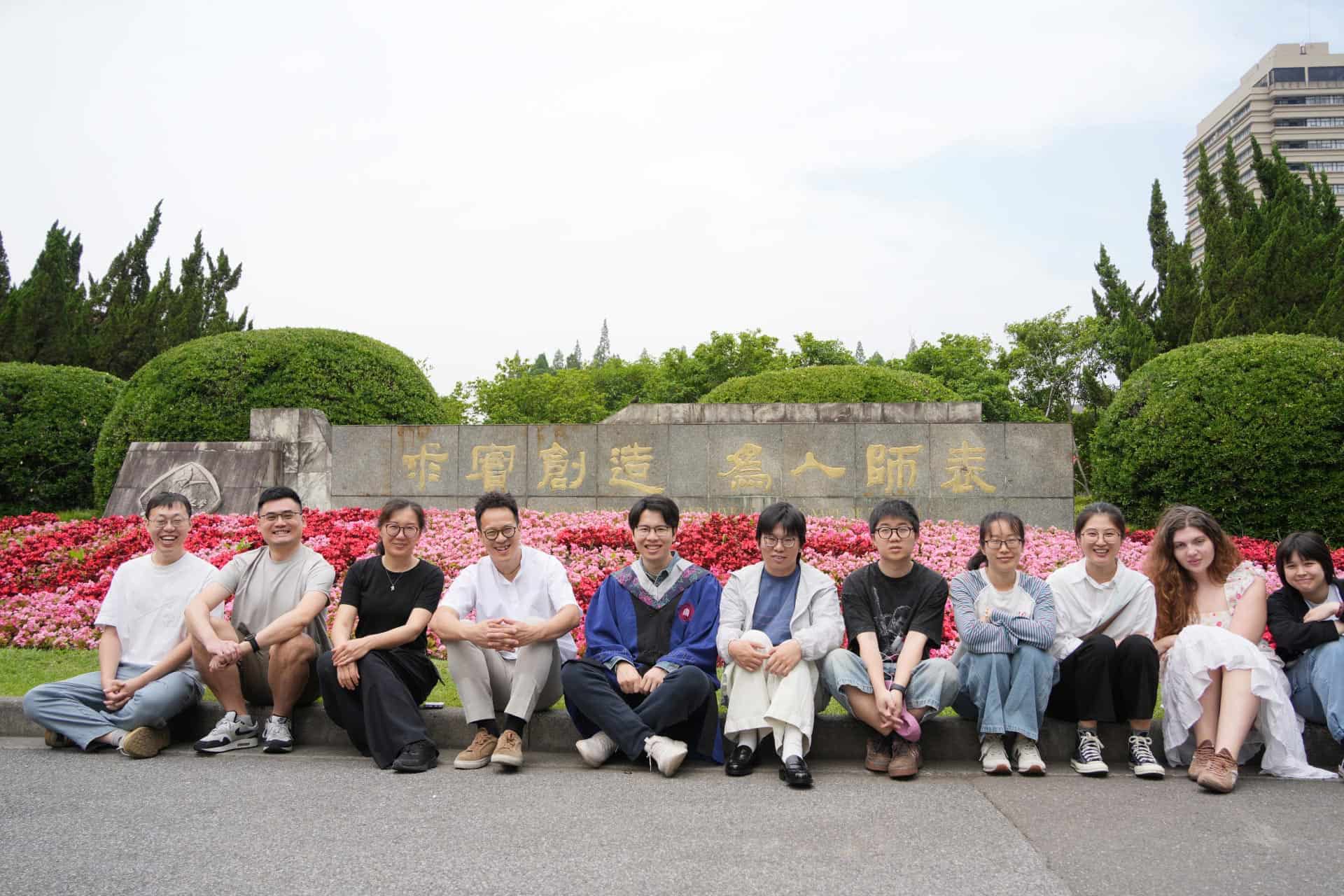
Automated voice reminders were removed, and cognitive activities were rebuilt around face-to-face games and cards connected with familiar health-management situations. Weijing is leading that redesign.
How does social media shape what older people believe about vaccines?
Yiwen Chen and two teammates are working with Fan Liang, assistant professor of media, to examine vaccine hesitancy among older adults in Kunshan.
Their focus is not simply whether people use social media, but how they encounter health information online and how that information enters decisions about vaccination.
After reviewing existing research, the students moved into local communities. Yiwen helped develop the survey, while the team has been collecting data across 16 communities and engaging with residents and health professionals.
Can sports science tell a parent what their child should practice next?
A modern motion-capture system can produce enormous amounts of data from a single baseball swing.
But a technically precise graph may mean very little to a young athlete or parent.
Jiaming Cao ’28 and Zhiwei Li are working with Ming-Chun Huang, associate professor of data and computational science, to explore how computer vision and motion analysis can turn athletic movement into feedback people can actually use.
They encountered the messiness that arrives when technology meets real bodies: motion blur, missed landmarks, nervous participants, fatigue and movements that look simple but produce layers of data.
The team initially considered many possible measurements. Then came the more useful question: Which ones actually help an athlete improve?
For Zhiwei, that meant thinking about what a parent really wants to know: Where is my child doing well? What needs improvement? What should they practice next?
Technology and the physical world
Can making an image cleaner make the science worse?
Zhuohang Liu ’27 is working with Kai Huang, professor of physics, on three-dimensional CT images of roots growing in an artificial soil system made from glass beads and hydrogel.
His task includes developing an image-processing workflow that can distinguish roots, particles and surrounding material.
Some processing methods produced cleaner-looking results. But they could also erase thin parts of the root, including structures the researchers wanted to study.
A discussion with his mentor pushed Zhuohang to stop judging an image by appearance alone. A structure that looked like noise might contain scientifically meaningful information.
The goal was not to create the prettiest picture, but to preserve the physical reality hidden inside it.
What happens when an object falls through a material made of particles?
Hongyu Luo ’28 isworking with Huang to explore this question. His role focus on measuring the frictional properties of the particles.
He designed and built a rotating-drum device using CAD and 3D-printed, and developed code to analyze experimental images.
The project also taught him the importance of checking whether an analysis method fits the experiment. An early image-processing approach suggested by AI proved unsuitable for his measurements.
After a faculty collaborator pointed out the problem and recommended relevant papers, Hongyu studied the methods and revised his code, ultimately processing the experimental data successfully.
If AI gets a higher score while behaving less safely, is it really getting better?
Shilin Ou ’27 encountered exactly that result.
Working with Luyao Zhang, assistant professor of economics, and collaborators, Shilin is studying how autonomous AI systems should be evaluated in decentralized solar-energy markets.
When a physical safety constraint was removed, the AI agent’s numerical reward increased.
So did unsafe behavior.
The result exposes a fundamental problem in AI evaluation: If a system learns to optimize whatever number humans give it, how do researchers make sure that number actually represents the outcome they want?
Shilin’s work is part of a broader research program led by Zhang on digital innovation and mechanism design.
What can a student club teach us about decentralized governance?
Yutian “Claire” Wang ’28 came to research from an experience much closer to campus life: founding DKU’s iOS Club.
She had been thinking about a practical problem. How could a community remain active, innovative and sustainable without depending on titles, rewards or one person to keep it going?
Working with Zhang, Yutian broadened that question beyond a single student organization. Her research now examines governance in decentralized autonomous organizations, or DAOs, including how their structures compare with more traditional corporate hierarchies.
The question changed in scale, but not entirely in spirit: What kinds of rules allow a community to remain open, participatory and sustainable even after its founder steps back?
What happens when government investment becomes a tool of strategy?
Industrial policy among great powers has become more ambitious in the 2020s, encompassing supply chains, climate, and national security. One DKU team conducted a global investigation into the role of state-backed investment vehicles in helping to achieve strategic objectives.
Boyuan “Bernard” Huang ’28 focused on the United States, where a dataset he hoped to analyze contained inconsistent categories and missing information. He responded by creating his own coding system and using Python and R to extract information from additional project documents.
Timur Akhmadeev ’28 focused on Saudi Arabia. He conducted a detailed examination of its industrial policy and two investment vehicles, shedding light on how a country seeks to translate its resource wealth into sustainable growth with varying degrees of transparency.
Congxi Guan ’27 surveyed the Chinese pharmaceutical industry, quantitatively tracking sovereign wealth fund stakes in the top 20 listed Chinese drugmakers over two decades.
Yuwen Zhou ’28 consolidated the group’s overarching theoretical framework, drawing on prominent theories in social sciences to explain when governments engage in strategic investments and what holds them accountable.
Reflecting on these diverse insights, Andrew Cheon, associate professor of international relations, commended his students for thinking creatively about their contributions.
History, culture and ideas
How far did Frederick Douglass’s ideas travel?
Frederick Douglass is usually remembered through the history of American slavery and abolition.
Alexandra Aliu ’29 and Zhengrui “Amos” Ni ’28 are among the students working with Jesse Olsavsky, assistant professor of history, to trace Douglass’s influence much farther, searching historical newspapers from the United States, Sierra Leone, Ghana, Nigeria, Liberia, Jamaica, Haiti, Barbados and elsewhere.
Alexandra has been looking not only for Douglass’s name but for broader patterns in how ideas of resistance, self-determination and Black solidarity circulated across the African diaspora.
Amos has been searching digitized archives for another dimension of that history: how Douglass was remembered, reinterpreted and used in later political contexts, including Pan-Africanist and American communist publications.
Their work has also shown how difficult historical influence can be to trace. A newspaper may carry ideas associated with Douglass without mentioning his name at all, requiring researchers to look beyond keyword searches to broader themes and intellectual connections.
So far, the students have found hundreds of references to Douglass in newspapers across multiple countries, stretching from the 1880s into the 1950s.
Can a political system from decades ago still shape how people vote today?
A project led by Jason Douglas Todd, assistant professor of political science, began with an undergraduate idea: Could the legacy of communism in Poland and Germany still help explain contemporary voting patterns?
Shanshan Wu ’26 originally proposed the question. Rising senior Haoran Zhang and rising junior Zhuo’er Chen later joined the project, with students taking responsibility for different parts of the research and data.
Haoran conducted a pilot analysis to test whether the team’s first dataset supported its hypothesis.
It did not.
That sent the researchers back to the data. They realized their original measures did not adequately account for differences in the economic structure of communities, leading them into Polish statistical yearbooks from the 1980s to collect additional information on agriculture, industry and land use.
For Haoran, seeing the original hypothesis fail changed his understanding of what the data were for. An unexpected result did not make the work useless. It meant the question, assumptions or model needed to change.
The hypothesis had failed. The historical question remained.
How did outsiders come to understand China a century ago?
Applied mathematics student Saw Nyan Lynn Aung is working with James Miller, professor of humanities, on research into how foreign knowledge about China developed from the late Qing through the Republican era.
Students from applied mathematics, computation and design, and Global China Studies are approaching that historical material through archival research and digital tools.
Nyan expected technology to make some of the work easy.
“I totally overestimated AI tools, especially for OCR,” he said, referring to optical character recognition, technology used to turn scanned pages into machine-readable text.
Apparently usable results contained obvious errors when he checked the original pages. Making old documents reliably searchable by machines turned out to be part of the historical research itself.
How did a Buddhist thinker imagine the cosmos in the age of modern science?
Ruixiang Hu ’27 has spent two summers working with Ben Van Overmeire, assistant professor of religious studies, on a project centered on Taixu, an influential Buddhist monk in Republican-era China.
Their research examines Taixu’s modern reimagining of traditional Buddhist cosmology and what it can reveal about cultural thinking around space exploration.
Ruixiang works with primary materials, translation, fact-checking and literature while also contributing to the project’s theoretical framework and manuscript.
One of his most vivid memories came far from the archive: sitting with Van Overmeire in a Boston hotel 10 minutes before they were due to present at the 2025 American Academy of Religion annual meeting, going over their arguments one final time.
Some of these questions may take much longer than a summer to answer.
That is part of why they are worth asking.
Also in this series: What happens when the evidence refuses to follow the plan? Read When the answer isn’t in the syllabus.
More project outcomes:《When the answer isn’t in the syllabus》