
Note: This story is part of a series featuring members of Duke Kunshan University’s Class of 2026 as they look back on their time at DKU and ahead to what comes next.
It was Johann Diego Asmus León’s final game as a DKU senior.
Exams were approaching, the season was nearly over, and DKU’s men’s football team had fallen behind 2-0 against Soochow University, one of the region’s largest universities. For Johann, the team’s co-captain, it could have ended there: tired legs, a difficult scoreline and one last match slipping away.
Instead, the team fought back.
One goal made the match possible again. Another brought DKU level. Then Johann scored the winner, sealing a 3-2 comeback.
For Johann, it felt like a fitting end to four years of learning how to keep going in unfamiliar places.
“I think that’s what it means to be a leader or a captain,” he said. “To uphold your standards and push to the last minute.”
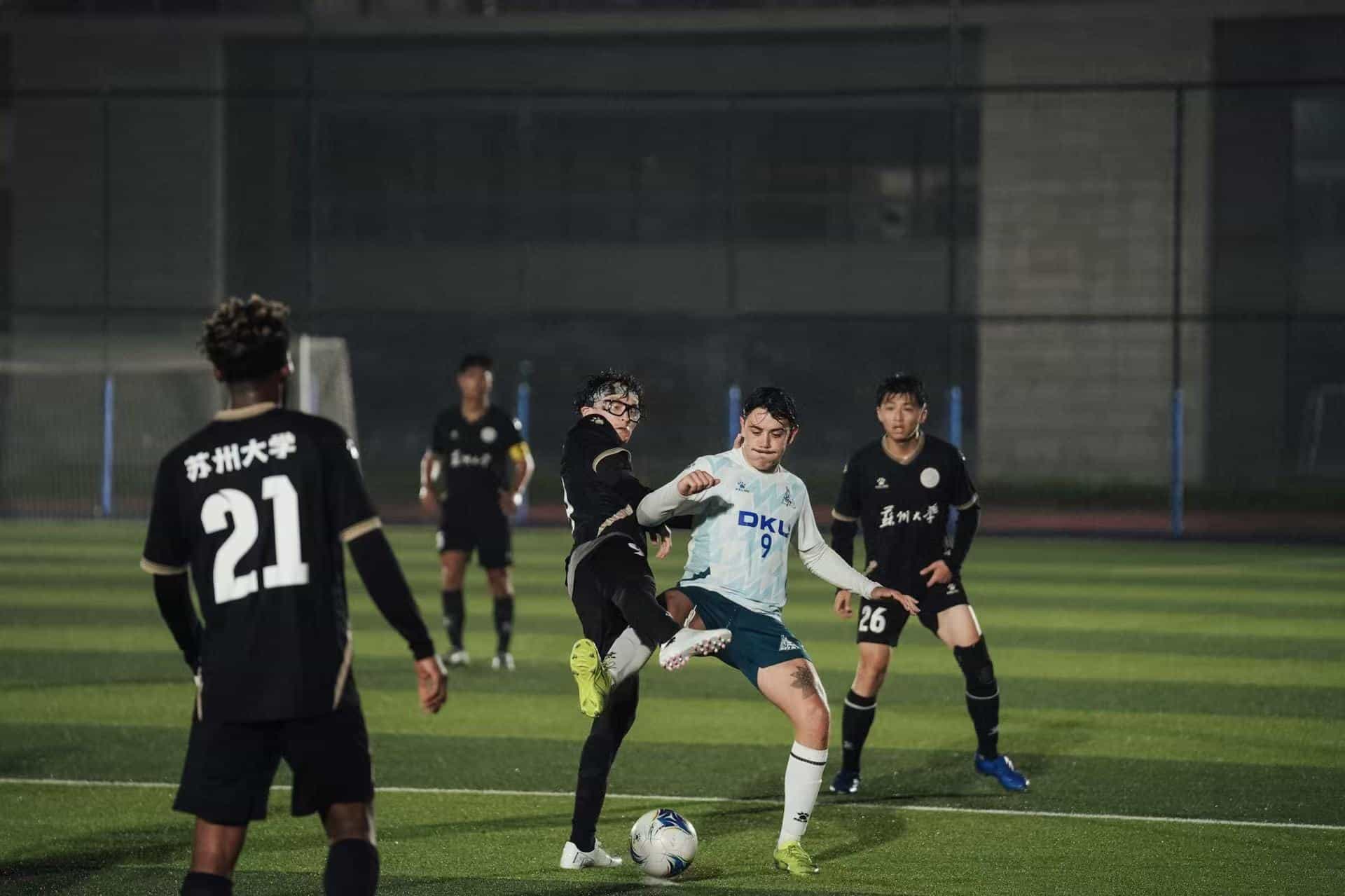
Johann Diego Asmus León, in DKU’s No. 9 jersey, battles for possession against Soochow University during a collegiate football match.
A leap into the unfamiliar
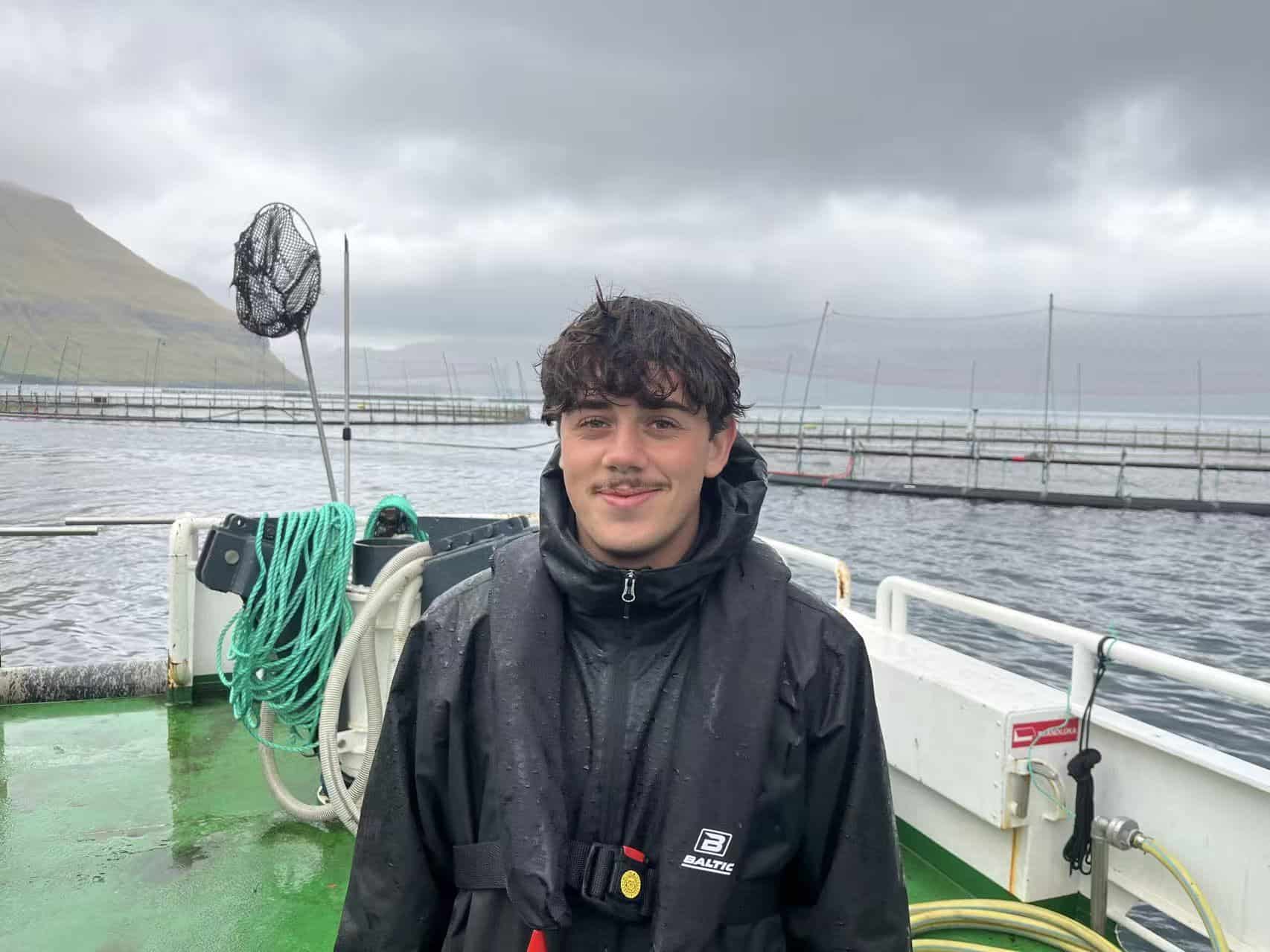
Johann on a field trip while spending a semester at Duke
Johann arrived at DKU in October 2022. Many students in his class had the option of beginning their studies at DKU’s Barcelona global education site, created during the pandemic, but he chose China.
He had grown up in Germany, spent a year studying in the United States at 16, and learned some Mandarin through a Confucius Institute, which offers Chinese language and cultural programs, before coming to DKU. His mother is Spanish, and he speaks both German and Spanish fluently. In his family, studying abroad did not feel unusual. His mother had studied in Germany and Spain, and his grandfather had been a Fulbright scholar at Ohio State University.
“Seeking educational opportunities beyond the place you grow up is something very normal in my family,” Johann said.
At first, life in Kunshan, the city west of Shanghai where DKU is located, was not easy. The food was unfamiliar. His English, his third language, was still developing. Mandarin was even harder.
“I was really frustrated at first because I was so excited to get to know China, speak to Chinese people, and learn more about their perspectives,” he said. “But I just couldn’t.”
That frustration became motivation. In his first two years, Johann made a serious effort to study Chinese. Slowly, the country that had once felt distant and difficult became more familiar, though never simple.
Looking back, he says choosing DKU was “the best decision of my life.”
“It made me grow up a lot,” he said. “I think I’m much more open-minded now, and much more skeptical of existing narratives. I’m also much more confident because I know that I can function and succeed in a new and challenging environment.”
His understanding of China began to change through everyday life, friendships and travel. One of the first moments came during his freshman year, when he traveled to Hainan, a tropical island province in southern China, hoping to find somewhere to surf. There was little information online, but a hostel owner helped him get equipment, and he ended up making friends on the beach.
The trip gave him a new sense of the country’s scale and variety.
“It showed me that there’s not just one China,” he said. “There are so many different sides to China.”
That idea stayed with him. Kunshan was one version of China. Hainan was another. Later, Shenzhen, Shanghai and other places would add more layers. The more he traveled, studied Chinese and talked with people from different parts of the country, the more he realized how impossible it was to reduce China to a single story.
“Now I think the more I learn about China, the less I understand China,” he said.
He came to see China as too large and complex to be understood quickly. He noticed how proud people were of their hometown food, regional culture, economic progress and traditions.
“Even four years at DKU only makes you scratch the surface of what it means to be Chinese,” he said.
Learning to lead, one match at a time
At DKU, Johann’s life rarely stayed in one lane. He studied environmental science with a public policy track, co-founded and later led a beekeeping club, served as co-captain of the men’s football team, DJed at parties, made a documentary about bees, and spent a semester at Duke University.
As co-captain, he helped lead a small DKU football team against much larger universities in the Suzhou College Football League. The team trained three times a week, played league matches and competed in tournaments, often while players were balancing academics, clubs and other commitments.
“You need to choose it every time,” he said. “You need to put in extra effort, and that’s a decision you need to make. Then you need to hold yourself accountable to that decision.”
Leadership, he learned, was not only about scoring goals or giving instructions. It was about communication, humor, composure and leading by example. When players were tired, frustrated or upset, he had to help keep emotions under control. During practice, he had to show the energy he expected from others.
“If you want them to work hard, then you need to show them that you’re working hard,” he said.
The comeback capped a six-game winning streak at a time when players were tired, exams were approaching and the easiest thing would have been to coast.
“It was a very great goodbye,” he said. “A proper way of leaving.”
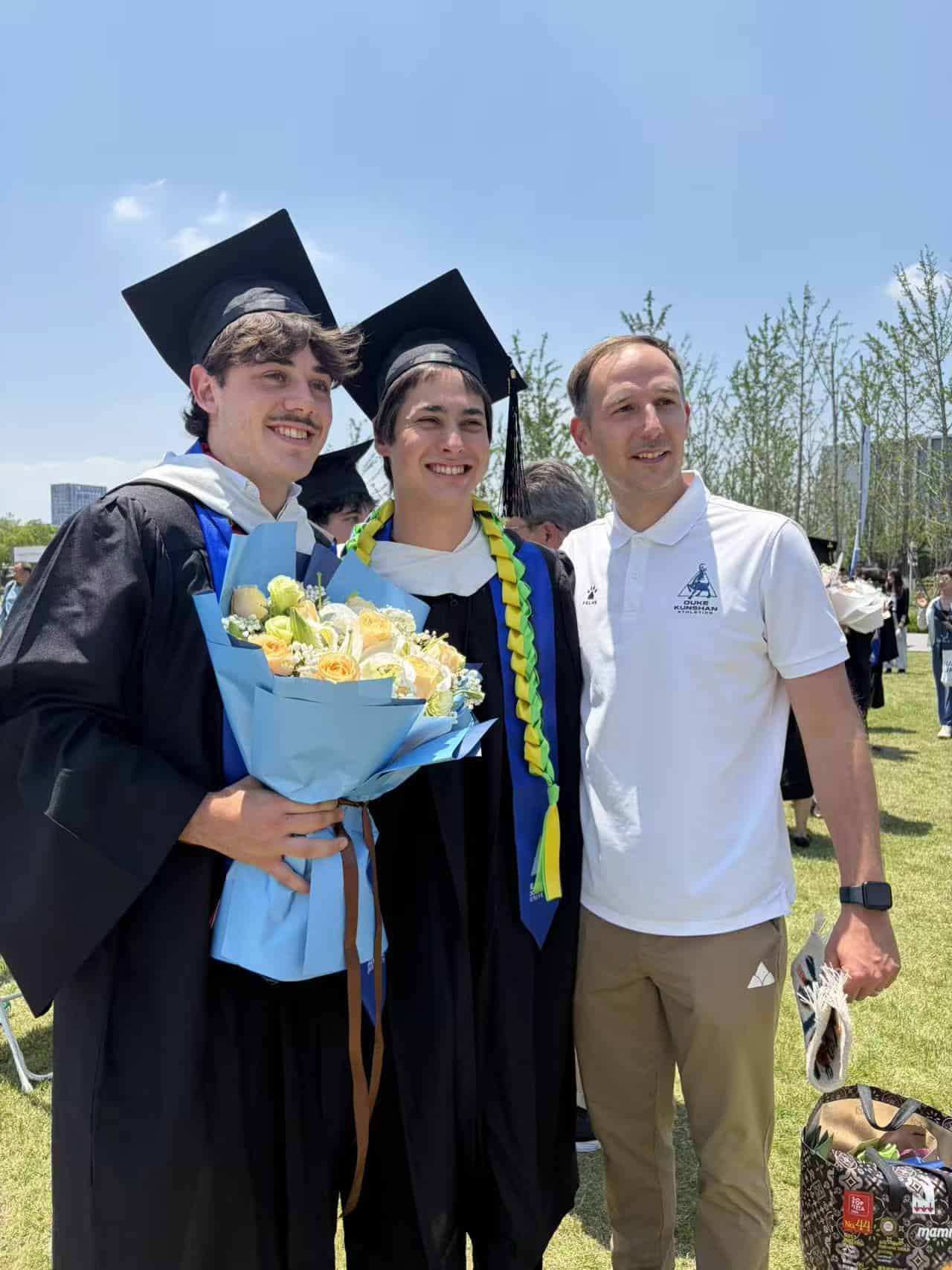
Johann (left) with fellow co-captain Felipe Silvestri (center) and head football coach Aleksandar Tomic, who Johann described as an amazing mentor during his time at DKU.
Finding quiet among the bees
If football gave Johann intensity, beekeeping gave him quiet.
Johann co-founded the DKU Hive Minds Beekeeping Club with fellow students Astrid Faustmann, Noah Caplan, Max Bergen and Kamila Mejia Ley, later serving as the club’s president.
For Johann, the initiative grew partly from something he missed during his first year in China: a direct connection to nature. He had grown up with nature close by, and his grandfather’s farm in Germany had beehives. Honey was a familiar part of daily life.
“In Germany, honey is very important,” he said. “We always eat honey on bread.”
At DKU, he found that many people knew little about beekeeping or where honey came from.
During a community-based learning field trip to Yuefeng Island Organic Farm in Kunshan, Johann tried fresh honey and met a beekeeper whose calm presence left a strong impression. At a time when he was feeling stressed, the farm offered a kind of balance to the fast pace of university life.
“I thought, ‘Wow, this is the same as in Germany,’” he said. “People working with the land and making an effort to do something good for the environment.”
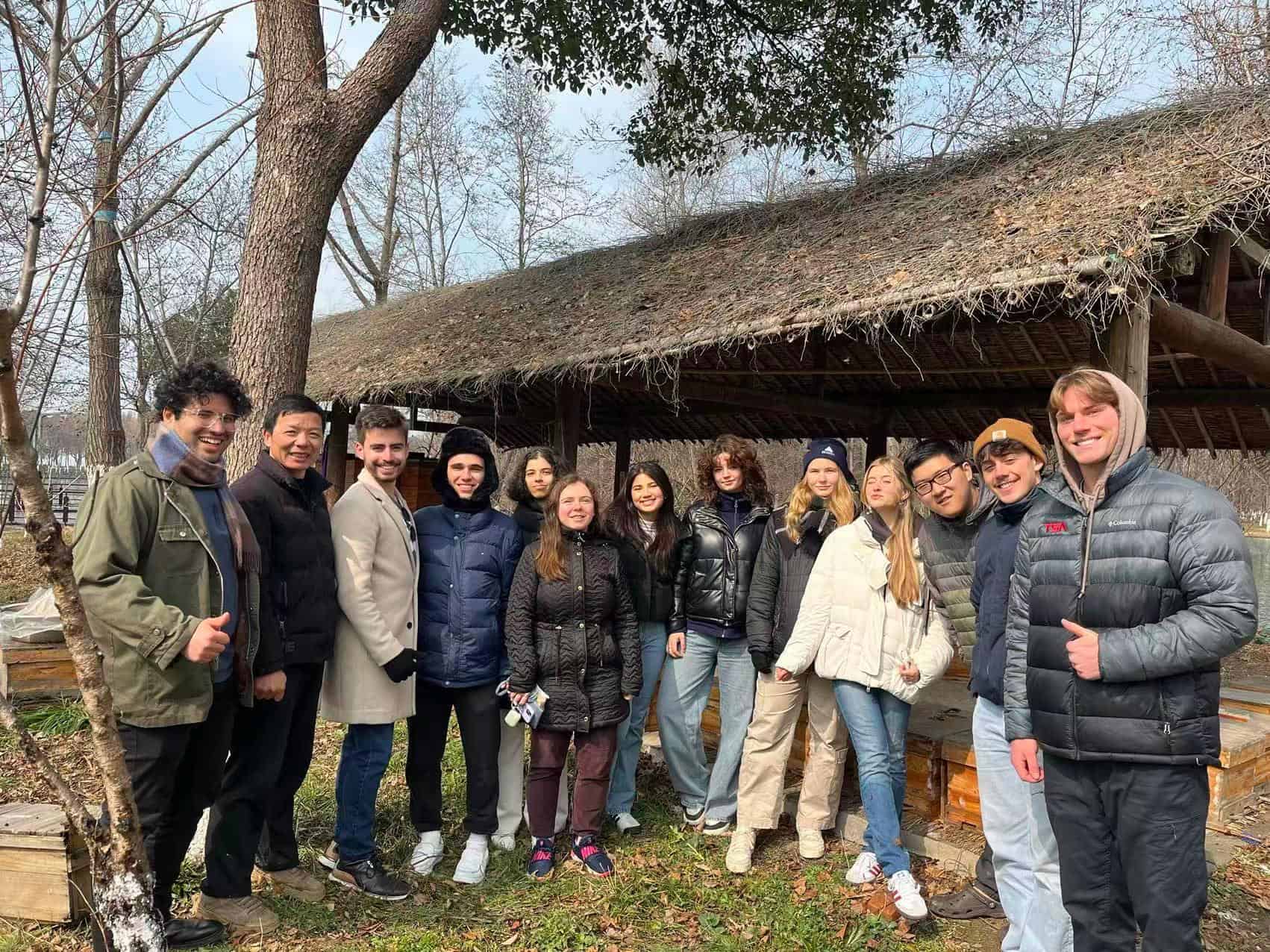
Johann, second from right, with fellow club members during a visit to a local apiary.
For Johann, the club offered something DKU students did not always get in their packed schedules: a reason to slow down, go outside and pay attention to where food comes from.
“We sit in classrooms and on computers, using our brains all day,” Johann said. “If you sit inside and work a lot, you need to go outside and use your hands.”
Thinking across systems
Johann chose environmental science partly because he was studying in China.
Growing up in Germany, he had been influenced by the Fridays for Future climate movement, when young people skipped school to call for stronger action on climate change. He had always enjoyed being in nature and believed it was worth protecting.
“China is such a big country, with so much economic power and so many people, so it has a big effect on the global stage,” he said. “At the end of the day, without the environment, we cannot exist.”
He credits DKU’s interdisciplinary approach with helping him think across fields. Professors including James Miller, Kaley Clements and Chi-Yeung “Jimmy” Choi helped shape that perspective, and his signature work, a documentary about surfing.
“I think in systems,” he said, adding that DKU taught him to think across disciplines and seek solutions that are “not just one-dimensional.”
A future between China and Europe
After graduation, Johann is entering the robotics sector, working with a German company exploring business development opportunities connected to China. The role will involve travel between Europe and China and require him to learn quickly in an industry that is new to him.
To Johann, the move reflects the same curiosity that brought him to China in the first place.
“I think it’s such an emerging and exciting industry because there is so much potential,” he said. “It is fundamentally going to change the way society is structured if we figure out how to have more work done by robotics.”
The field also gives him a way to connect Germany and China. Germany, he said, has a strong engineering tradition, while China has become one of the world’s most dynamic robotics ecosystems.
“China has really amplified my fascination with technology,” he said.
During visits to robotics companies in China, Johann was struck by how seriously people in the industry treated him, even though he was still an undergraduate asking questions. Senior professionals made time for him, answered his questions and showed interest in possible collaboration.
“They always showed respect,” he said. “They never made me feel like I was just a silly young boy.”
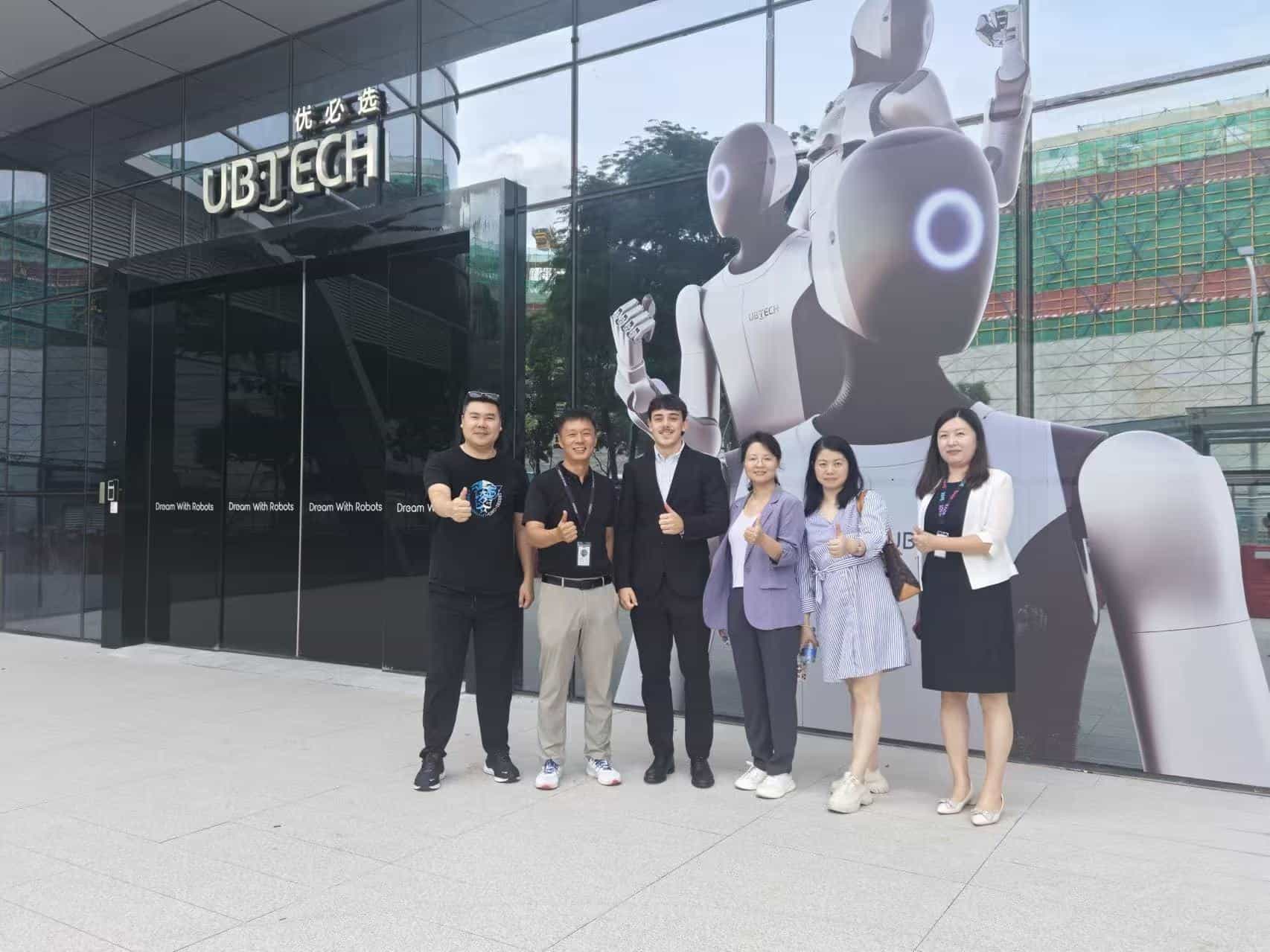
Johann visits a robotics company in Shenzhen, a major technology hub in southern China.
Those experiences gave him confidence and helped him imagine a professional future linked to China. From his early conversations in the robotics sector, Johann found China’s professional environment faster-moving and more open to possibility than he had expected.
“I really think China’s influence is only going to increase,” he said. “If I’m able to know more about it, navigate that environment and develop relationships with Chinese partners, then that is going to be very fruitful for the future.”
Johann does not pretend to have everything figured out. He says that he still has a lot to learn about business development. But that, too, feels like part of what DKU prepared him to do.
“To be honest, I don’t know much about it yet,” he said. “But I have a lot of self-confidence.”
That confidence, he said, comes from having already done something difficult: moving to a new country, learning a new language, building friendships and finding his way in an unfamiliar environment.
“I’ve always tried to do something new,” he said. “I think that’s also the reason why I went to China: to try something completely new. Usually, it works out pretty well.”
In the future, Johann hopes to start something of his own. He wants to keep traveling, stay active, meet interesting people and build relationships across countries. China may be part of that future. Europe will be, too.
With family connections across Germany, Spain and France, Johann thinks of himself not only as German, but European. At DKU, where European students were relatively few, he felt proud to represent that identity.
“More than German, I feel European,” he said.
When he thinks about his DKU years, what comes to mind most vividly is movement: traveling within China, flying between Germany and China, spending a semester in the United States, and making friends from around the world.
Over time, the distance that once felt enormous began to feel manageable. The world became less divided into faraway places and more like a set of paths he had learned how to walk.
“Suddenly,” he said, “the world is yours.”
By Chen Chen