
“Kenes likes the noodles I make,” Lijuan Shen said.
When Shen talks about Kenes Serik, a Class of 2029 student at Duke Kunshan University, that small detail from family life comes naturally to mind. Her family hosts Kenes through DKU’s Host Family Program, but the relationship has long since grown beyond the program.
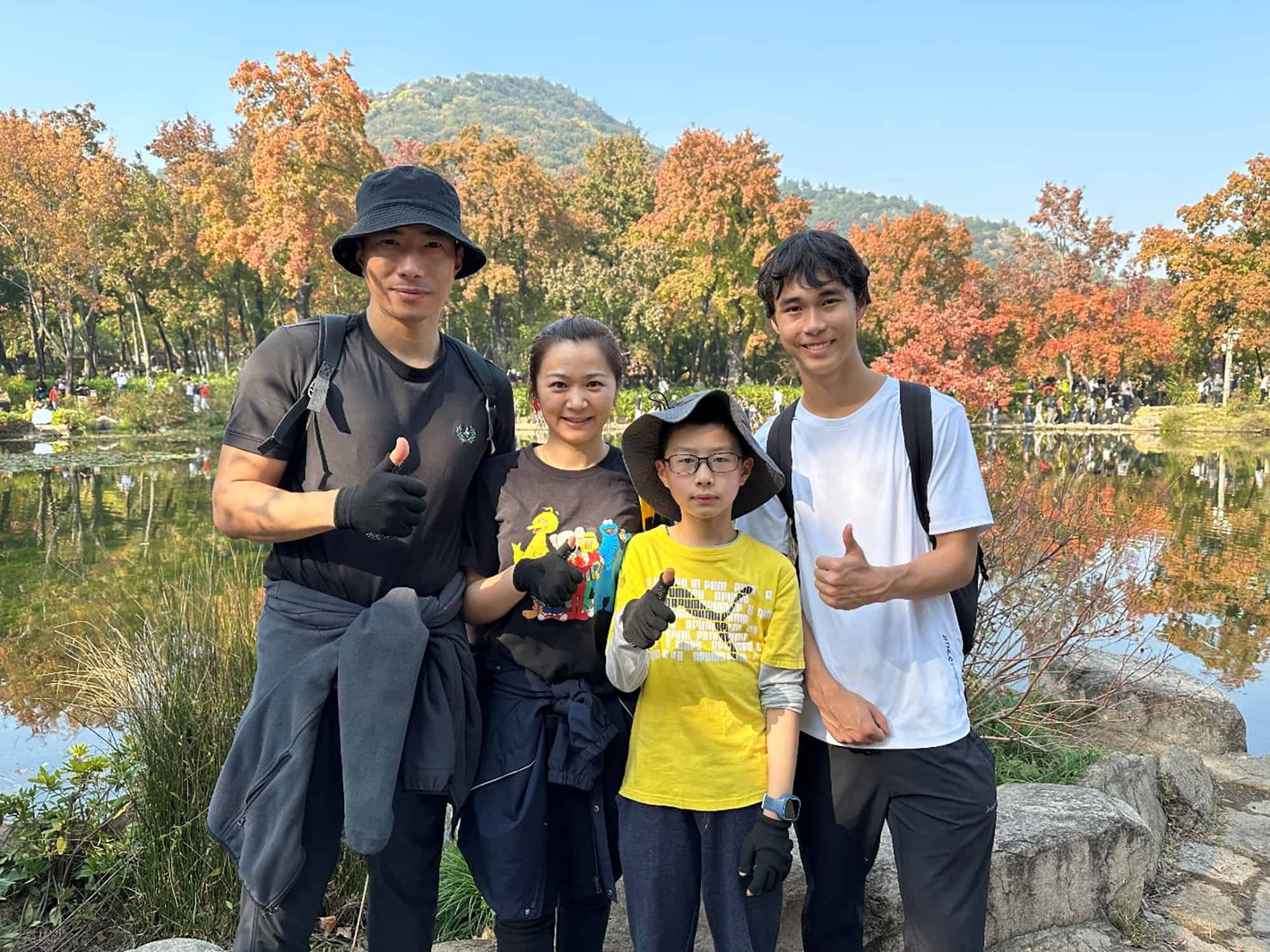
“If I had to describe my relationship with my host family in one word, I would choose ‘home,’” Kenes said. “My family is in Kazakhstan, but they have given me a home in China.”
Kenes joined the Host Family Program hoping to experience life in China beyond the classroom, improve his Chinese and build a meaningful connection with a local family.
He first met Shen and her family at the program’s opening ceremony. He remembers feeling nervous and not knowing what to expect.
The family welcomed him with Suzhou tea and a postcard.
“Tea is a kind of calling card for Suzhou. I wanted him to get a taste of the city’s refinement,” Shen said. “The postcard was a visual introduction to Suzhou’s gardens and museums.”
Kenes still remembers the gift.
“I really appreciated it,” he said. “It meant a lot to me.”
Shen had initially wondered whether cultural differences might make things difficult, but those concerns quickly faded. Kenes soon became friends with her son, Justin. They talked about school and their hobbies, and the family began spending time together on hikes, museum visits and other outings.
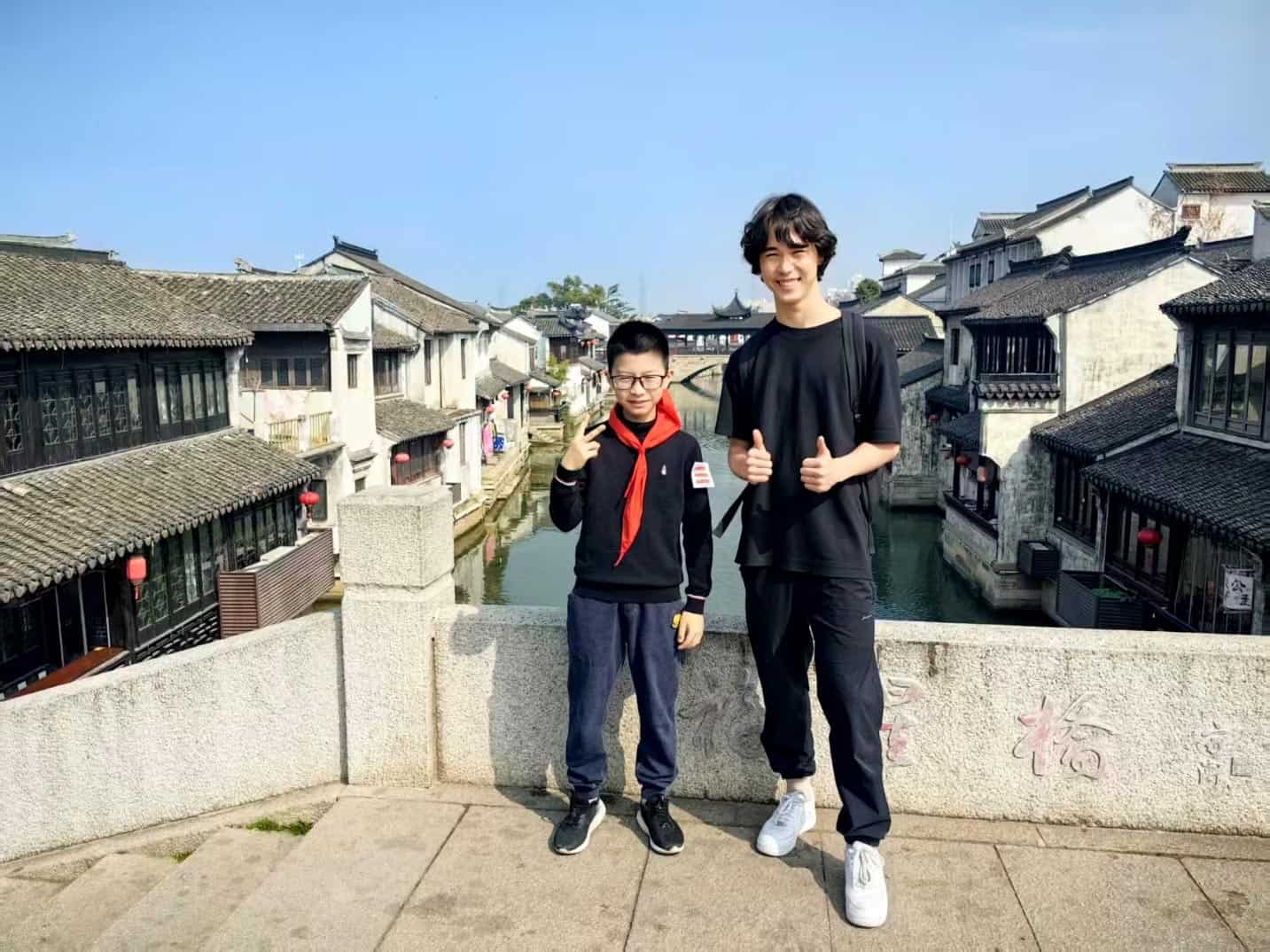
Over time, Sundays took on a familiar rhythm.
Because Shen’s home is close to DKU, Kenes began visiting every Sunday to learn Chinese. After each lesson, the family would sit down for dinner and talk about school, their week and everyday life.
“I don’t think there was one special moment when my host family became my family,” Kenes said. “I think it happened little by little.”
“After a while, visiting them no longer felt like joining the program,” he said. “It felt like visiting family.”
Living far from Kazakhstan was not always easy, Kenes said, particularly when he missed his family back home.
“But knowing that I have a family in Kunshan makes me feel much less alone,” he said.
One of Shen’s most memorable moments with Kenes came during a hiking trip in last November.
The trail was steep and slippery in places, and some sections required hikers to hold on to ropes as they made their way down. Kenes would move ahead, steady himself and then turn back to help Shen and Justin. When he saw other hikers struggling, he stopped to help them, too.
“He was always ready to lend a hand,” Shen said. “Although his Chinese wasn’t very fluent yet, I could tell that he was a very kind young man.”
Much of the cultural exchange between Kenes and his host family happened just as naturally.
The first time Kenes ate Yangcheng Lake hairy crabs, he had no idea where to begin. The family showed him how to eat the crabs using the special utensils, and he quickly got the hang of it.
“He was very open to trying new things, and he learned very quickly,” Shen said.
Justin discovered that firsthand when he taught Kenes to play Chinese chess. At first, Justin was confident he would have the advantage because Kenes could not read the Chinese characters on the pieces.
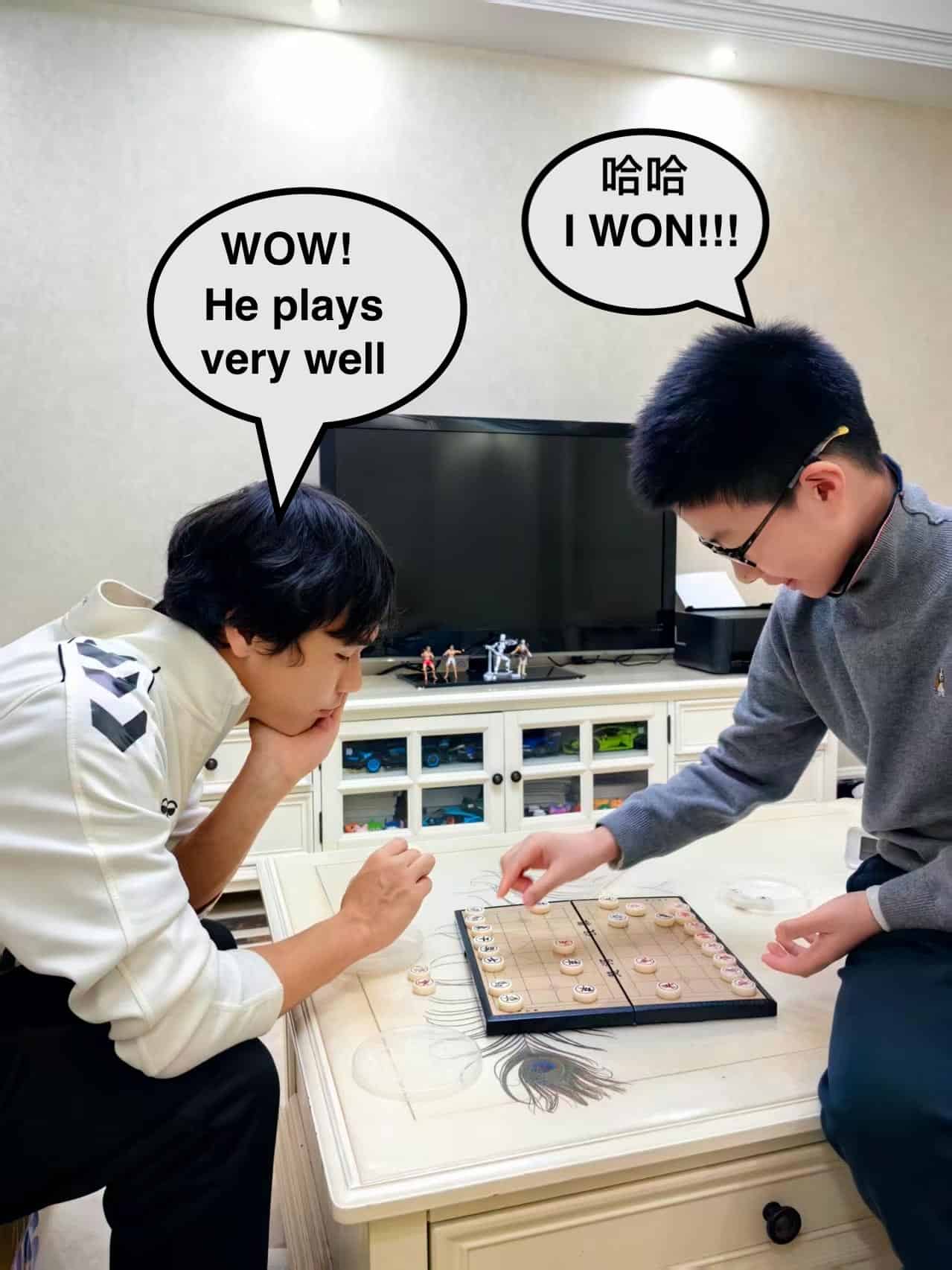
A few games later, Kenes was close to beating him.
“Kenes learns very quickly,” Shen said. “Even though he couldn’t read the characters, he understood the rules very quickly.”
Kenes, meanwhile, introduced the family to Kazakhstan.
During one conversation over hot pot, he talked about traditional foods in Kazakhstan, including horse meat. He also told them about Almaty, a modern city set against snow-capped mountains, and about the country’s nomadic traditions and modernization.
For Shen and her family, those conversations offered a fuller picture of a neighboring country they had previously known only in broad terms.
Kenes also realized that the learning was going both ways.
“At first, I thought they would teach me about China,” he said. “But after a while, I realized that I was also teaching them about my country, Kazakhstan. We were both learning from each other.”
The experience has also changed the way Kenes thinks about family.
“Before coming to China, I thought family was only the people you grew up with,” he said. “But this experience showed me that family can also be people who welcome you, who care about you and who make you feel at home, even if you come from different countries.”
For international students considering the Host Family Program, Kenes has a simple message.
“Please don’t miss this opportunity,” he said. “The program is more than just learning about Chinese culture or improving your Chinese. It is a real chance to build meaningful relationships, create unforgettable memories and find a second home while in China.”
Kenes has already imagined what it might be like to return to Kunshan years from now.
“If I came back to Kunshan 10 years from now and knocked on my host family’s door without telling them, I hope they would be surprised and happy to see me,” he said. “I think we would sit together, share a meal, talk about old memories and laugh about everything that happened during my time at DKU.”
Shen already knows what she would do.
“I would let him in first,” she said. “Then I would go to the kitchen and make him a bowl of noodles. He likes the noodles I make.”
And she already knows what she would say.
“Welcome home.”
DKU’s 2026–2027 Host Family Program is now open for applications!
International students interested in joining the program are invited to apply using the link below.