
Note: This story is part of a series featuring members of Duke Kunshan University’s Class of 2030 as they begin their journeys at DKU and look ahead to the next four years.
“Hi, this is Connor from the Florida Immigrant Coalition. How can I help you?”
The calls often came from people who did not know what to do next: someone trying to figure out how to begin an immigration case, or a family member looking for legal help after a relative had been detained.
Connor Eller Vaughn would answer in Spanish or English and try to connect them with the resources they needed.
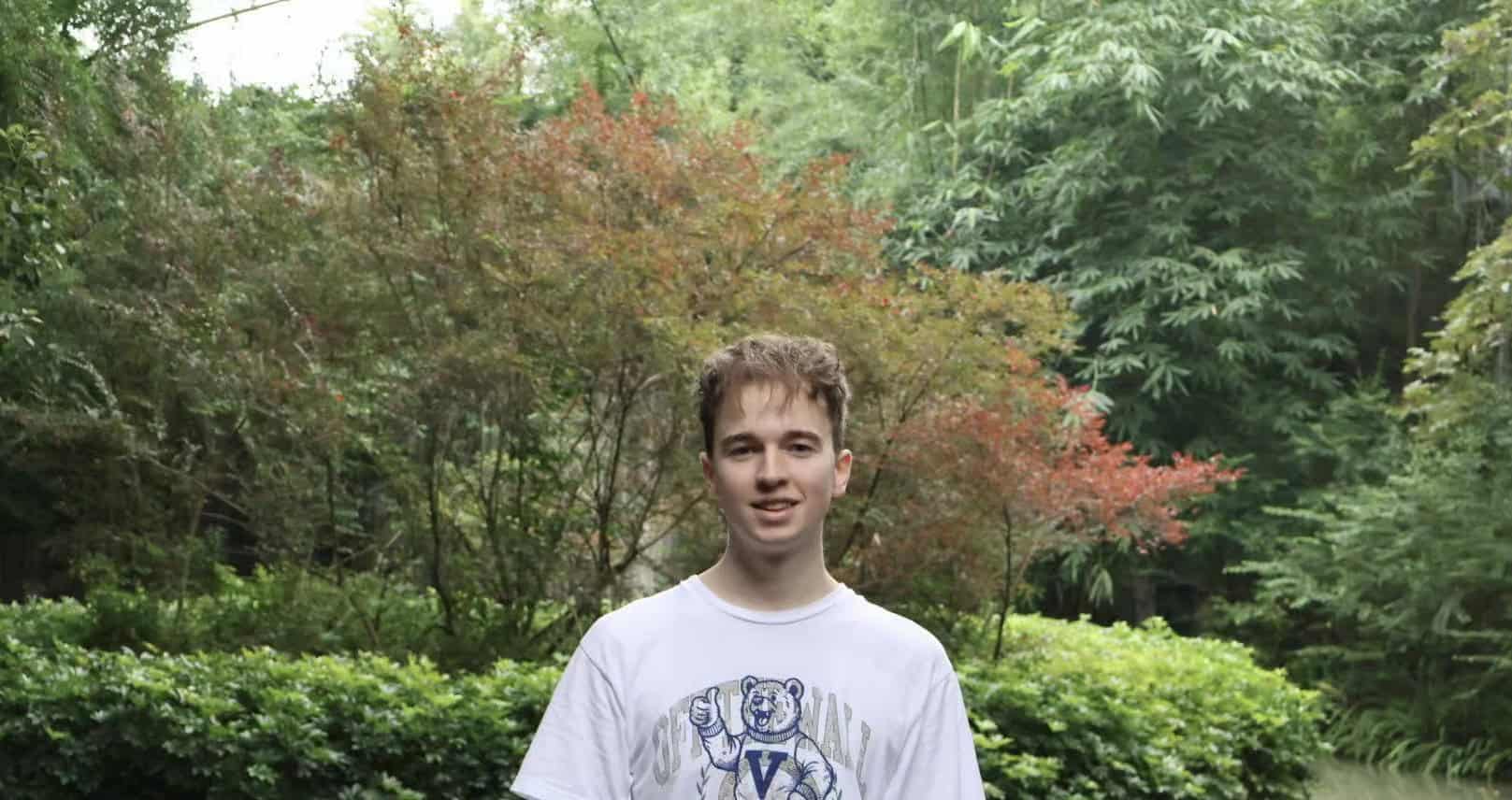
The people calling could not see Connor. Most did not know they were asking a high school student for help.
Nor could most callers tell that Spanish was not his first language.
When language became a way in
One morning in Tallahassee, a leafy college town in Florida, something Connor had mostly encountered through news stories suddenly felt much closer to home.
He remembers the calls coming in unusually fast: perhaps 50, perhaps closer to 100 within three hours, far more than the hotline normally received during one of his shifts. He later learned that an immigration enforcement operation had taken place at a construction site in Tallahassee.
Until then, immigration enforcement had felt distant. Now, it was happening in his own city, while calls were pouring into the hotline where he volunteered.
“It made me realize just how close to home some of these events were unfolding,” he said.
For Connor, that was the difference between knowing about an issue and being pulled, however briefly, inside it. The people on the phone were no longer figures in news stories or videos he had scrolled past on a screen.
He was listening to them, speaking with their families and, in small ways, trying to help.
He was no longer only watching the world happen.
When a problem could not be resolved during his shift, Connor kept working on it in his own time, sometimes spending days tracking down the right information or resources for a caller.
The hotline gave him a reason to enter spaces that normally belonged to adults. He found himself calling lawyers, government offices and even consulates to ask questions on behalf of people he had never met, having conversations he knew few people his age would ever have.
Connor usually worked on Saturday mornings, though he did not always want to spend them on the hotline. Like many high school students, he had plenty of other things he would rather be doing.
“There were definitely days when I didn’t want to go,” Connor said. “But I made the commitment, so I got up and did it anyway.”
Annabella Pashell, who worked with Connor at the coalition, was impressed by his dedication.
“His strong commitment to immigrant communities and justice particularly stood out to me,” she said. “I was impressed to see someone so young approach this work with such care and passion.”
At home, the work sometimes worried his mother. If something unusual or upsetting happened during a shift, Connor would tell her a little about what he had heard.
“It involved facing deeply real and genuinely heartbreaking realities,” he said.
For his mother, it was a lot for a high school student to be carrying. For Connor, that seriousness was part of what made the work feel real.
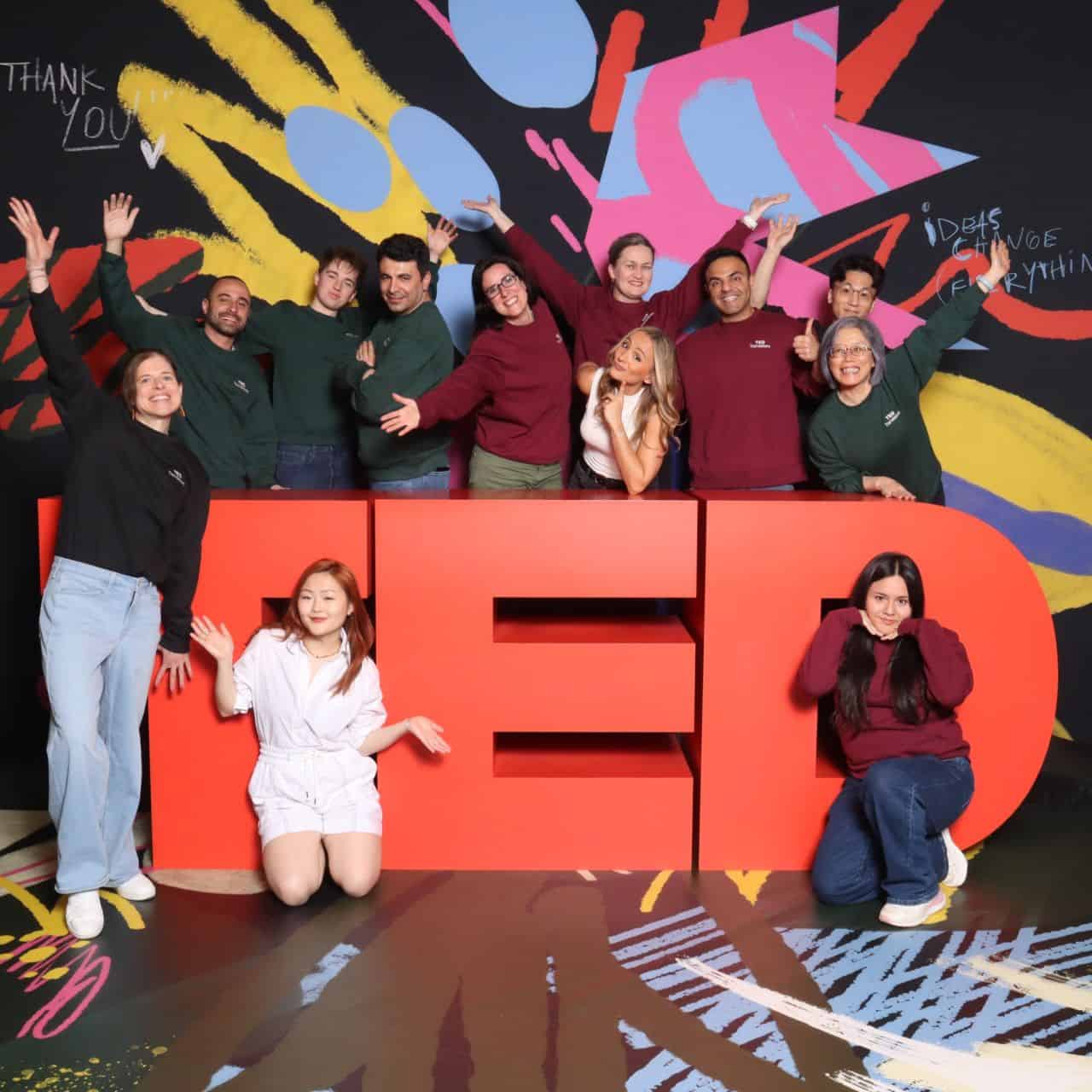
Connor Eller Vaughn attends TED2026 in Vancouver, Canada, in April 2026.
A young voice in the room
The hotline was not the only door language opened.
Connor also volunteered as a translator for TED, eventually moving on to review other volunteers’ work. That experience later brought him to TED2026 as part of a delegation of volunteer translators, placing him among people he might otherwise have known only by name.
Speakers included Reddit’s co-founder and CEO, a Waymo co-CEO, a Nobel laureate and leading figures in academia and the arts. Connor was among the youngest people there. “People were curious what in the world I was doing there,” he recalled.
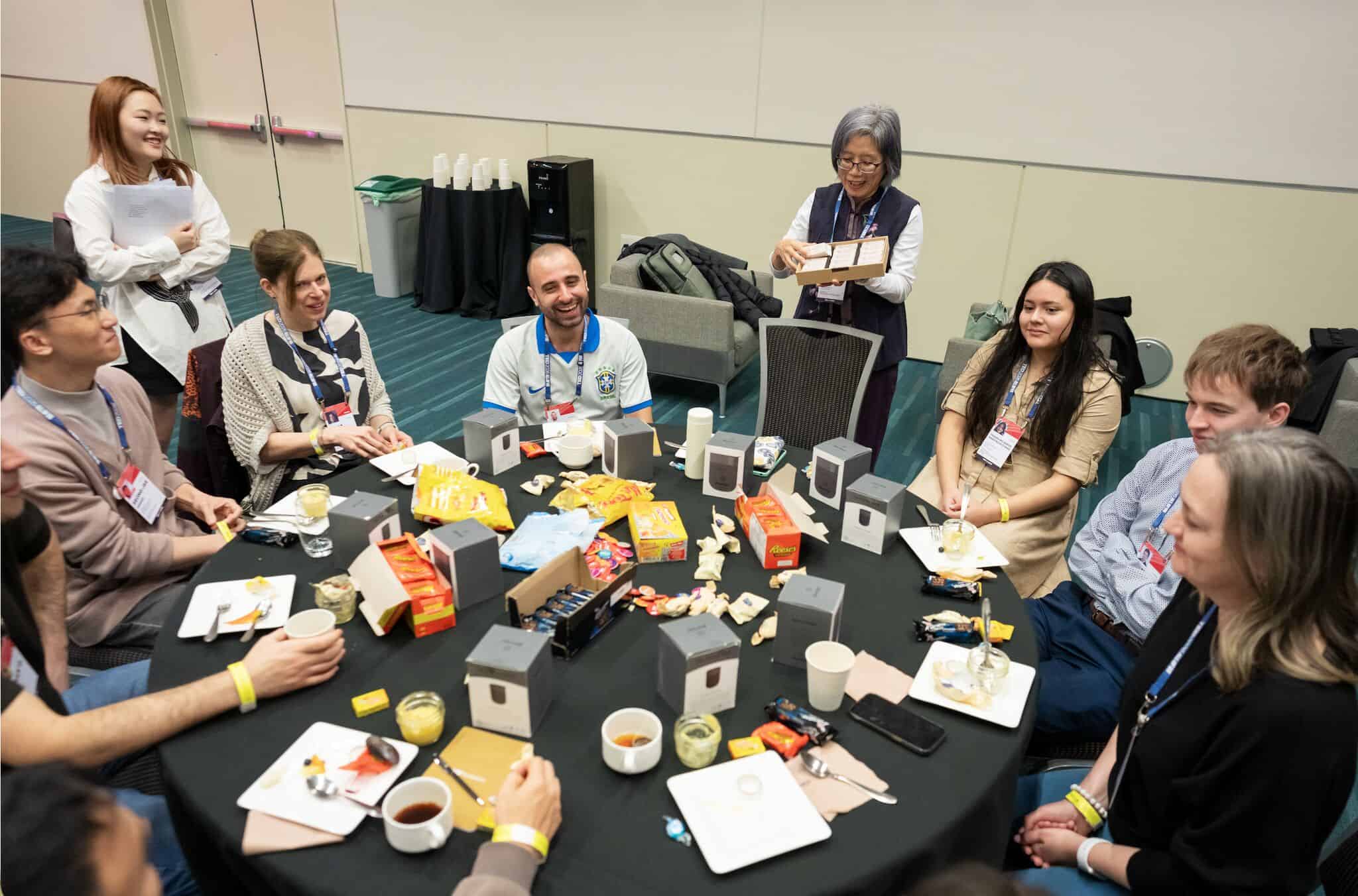
Connor Eller Vaughn attends a session on ways to improve the TED Translators community at TED2026.
Rather than spend his time lining up for brief encounters with prominent speakers, Connor gravitated toward the conference’s “Braindates,” small-group conversations organized around questions proposed by attendees.
One he signed up for posed the question: “How do we make the civic process resonate with younger generations?”
In a room where most participants were older and more experienced, Connor might have seemed an unlikely voice in the conversation. But on this question, his age became an advantage. He was not simply discussing how to reach younger generations; he was part of the generation everyone else was trying to understand.
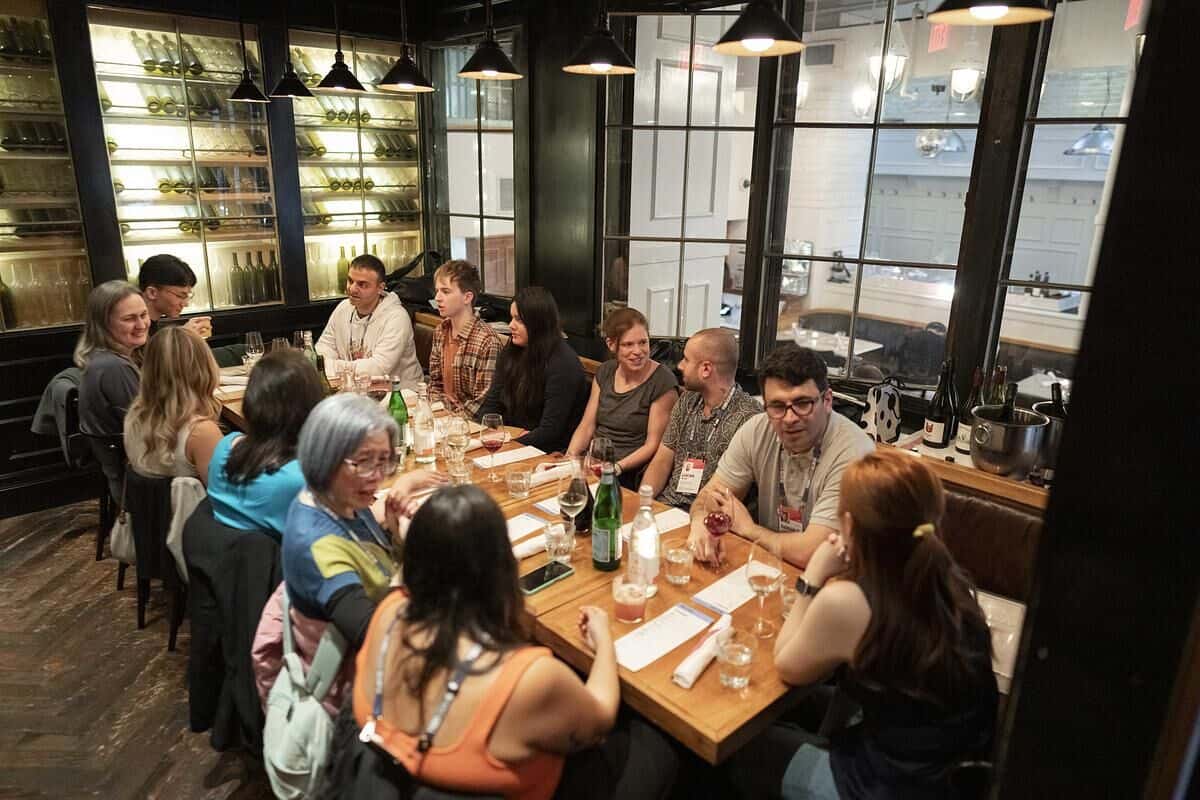
Connor Eller Vaughn attends a dinner during TED2026 in Vancouver, Canada, in April 2026.
Other participants took notice, telling him they appreciated having someone his age at the table. Yet what seemed to intrigue people even more was what Connor planned to do next: move to China for college.
“They’d say, ‘Do you mean for a semester? For a year? Like study abroad?’” Connor recalled.
“No. Four years.”
Why DKU?
Then he would explain Duke Kunshan University (DKU), its relationship with Duke University and why he had chosen to study in China.
Connor had distinguished himself academically in high school. In May 2026, he won first place in the World Languages category at the Best & Brightest Awards, organized by the Greater Tallahassee Chamber of Commerce. He later graduated as a co-valedictorian of his class.
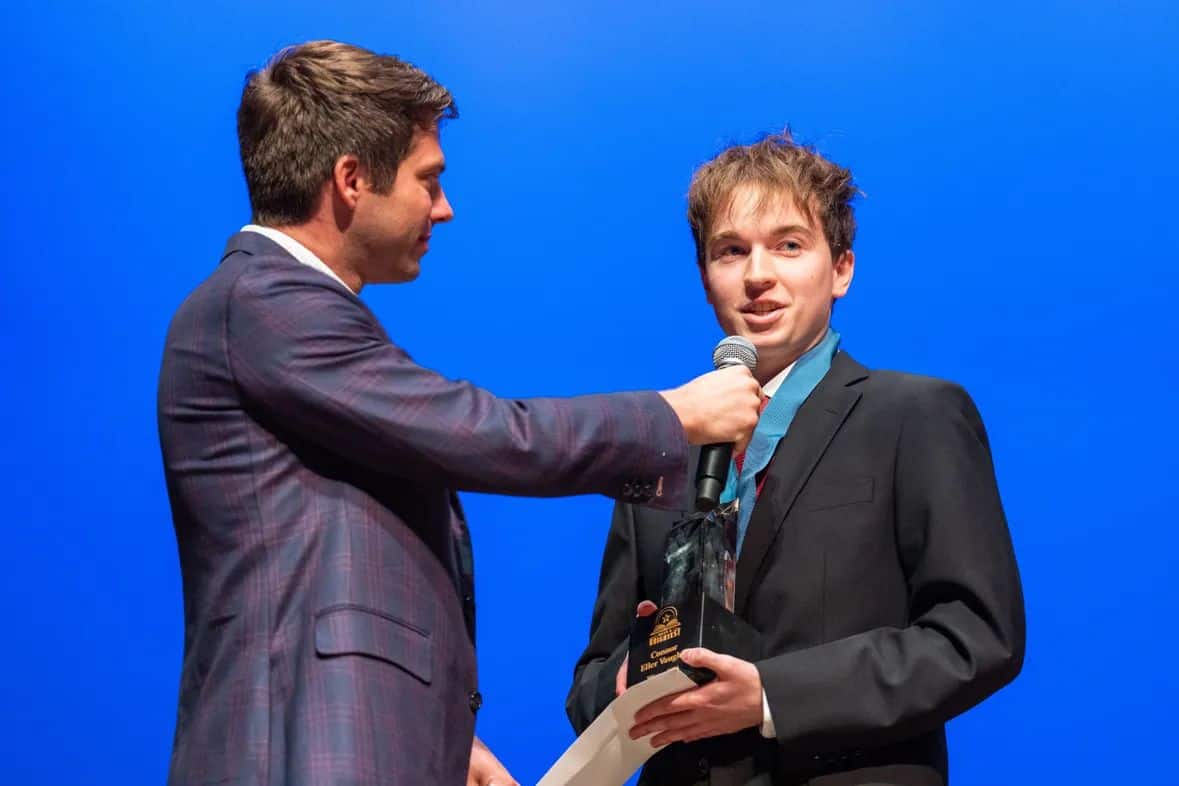
Connor Eller Vaughn receives the first-place award in the World Languages category at the 2026 Best & Brightest Awards.
He had considered applying to prestigious U.S. universities, including Columbia and Princeton. In the end, however, DKU was the only university he applied to.
Connor first learned about DKU during a trip to North Carolina, when his mother, who is now pursuing a Ph.D. at Florida State University, arranged a meeting with a DKU admissions representative at Duke University.
The conversation sparked his interest and helped ease his parents’ concerns about the prospect of studying in China.
Connor was encouraged by what he learned about DKU graduates’ paths after university. “It seemed like people were getting similar results to someone who goes to Duke,” he recalled.
For Connor, who had spent years learning Mandarin and had already visited China, DKU offered something he had not found elsewhere: a way to pursue his interest in the country while receiving the kind of university education he and his family valued.
Although studying in China was part of the appeal, he had not considered any other universities in the country. In his view, none offered quite the same combination of educational experience and opportunities that he saw at DKU.
He also saw possibilities beyond graduation. With its ties to Duke and its location in China, he hoped DKU could help him build connections and explore opportunities in a country where he might one day work.
Still, his family had reservations.
His grandmother did not want him to go to China. His father worried about the value of a degree from such a young university. And for a family with limited experience of Asia, four years on the other side of the world was no small decision.
Connor understood their concerns. But he had another reason to go.
Mandarin had been much harder for him than Spanish. He had come close to giving it up several times.
“I felt like it would be a very big waste to have spent all that time learning Chinese and then stop,” he said.
So he chose to put himself in a place where quitting would be harder.
“I wanted to throw myself in the deep end so that I would have no other choice.”
By Ziyu Zhang