
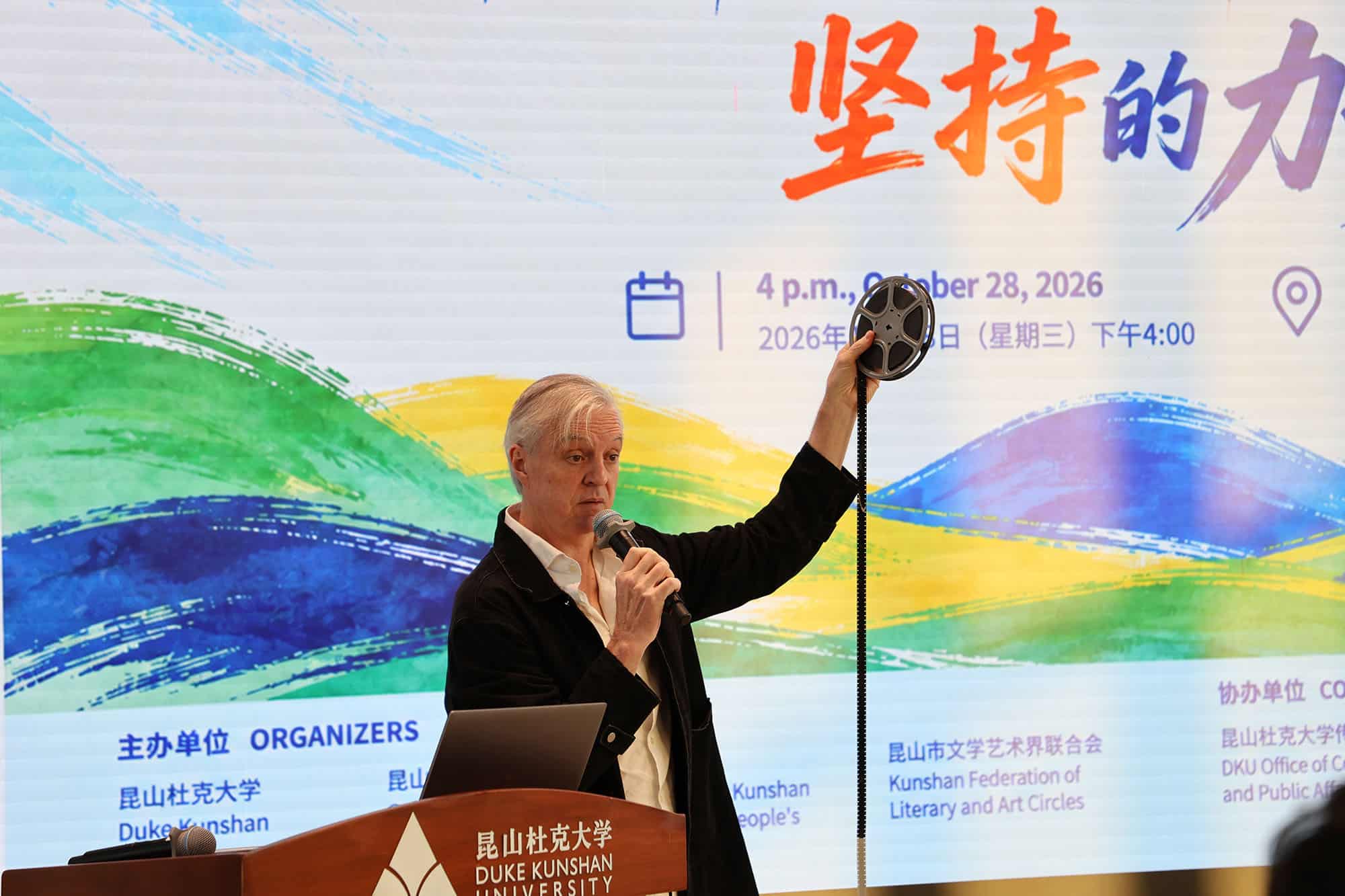
A strip of 16 mm film contains a series of still images. Yet when projected, those images, interrupted by brief moments of darkness, create the illusion of continuous motion.
For Travis Wilkerson, a Duke Kunshan University professor and 2025 Guggenheim Fellow, the process offers a metaphor for life:
Progress does not always happen in moments of forward movement. Even pauses, uncertainty and setbacks can be part of the journey.
Wilkerson shared that perspective at the inaugural DKU Perspectives event on Oct. 28, joining Wang Jibing, a Kunshan-based delivery rider and award-winning poet, and Zhang Wei, founder of a Kunshan-based outdoor brand.
Co-organized by DKU and the Kunshan Federation of Literary and Art Circles, the event explored the theme “The Power of Persistence.”
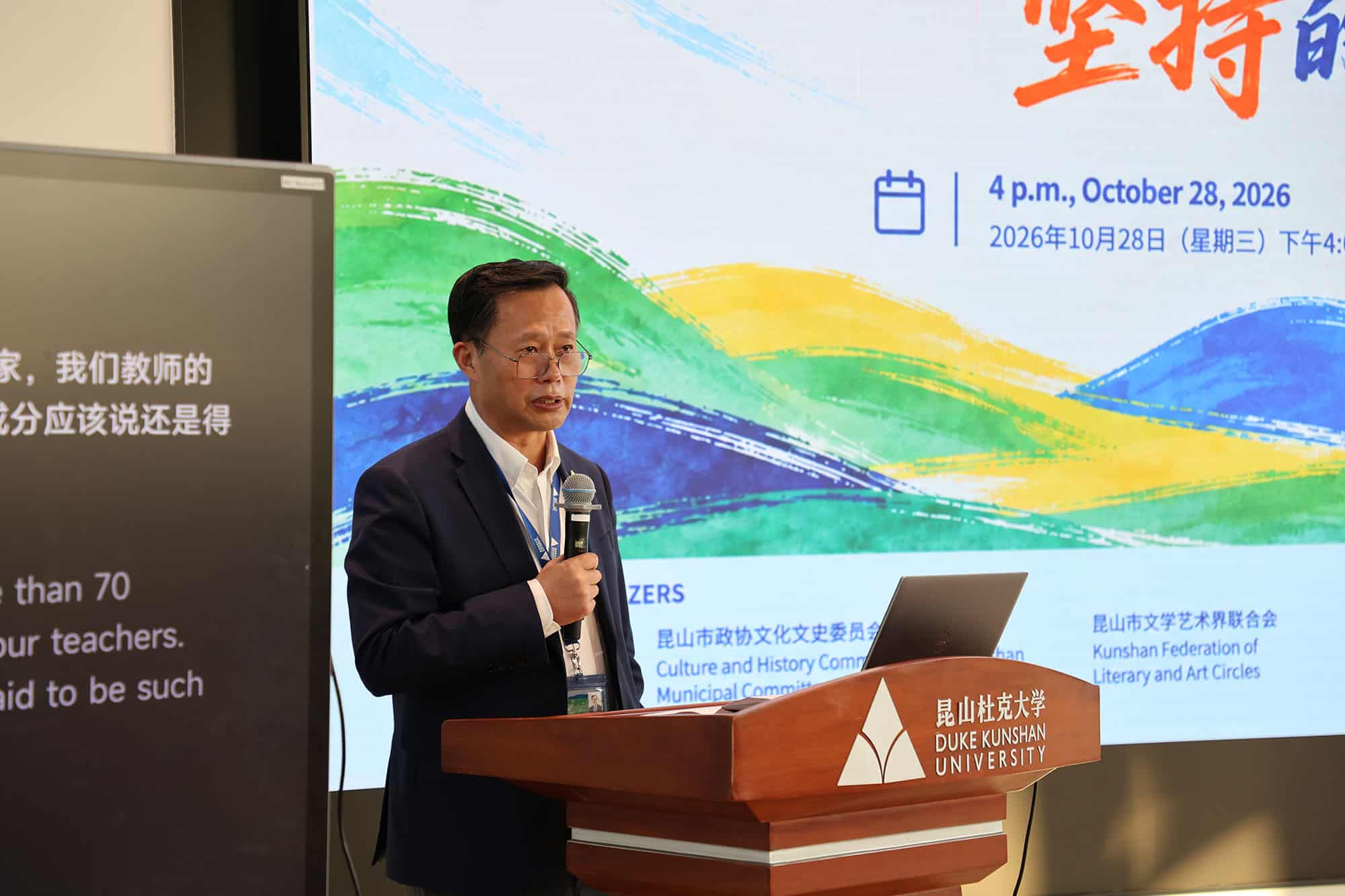
DKU Chancellor Yaolin Liu said DKU Perspectives reflects the university’s commitment to cultivating independent thinking, curiosity and resilience while strengthening ties with Kunshan.
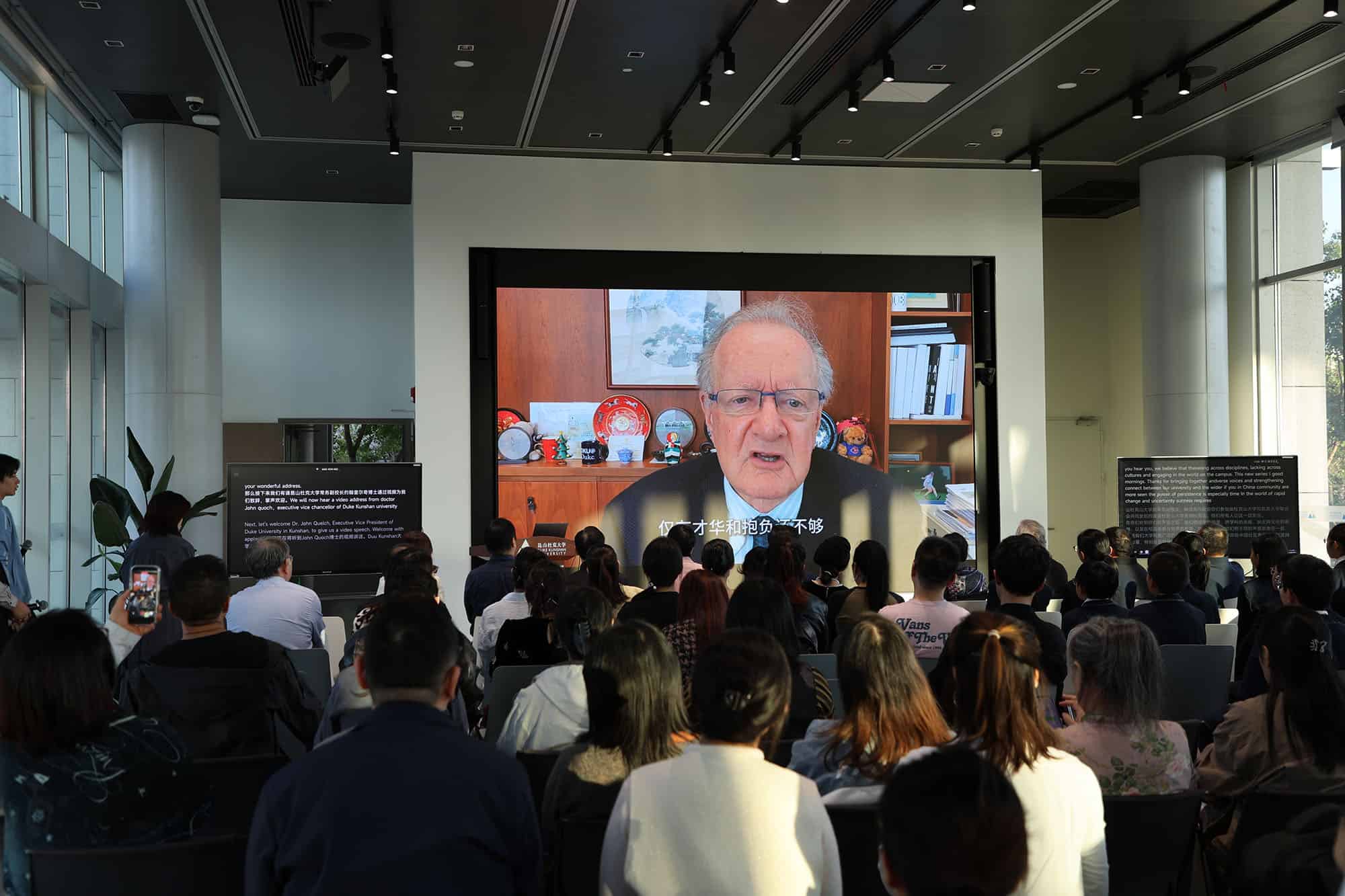
In a video address, Executive Vice Chancellor John Quelch said the three speakers’ experiences illustrated how resilience and adaptability can help people turn challenges into opportunities.
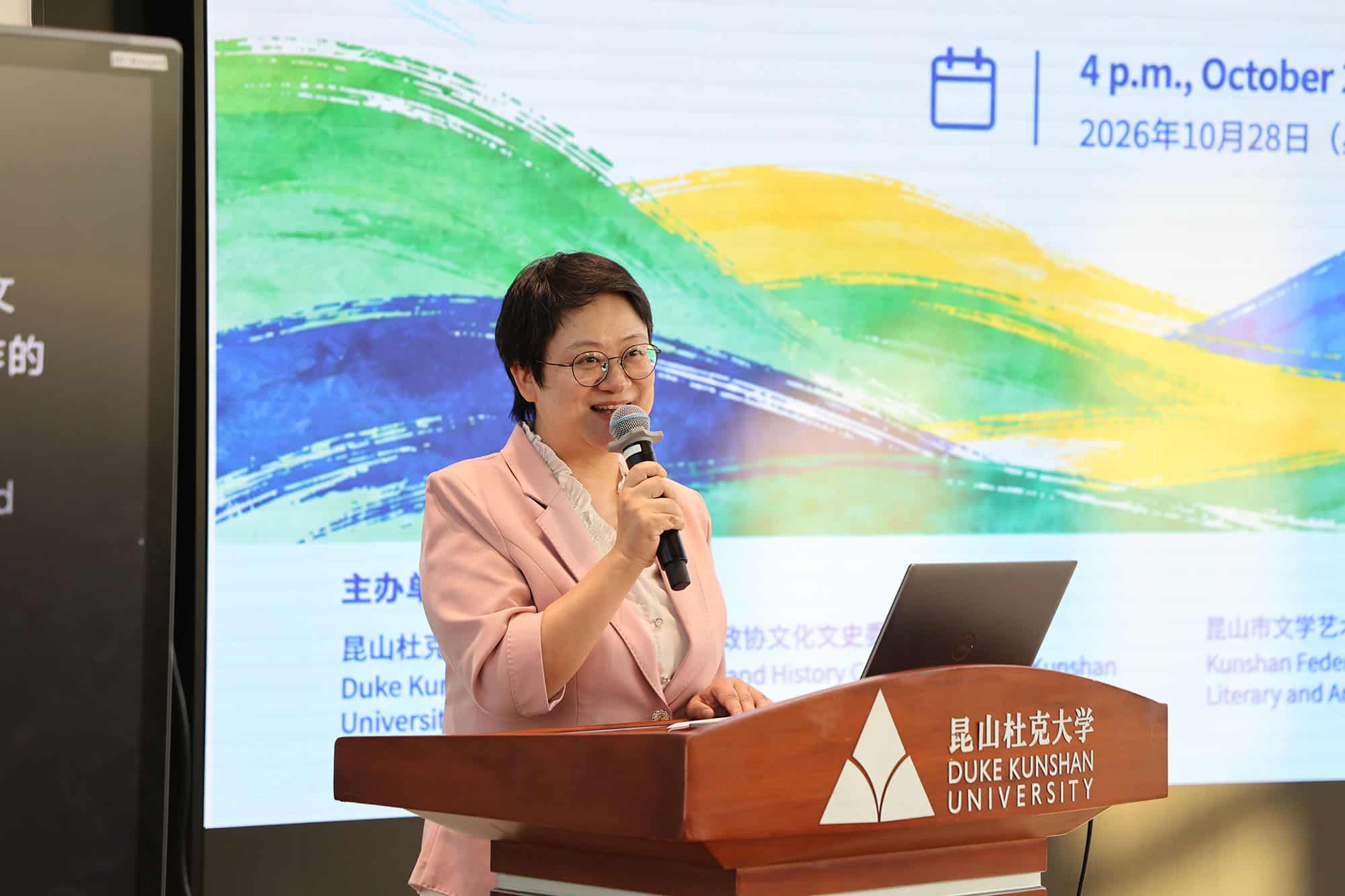
Chen Yan, chair of the Kunshan Writers Association, drew on the city’s cultural traditions and development to encourage students to pursue meaningful goals through sustained effort.
Finding progress in the pauses
Raised in a declining copper-mining town in the Rocky Mountains, Wilkerson recalled being told that leaving to explore the world was impossible. Two mentors helped him challenge that assumption.
His father, a helicopter pilot during the Vietnam War, later became a physician and medical professor at the University of Michigan. During his father’s hospitalization for cancer, former students were among those providing his care, a reminder that the impact of teaching can extend far beyond the classroom.
Wilkerson’s second mentor was Cuban documentary filmmaker Santiago Álvarez, who generously shared his films and creative experience with him.
Álvarez did not begin making films until he was 40, yet went on to produce roughly 700 works. When travel restrictions prevented him from filming in the United States, he created a documentary about the American civil rights movement using photographs and music. For Wilkerson, it was a powerful lesson in turning limitations into creative opportunities.
“No one can tell me what I can’t do,” Wilkerson said. “They can tell me the challenges I will face, but I will decide what I can do.”
He now brings that philosophy into his teaching at DKU. He described a student who drew on his rural hometown, family stories and friendships to create a film that deeply impressed him. Rather than waiting for ideal conditions, Wilkerson encourages students to recognize the creative possibilities in the resources and experiences they already have.
When passion becomes a habit
For Wang, perseverance began long before literary recognition.
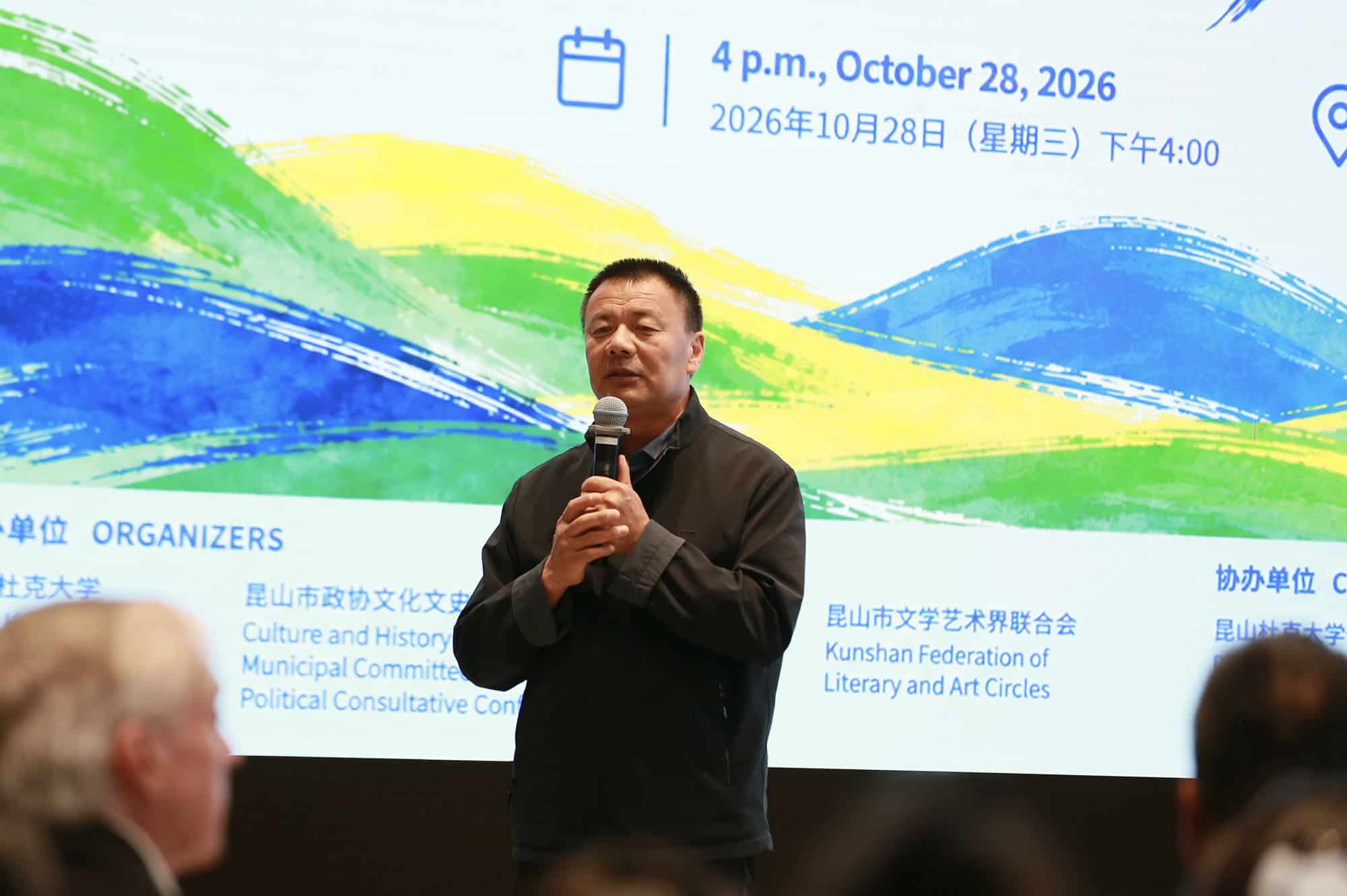
While earning a living collecting discarded materials, he could not afford books. Instead, he salvaged newspapers, dried them in the sun and read them word by word. Decades later, his poetry collection “Low Flight” won the 2026 Lu Xun Literary Prize for poetry, one of China’s most prestigious literary honors.
Asked how he had sustained his writing for 38 years, Wang said the answer was not endurance alone.
“When you come to love what you persist in doing, the word ‘perseverance’ gradually disappears from your life,” he said.
His writing has evolved with his circumstances. When he had more time, he wrote fiction. As life became busier, he turned to essays. Delivery work fragmented his days, so he began composing poetry, recording ideas by voice between orders.
For Wang, adapting his form was not abandoning his commitment. It was a way to keep it alive.
He also recalled how the generosity of Kunshan residents helped his family through difficult years. Those experiences shaped his desire to write about ordinary lives with warmth and compassion.
Knowing when to turn back
For Zhang, founder of the outdoor brand mt.ten, mountaineering has been both a test of endurance and a lesson in recognizing his limits.
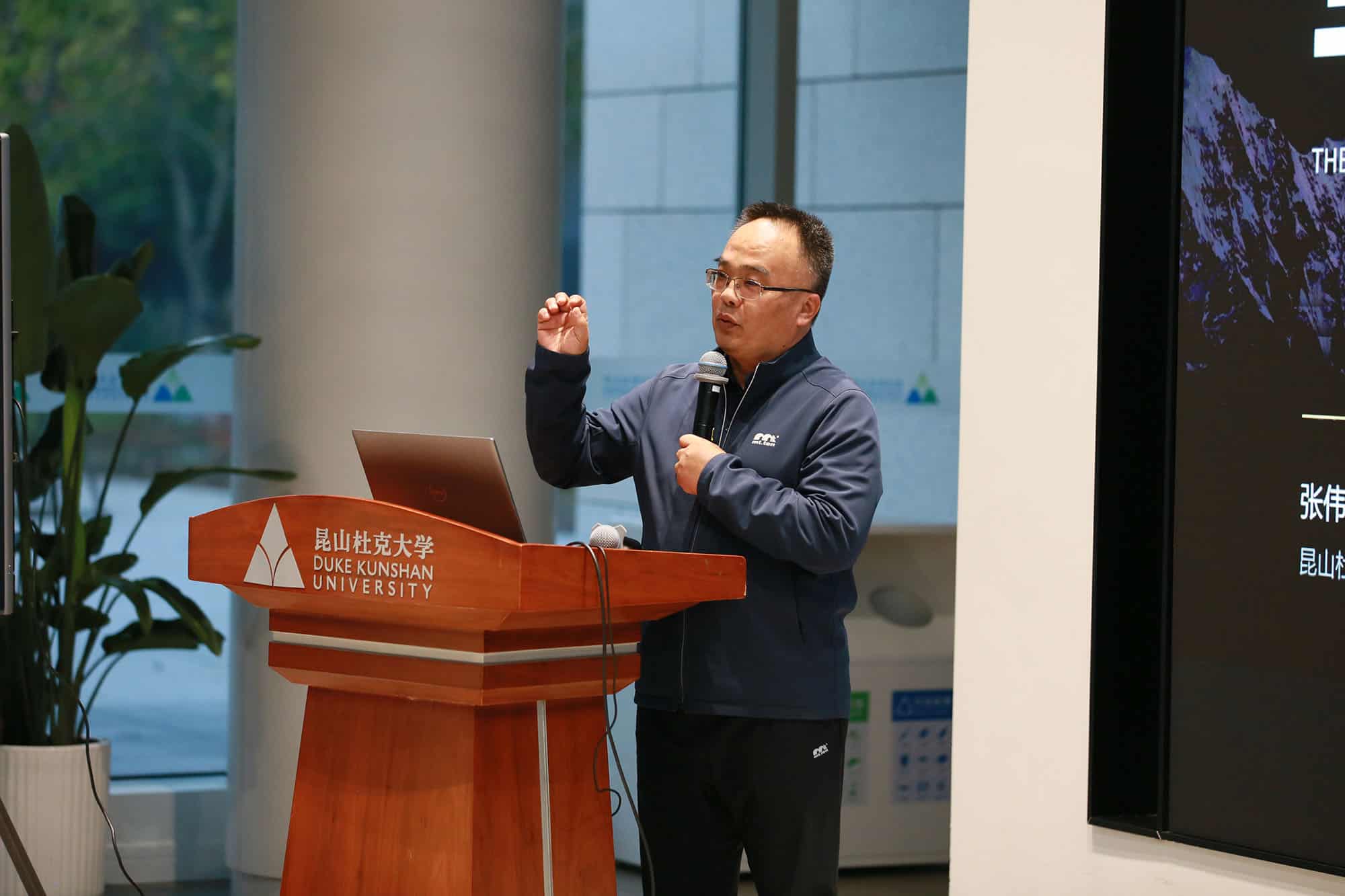
During an attempt to climb Mount Everest in 2013, severe altitude sickness forced him to stop at about 7,790 meters, or 25,560 feet.
Seven years later, his company joined in supporting China’s 2020 Everest elevation survey. Their contributions included outdoor equipment and environmentally focused facilities at base camp, where six modular units provided accommodations, workspace, and water and waste treatment systems.
Zhang spent 53 days in the Everest region and recalled watching members of the survey team embrace in tears after completing their mission.