
A tiny ring made from discarded plastic sits in May Zermouni’s room.
A fourth grader made it from a scrap left over after a plastic-yarn activity at Xinyi Primary School in Kunshan. At the end of class, the girl handed the ring to Zermouni, a Duke Kunshan University student from Morocco.
Zermouni had expected to teach the children and lead them through classroom activities. She had not expected to form such a personal connection.
When the girl gave her the ring, Zermouni said, “That really warmed my heart.”
The ring was made during DKU’s Climate Education Program, or CEP, a seven-week initiative that brought nine undergraduate volunteers to Xinyi Primary School in spring 2026.
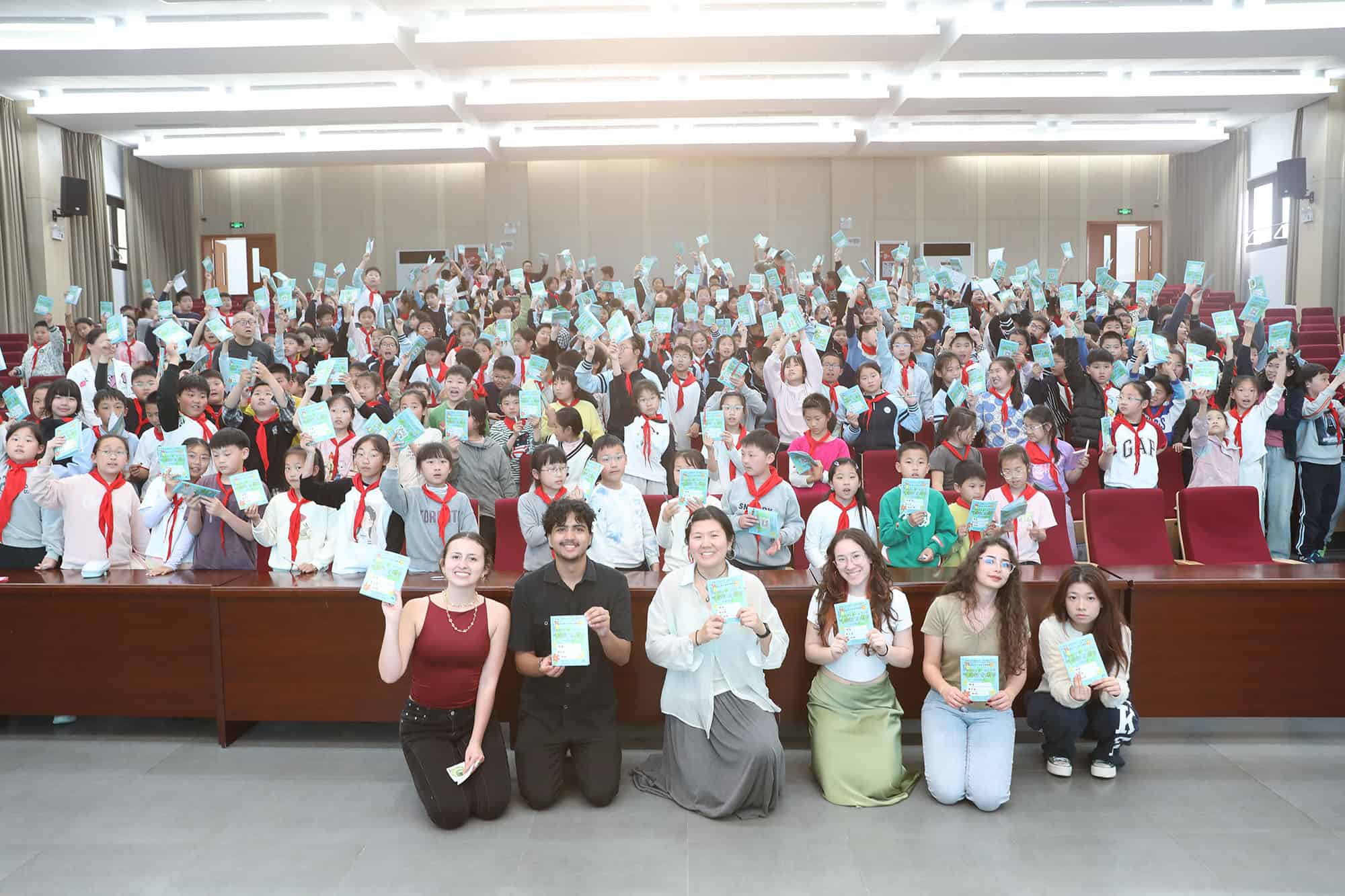
Through bilingual lessons, games and hands-on activities, the volunteers introduced about 400 fourth graders to climate change and sustainable living. The program also gave DKU’s international students a chance to use Chinese beyond campus and get to know people in the local community.
Starting with what children already know
The program was created by Coco Zhang, a member of DKU’s Class of 2028 and Chief Sustainability Officer on the university’s Student Leadership Board.
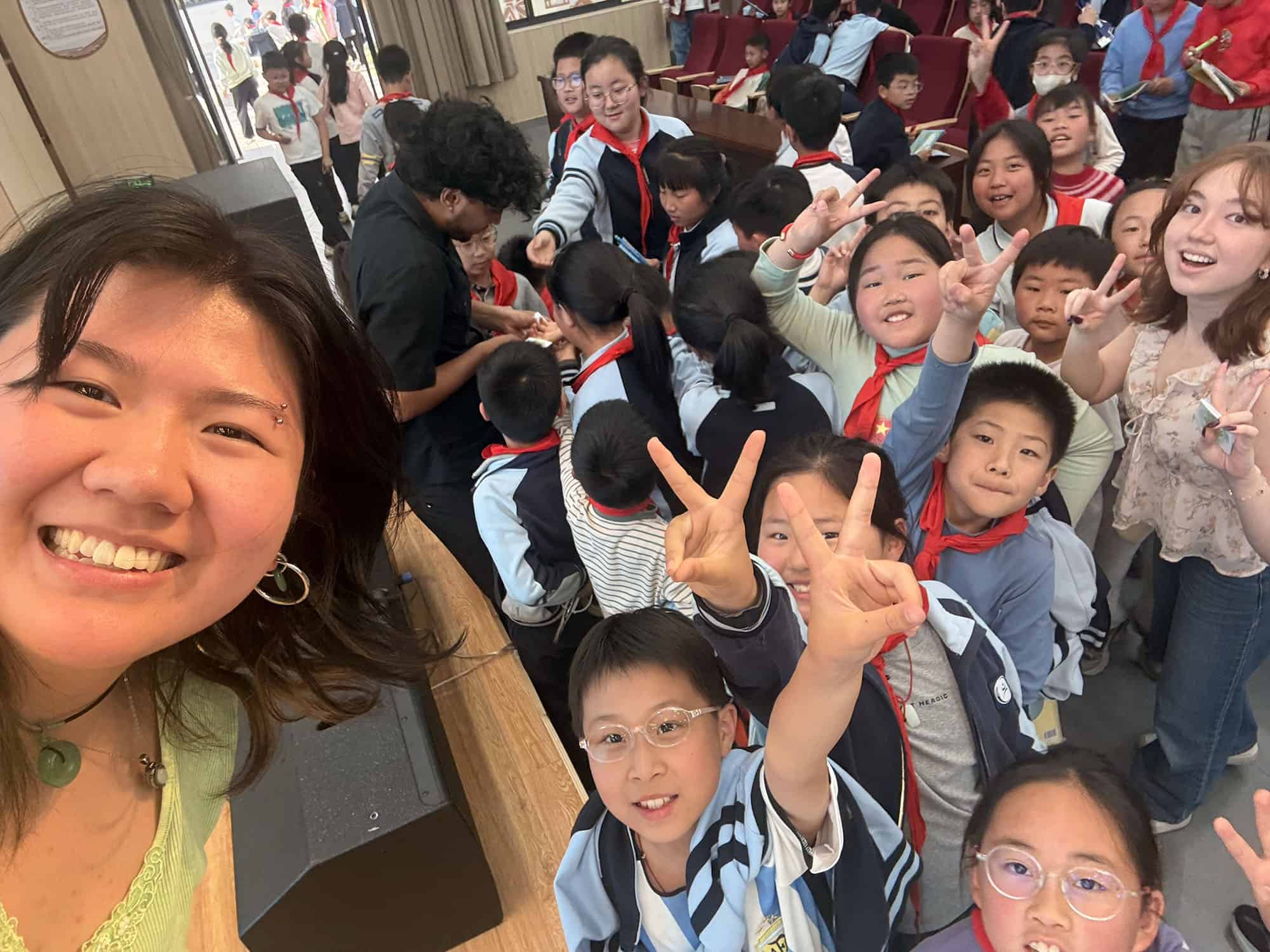
Coco Zhang with the children
Zhang said children in both China and the United States often hear the phrase “climate change” without exploring how it connects to daily life. She saw another gap closer to home: Many international students at DKU had few opportunities to use Chinese in real-world settings or get to know people beyond campus.
CEP was designed to address both.
“Climate change is both a local and a global issue,” said Wen Zhou, assistant professor of evolutionary anthropology and the program’s faculty mentor.
Xinyi Primary School already had a strong tradition of nature-based education. Students regularly took part in planting, harvesting and outdoor learning, giving them firsthand experience with soil, crops and seasonal change.
Zhou said those experiences gave the children a natural starting point for connecting local observations with environmental challenges around the world.
“We hit it off almost immediately,” said Yang Yang, a teacher at Xinyi Primary School.
Yang said the school’s farming courses had traditionally emphasized hands-on work, including loosening soil, sowing seeds, watering and harvesting. The bilingual climate lessons added scientific context and a broader global perspective.
In the school’s farming classes, students had measured the height of rapeseed plants and counted their flowers. The climate lessons introduced broader questions, including how changing weather patterns might affect flowering and pollination. Some students also tried describing their observations in simple English.
Turning a crowd into a classroom
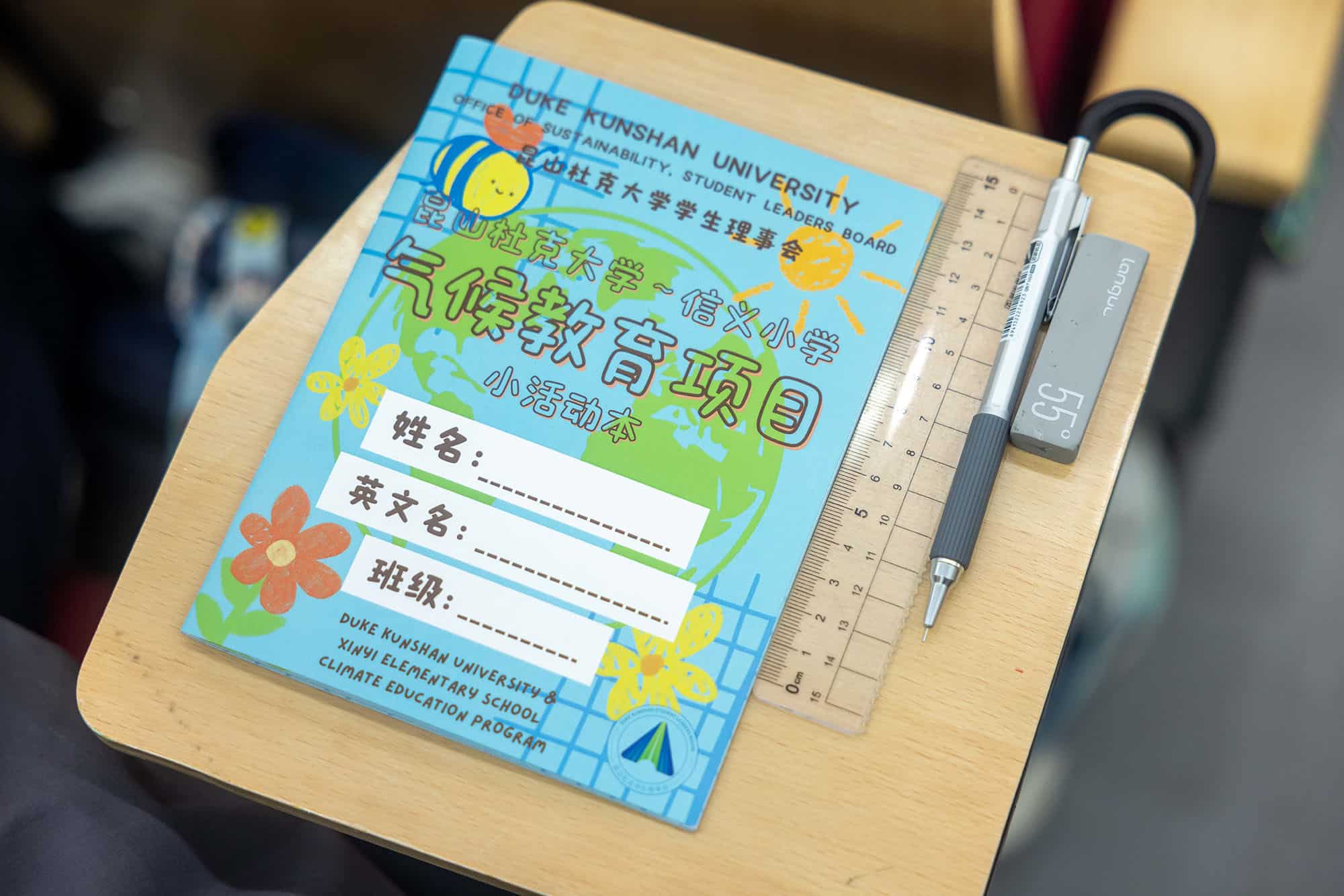
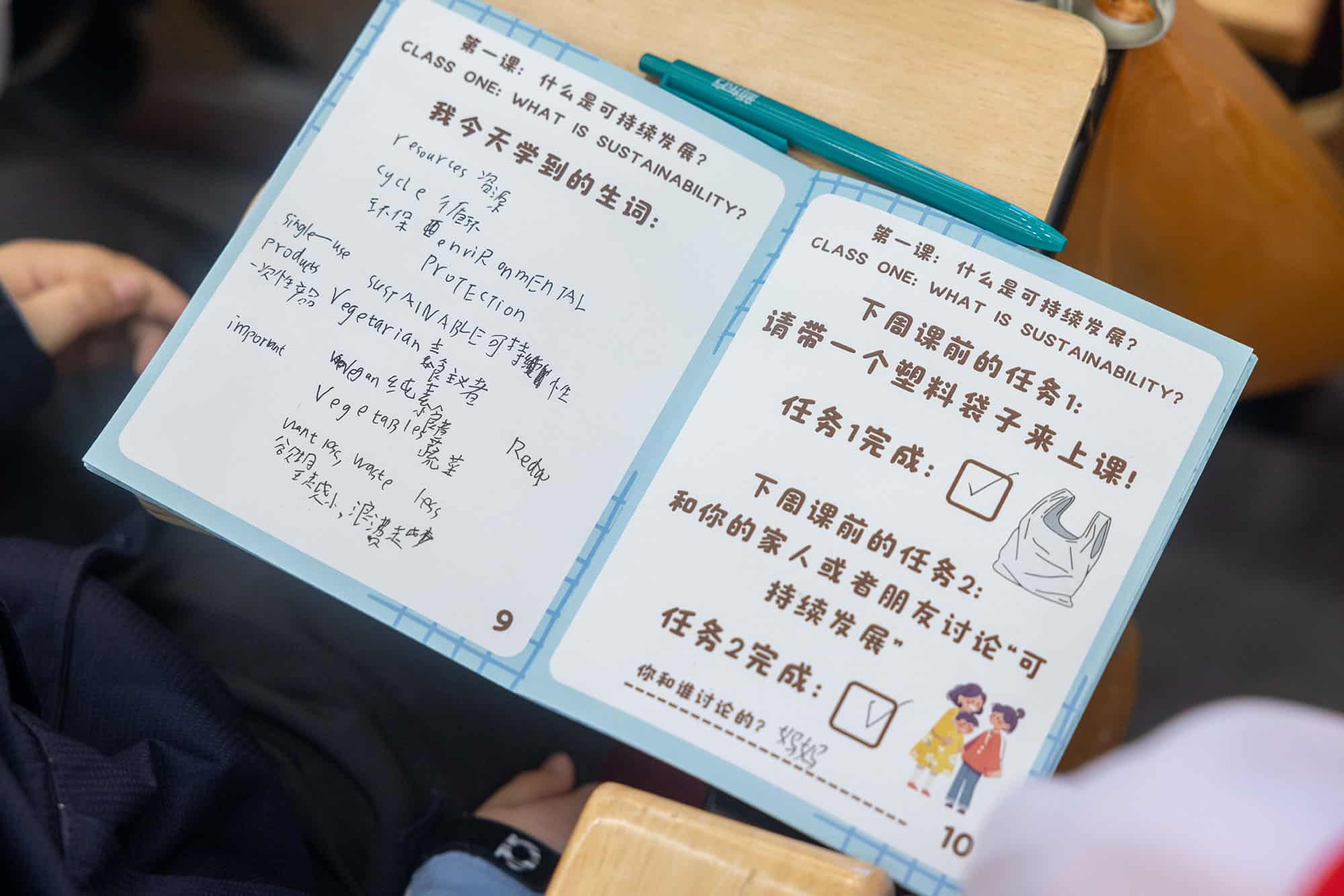
The program offered three lessons covering sustainable living at home, clean energy and water, and environmental action around the world.
Before each visit, the DKU volunteers spent about an hour reviewing the day’s lesson and discussing how to explain unfamiliar ideas to a large group of children.
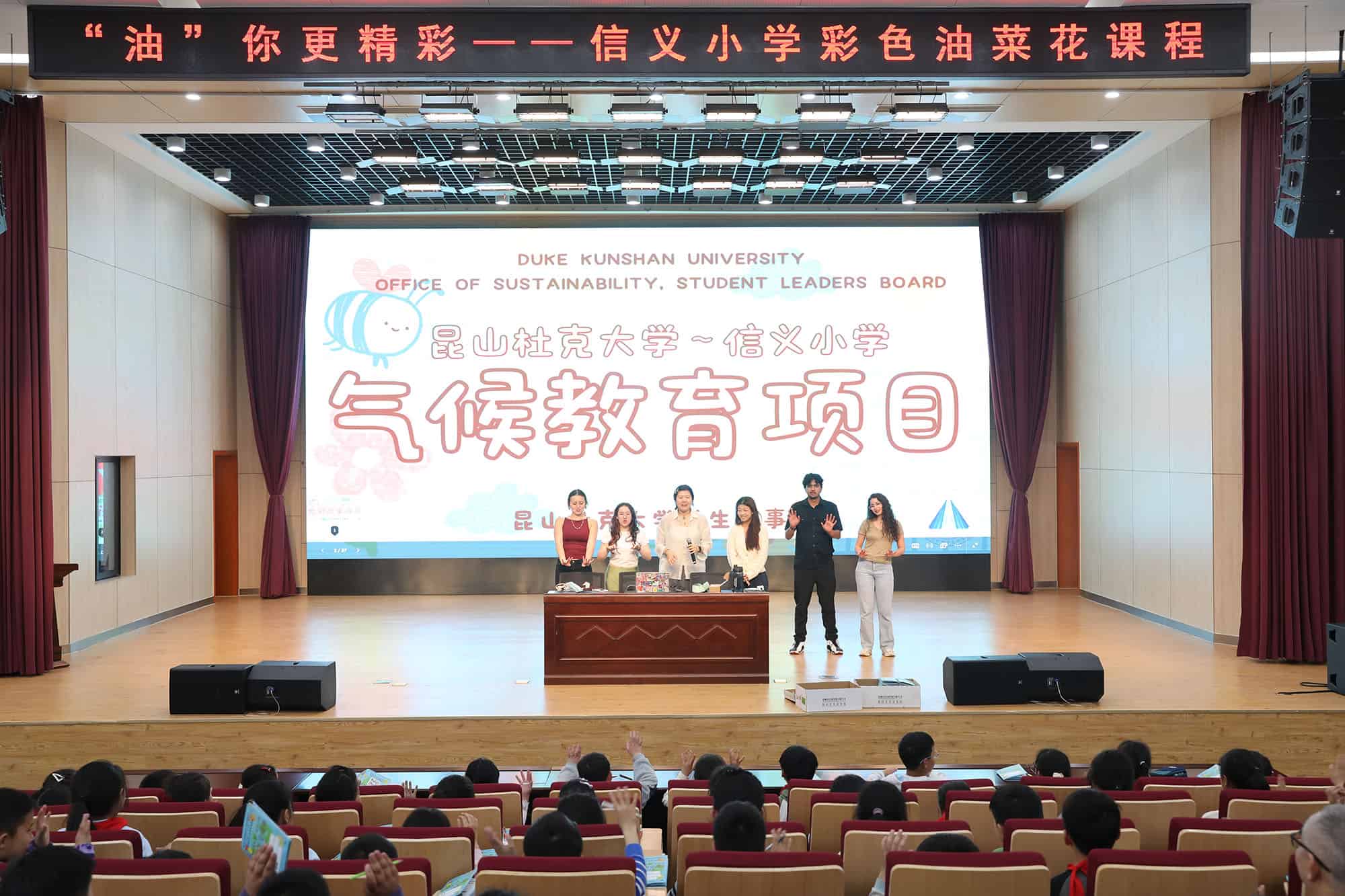
Once class began, however, the lesson did not always unfold neatly.
During bilingual exercises, volunteers might say a word in Chinese or English and ask the children to repeat it. At first, only a few voices would respond. The volunteers repeated the word, encouraged the class and tried again until more children joined in.
Stickers helped draw students into the discussion, sometimes in unexpected ways.
After one child described how his family reused household water for washing clothes or watering plants, several classmates began offering the same answer in hopes of earning a sticker. The volunteers had to encourage them to think of something different.
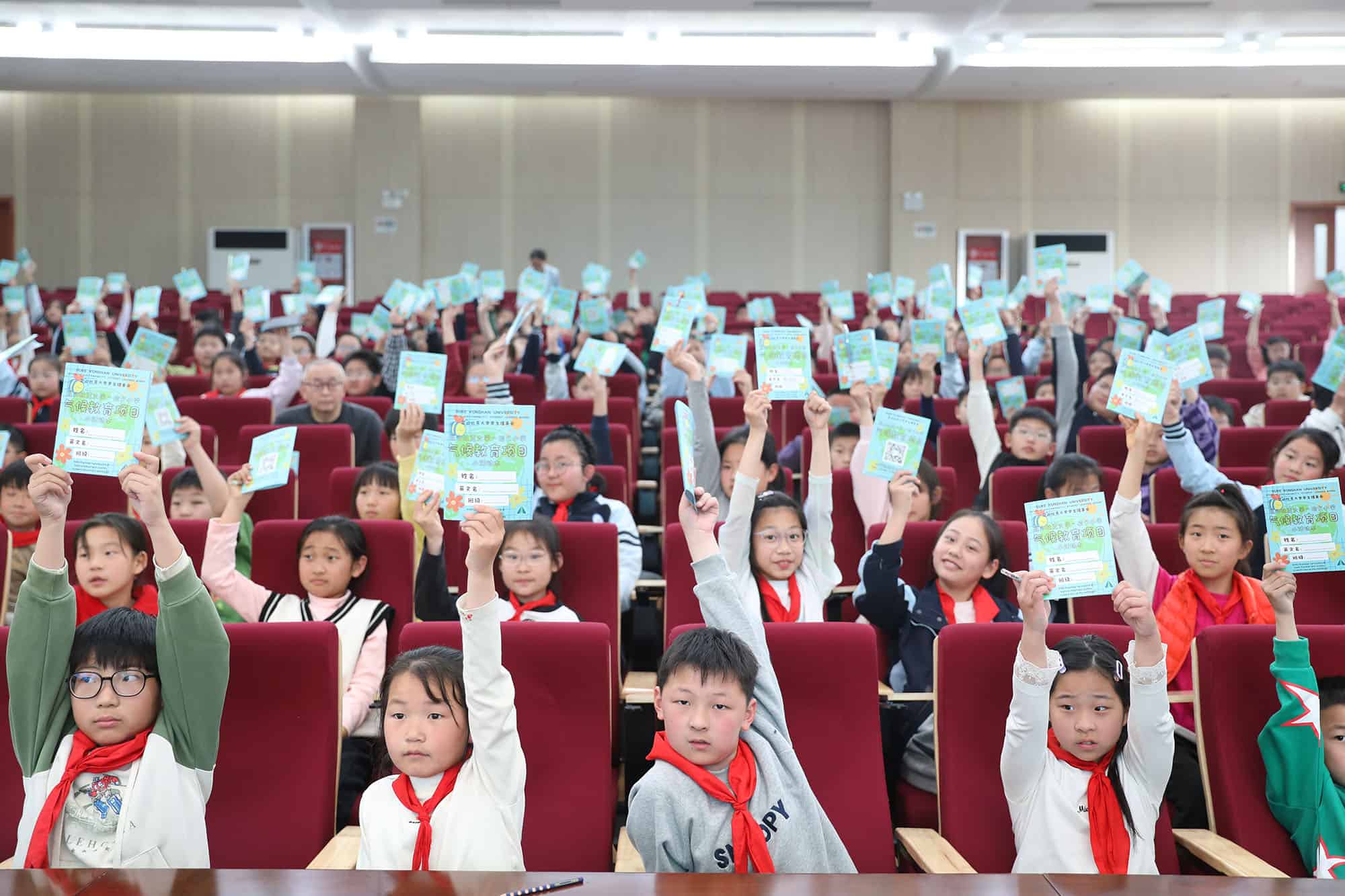
Keeping the children focused presented another challenge. When the room grew noisy, Zhang introduced a call-and-response cue: She would say “waterfall,” and the children would answer “shhh.” Hellen Song, a member of DKU’s Class of 2027, said the signal quickly became an effective way to bring the room back together.
Moments like these required the student teachers to adjust their language, pacing and expectations in real time.
One of the most popular activities involved making “plarn,” or yarn created from discarded plastic bags.
Children brought used plastic bags from home, cut them into strips and tied the strips together. With help from the volunteers, they wound the connected strips into balls and learned to finger-crochet chains from plastic that otherwise would have been thrown away.
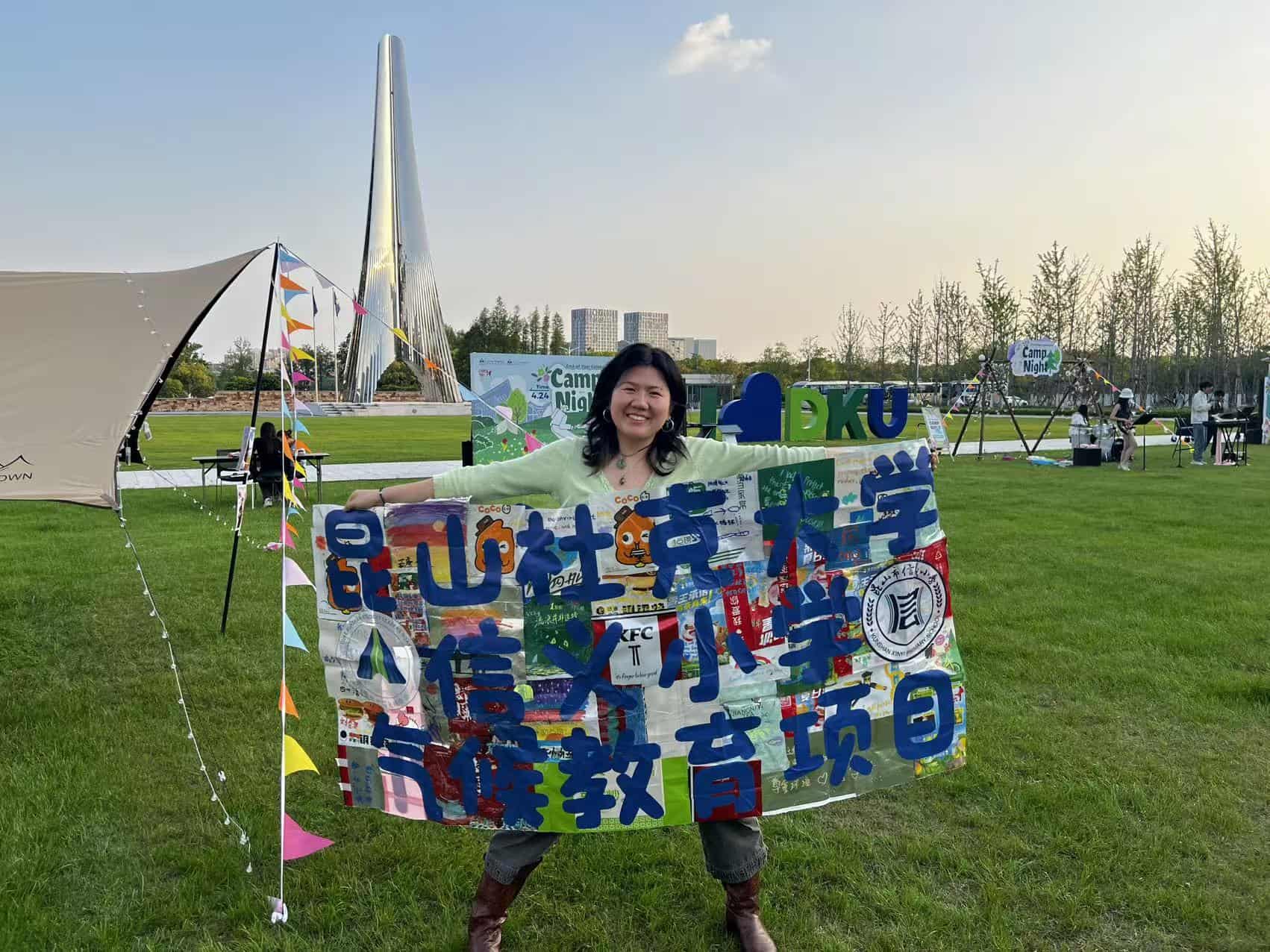
In another lesson, students cut and joined discarded takeout bags to create small reusable bags and a larger patchwork piece decorated with drawings and environmental messages.
Fourth grader Ruixi Xu said it was her favorite activity.
“We usually throw these bags away at home,” Xu said. “In class, we cut and joined them to make a useful little bag. I learned that things we throw away can still be useful.”
Her classmate Yilai Zhao said he had once thought protecting the environment mainly meant not littering.
“Now I understand that it also means saving resources, protecting plants and reducing waste,” he said. “The school’s farming activities taught me that we need to take care of nature.”
Bringing the wider world into the classroom
The DKU volunteers also shared stories from their home countries and families.
The children learned about Nepal’s mountains and Morocco’s desert landscapes. They heard about families that observe meatless Mondays and about seaweed being used as an alternative to plastic packaging. Some of those images later appeared in drawings on the patchwork piece created during the final lesson.
“I learned that different countries protect the environment in different ways,” Xu said. “Some places use seaweed instead of plastic packaging, and some people carry their own utensils when they go out.”
She said the lessons had also changed some of her habits at home. She now turns off lights, avoids wasting water, reminds her mother to bring reusable shopping bags and saves plastic bottles and old notebooks for recycling or reuse.
Yang said some children were initially shy around the international volunteers, particularly when speaking English. Games, gestures and shared activities gradually made communication easier.
Some students went from quietly saying “hello” to using a mix of simple English, Chinese and gestures to explain their work. Others stayed after class to ask the volunteers questions.
One child later wrote in a journal, “I want to learn English well so I can visit their countries and see their flowers.”
Teachers also noticed children carrying some of the lessons into daily life. One class made bilingual water-saving signs and placed them near sinks. A student persuaded her family to use water left over from washing vegetables to water plants, then shared a photo in the class group chat.
Zhang was careful not to overstate the program’s effects.
She noticed that the children waved more enthusiastically each time the volunteers returned and increasingly approached them after class. But she said she could not be sure whether they were most excited about the environmental content, the activities or simply seeing the university students again.
The volunteers were learning, too
Of the nine DKU volunteers, seven were international students and two were Chinese students.
For Ojas Paudyal, a member of the Class of 2029 from the United States, the project offered a return to something he had enjoyed before coming to China.
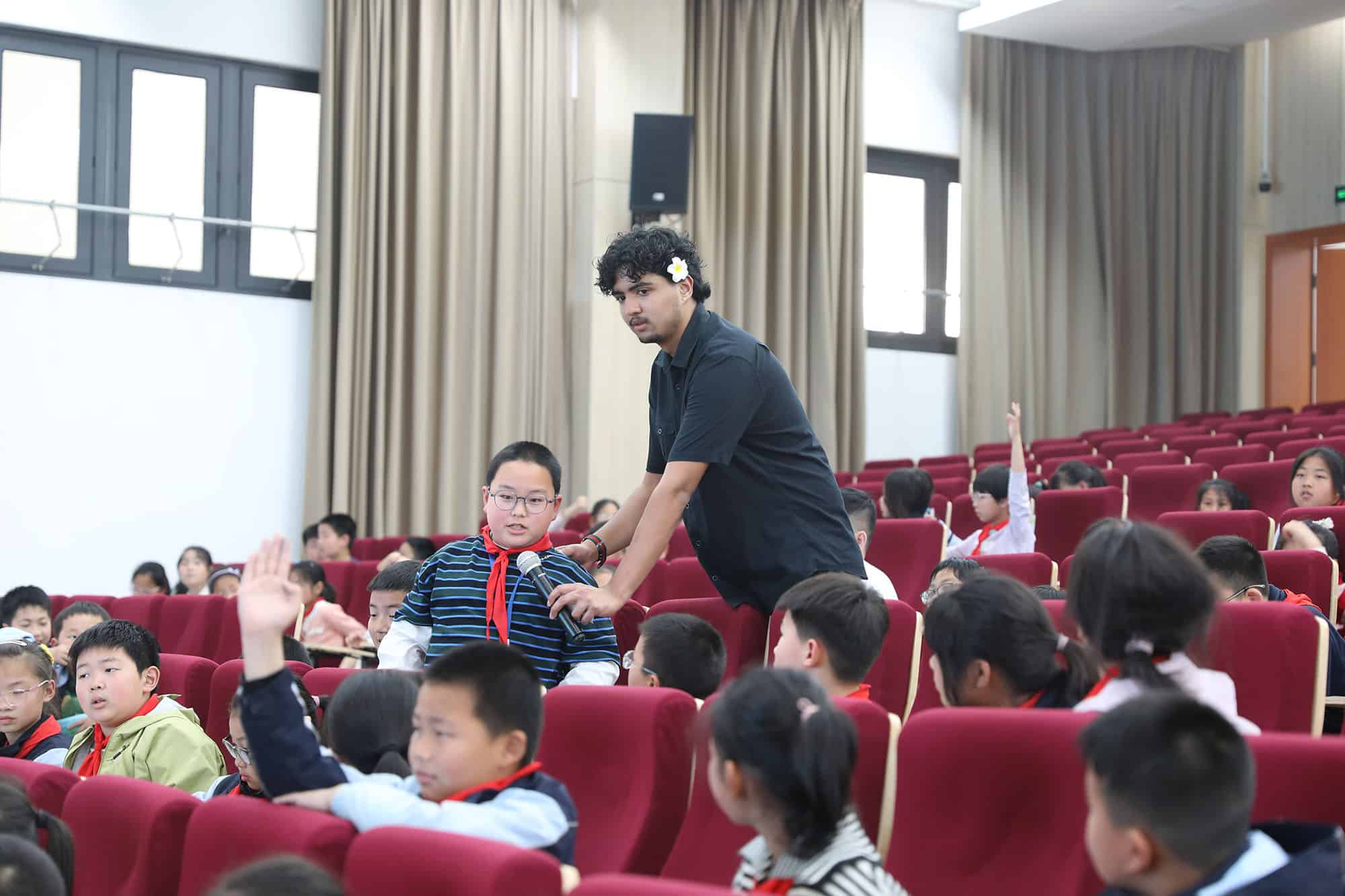
Ojas Paudyal
Paudyal, who had worked as a tutor in the United States, said the program gave him a chance to teach children again and interact with people beyond the DKU community.
He called joining “one of the best decisions I’ve ever made.”
At the end of one class, Paudyal signed his name for two children. More students noticed, and a crowd quickly formed around him, notebooks in hand.
Milana Sleptsova, a member of the Class of 2029 from Russia, joined partly to practice Chinese and partly because of her interest in behavioral science.
“They were really open to new information, and I also learned a few things about sustainability,” she said.
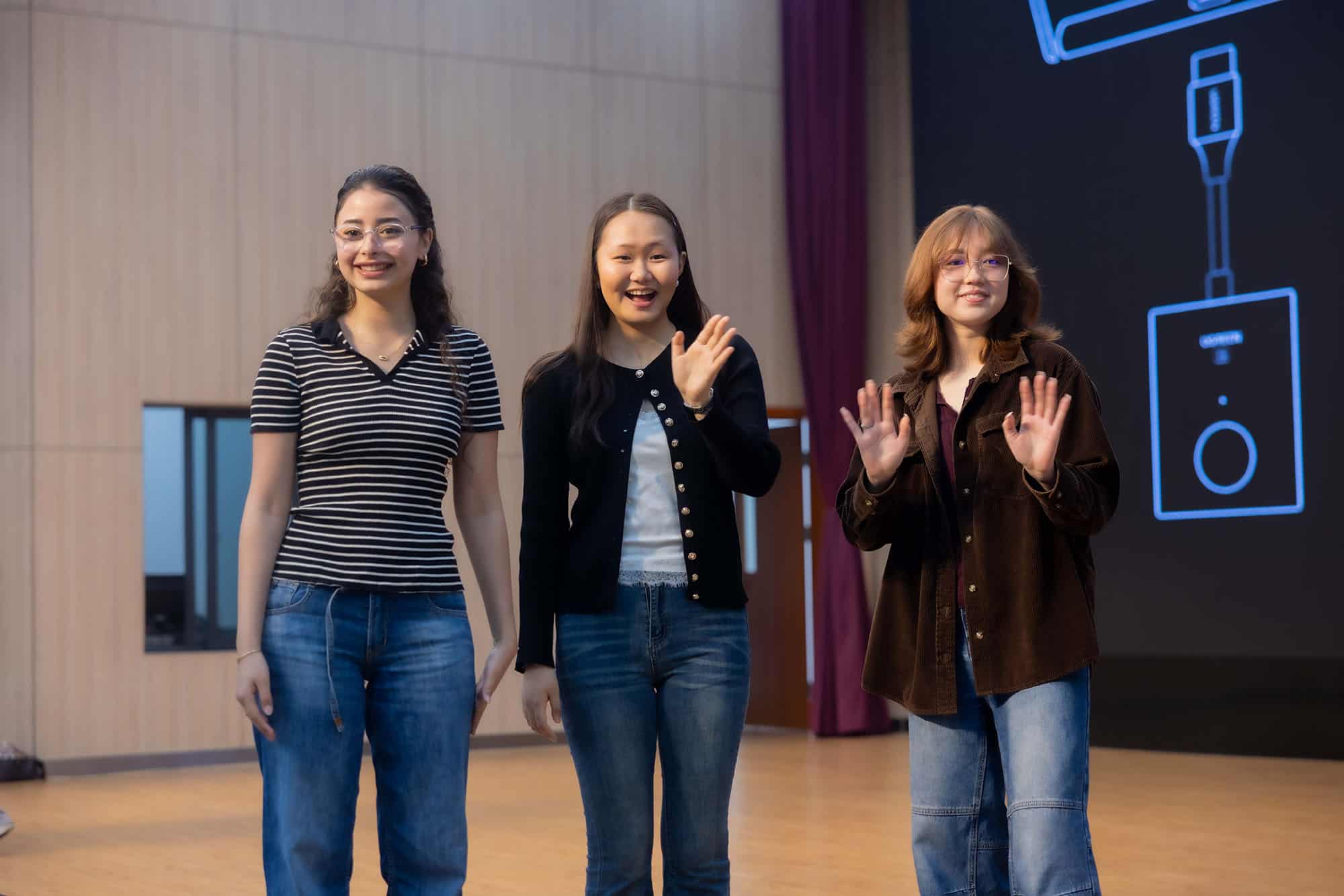
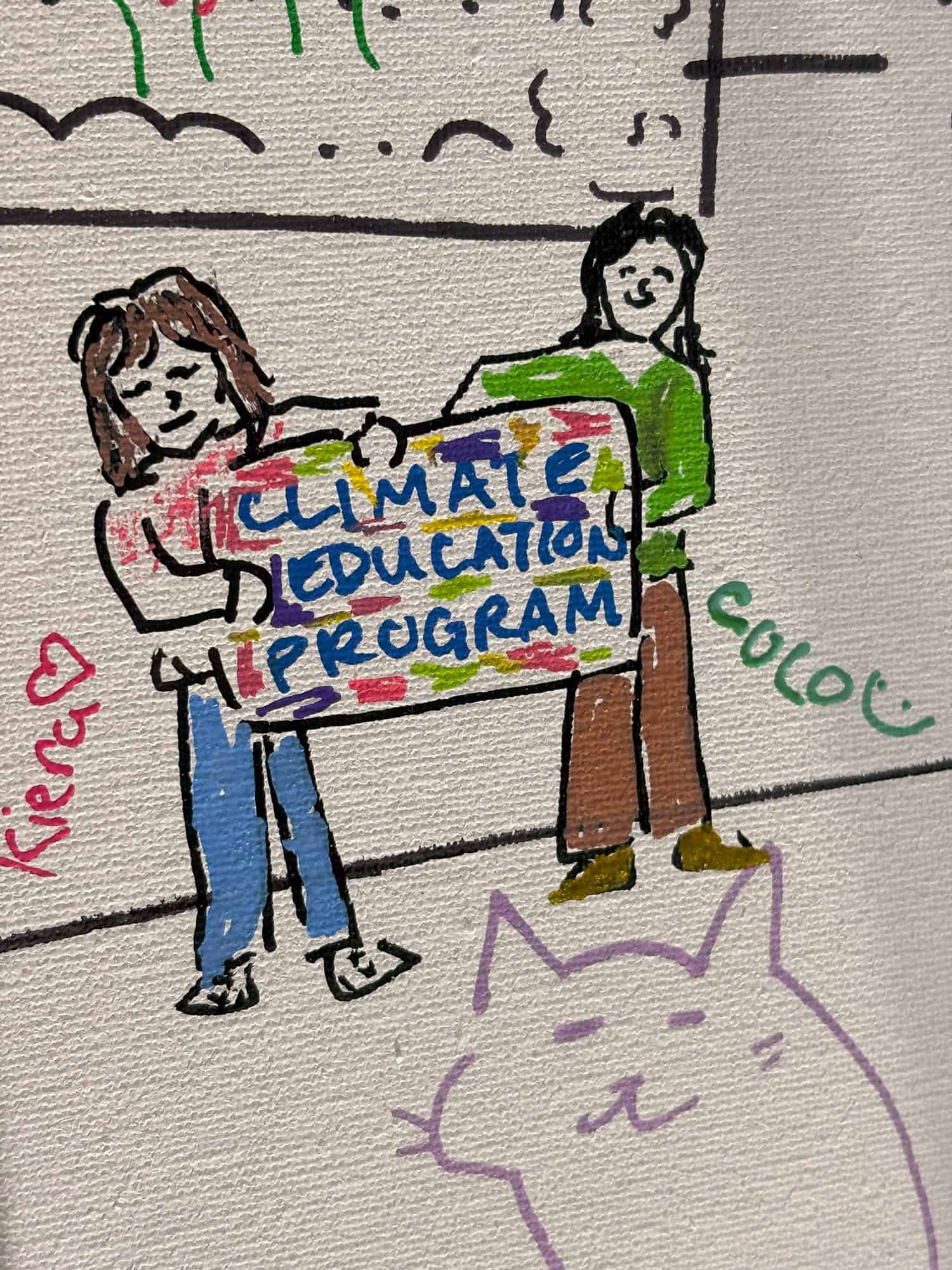
May Zermouni (left), Milana Sleptsova (center), and Kiera Mc Manus (right)
Song, who was the only Chinese student on the team at the start of the program, often helped translate and explain local classroom habits to the international volunteers. She said she frequently switched between English and Chinese as the lessons unfolded.
Speaking Chinese in a crowded primary school classroom was different from practicing it in a language course. The international volunteers had to simplify their words, repeat unfamiliar terms and rely on gestures, images and Chinese-speaking teammates.
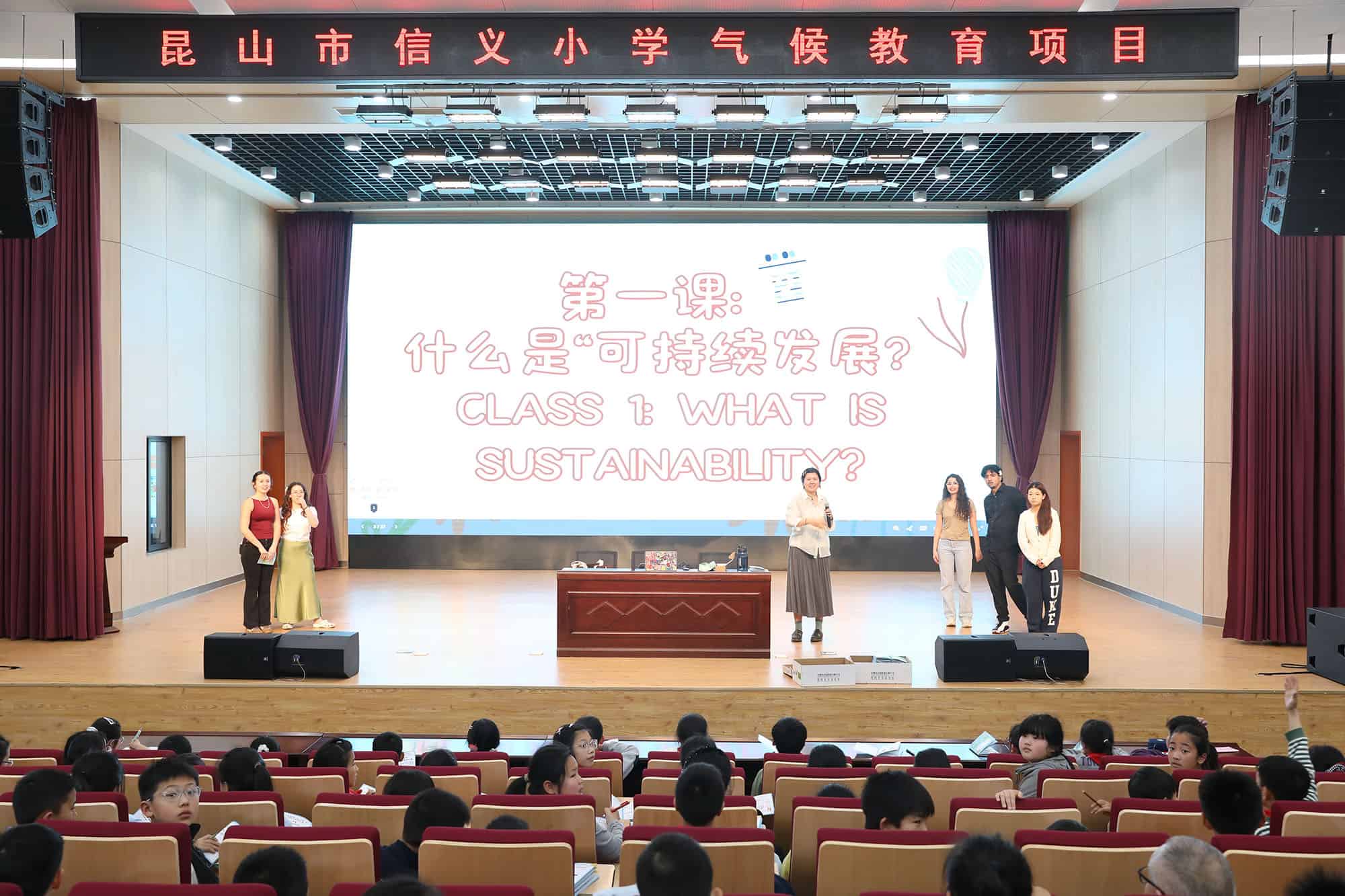
They also learned from the children. Some became more familiar with Chinese household conservation habits, while others learned hands-on skills such as making plastic yarn and using different approaches to composting.
Building something that can last
As the final lesson ended, children approached the volunteers one by one to say goodbye and ask whether they would return.
The program’s next phase has not yet been finalized. Zhang hopes to recruit more volunteers and pair Chinese and international students so they can teach in smaller classrooms rather than addressing hundreds of children in an auditorium.
Doing so would require a larger team, more preparation and further coordination with the school.
Yang would also like future lessons to follow the school’s agricultural calendar more closely, with different modules during planting, flowering and harvest seasons. He hopes the program can eventually provide age-appropriate teaching materials and resources that Xinyi teachers can continue using between visits from DKU volunteers.
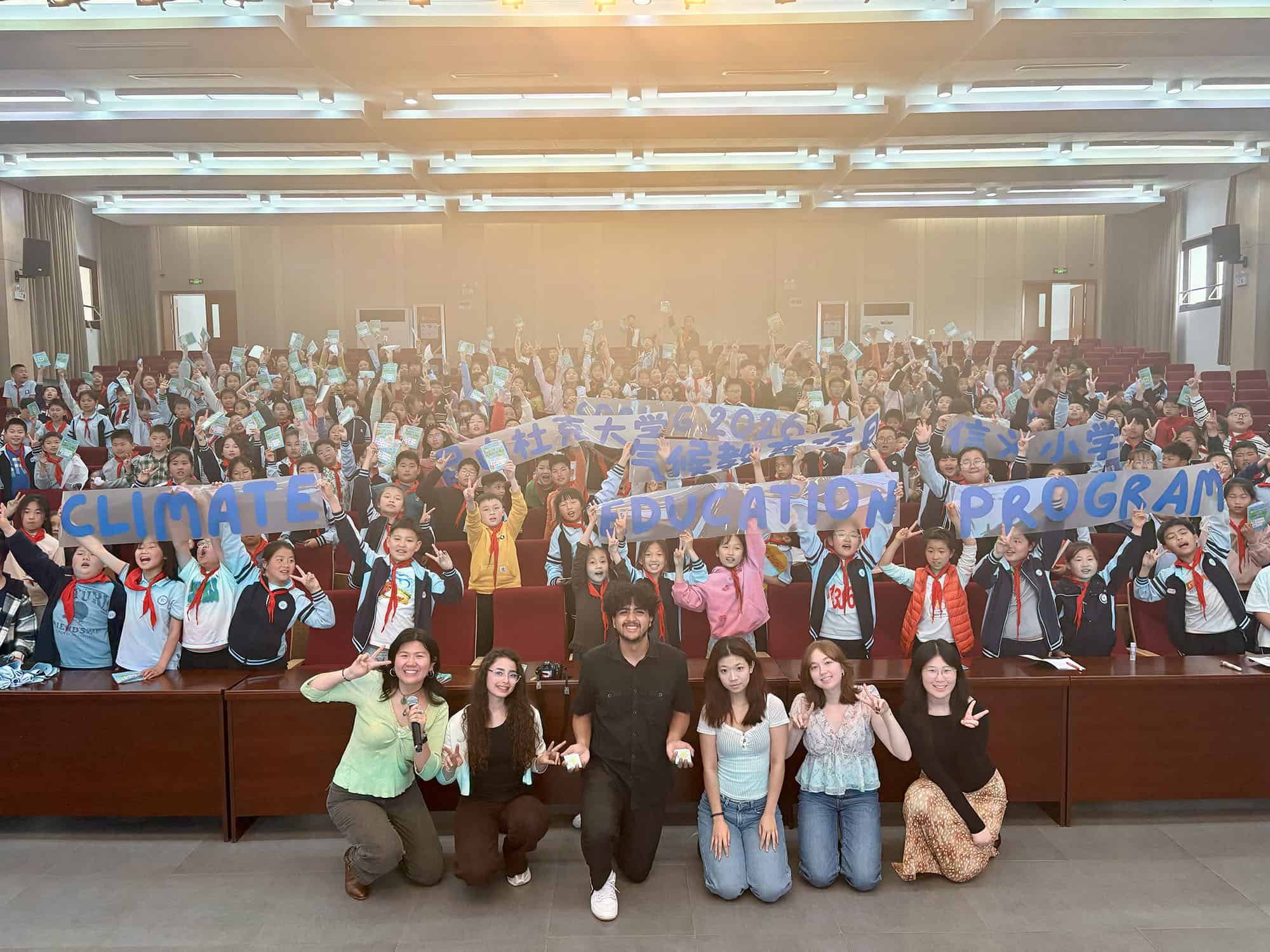
Zhou said she hoped the project would inspire more students to apply what they learned in class to issues they cared about and to real needs in the local community.
For Zhang, the program was also about how DKU students understood the city they called home.
She said she hoped it would foster greater empathy for Kunshan, “not just as a place next to Shanghai, but as a real community that DKU students have a stake in.”