
This story is part of a series featuring members of DKU’s Class of 2026 as they look back on their time at the university and ahead to what comes next.
Two days after arriving at Duke Kunshan University, Noah Caplan tried to get to Shanghai for dinner.
He left campus four hours early.
He arrived 10 minutes late.
“I ended up going to the slow train station,” he said. “I had no idea why anyone would take that. I feel like the only acceptable thing to take in China is the high-speed rail.”
It was a small disaster, the kind many international students know well: a new country, unfamiliar transportation, digital payment systems that did not yet make sense to him, and a simple trip that somehow turned into a four-hour lesson in humility.
After graduating from DKU in May, Noah is looking ahead to New York, where he will begin a master’s program in international affairs at Columbia University.
Now, he could make the trip to Shanghai in about an hour. The distance had not changed. He had.
For Noah, a political economy major from the United States, DKU was never just a place to earn a degree. It was a leap: a chance to live in China, study Mandarin, build friendships across cultures and test the kind of person he wanted to become.
“I wanted to make friends that were from other countries,” he said. “I felt that the experience of being able to go to an undergraduate program with people from all over the world, most of whom are living in a new country, was going to be excellent.”
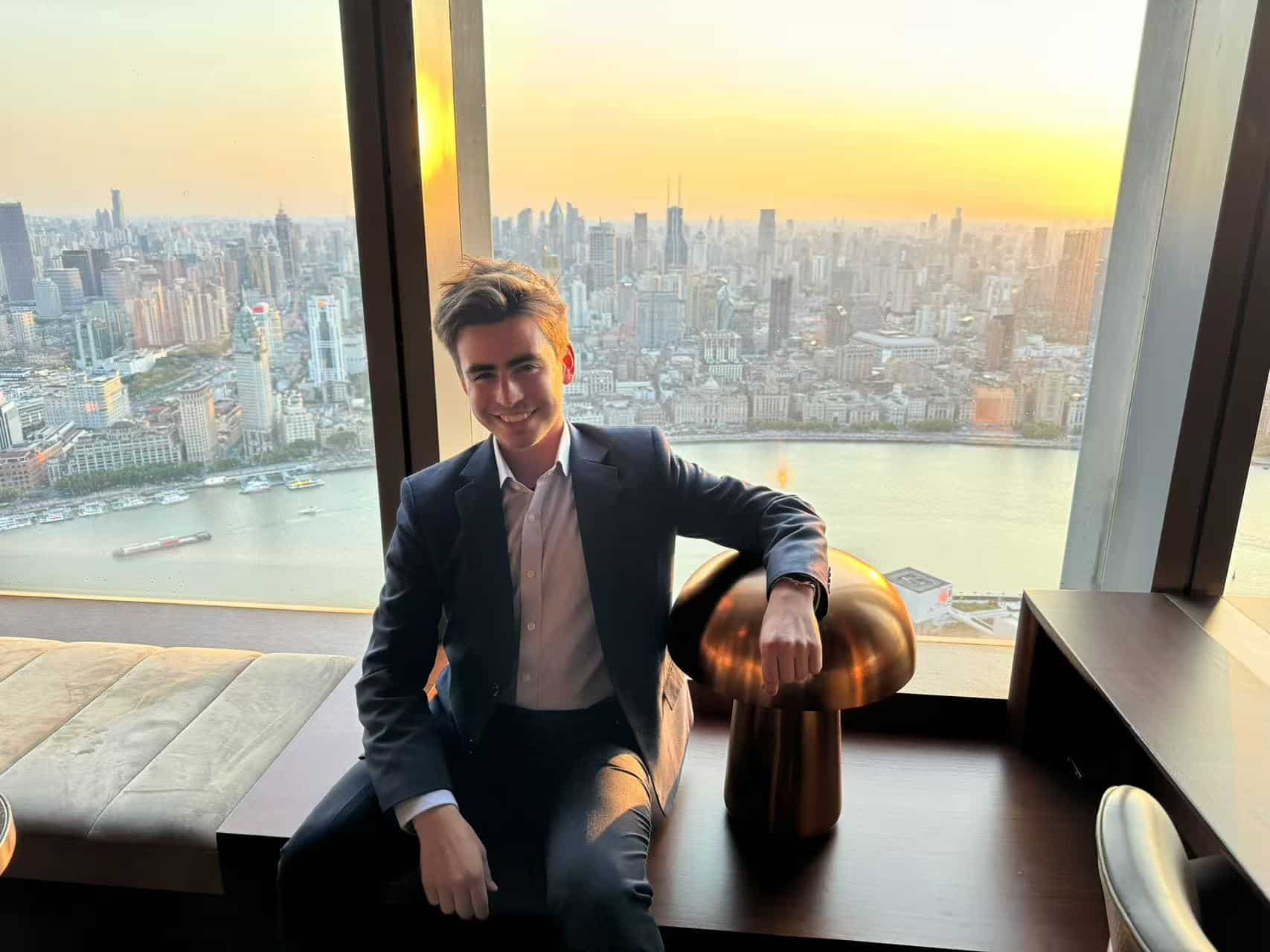
Finding home in Kunshan
Noah was born in Santa Clara, California, and grew up in Atlanta, Georgia, a city he remembers for its warmth, hospitality and food. He talks about Atlanta with affection: late-night Korean barbecue after high school assignments, African American soul food, Mexican restaurants and the easy friendliness of the American South.
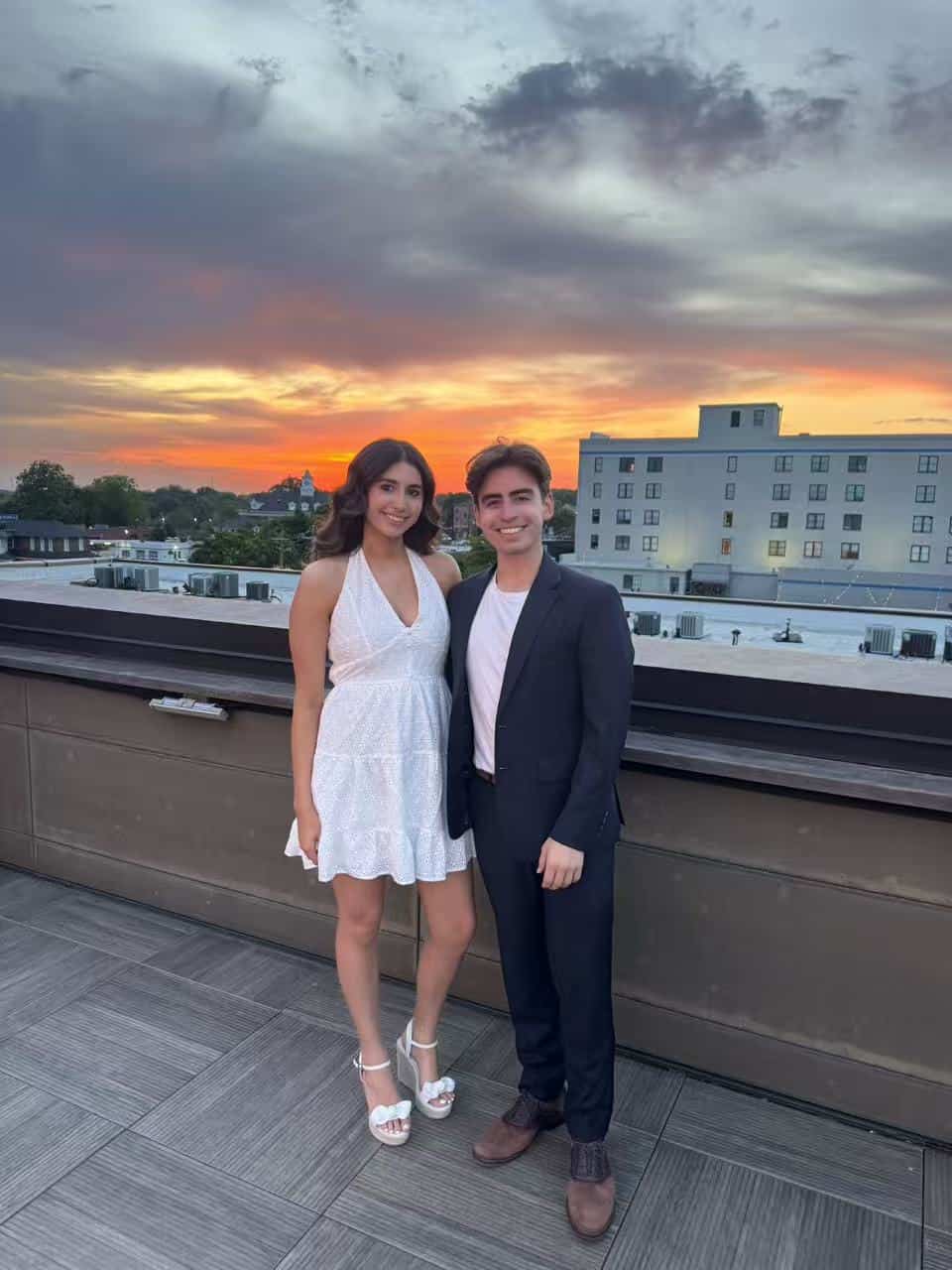
Noah with his sister in Georgia.
But China had been on his mind for years.
He had visited China before, including a trip to Beijing as a child, and saw DKU as a chance to experience the country more deeply. He was also drawn to the chance to live near Shanghai, a city whose mix of architecture, history and cultures had long fascinated him.
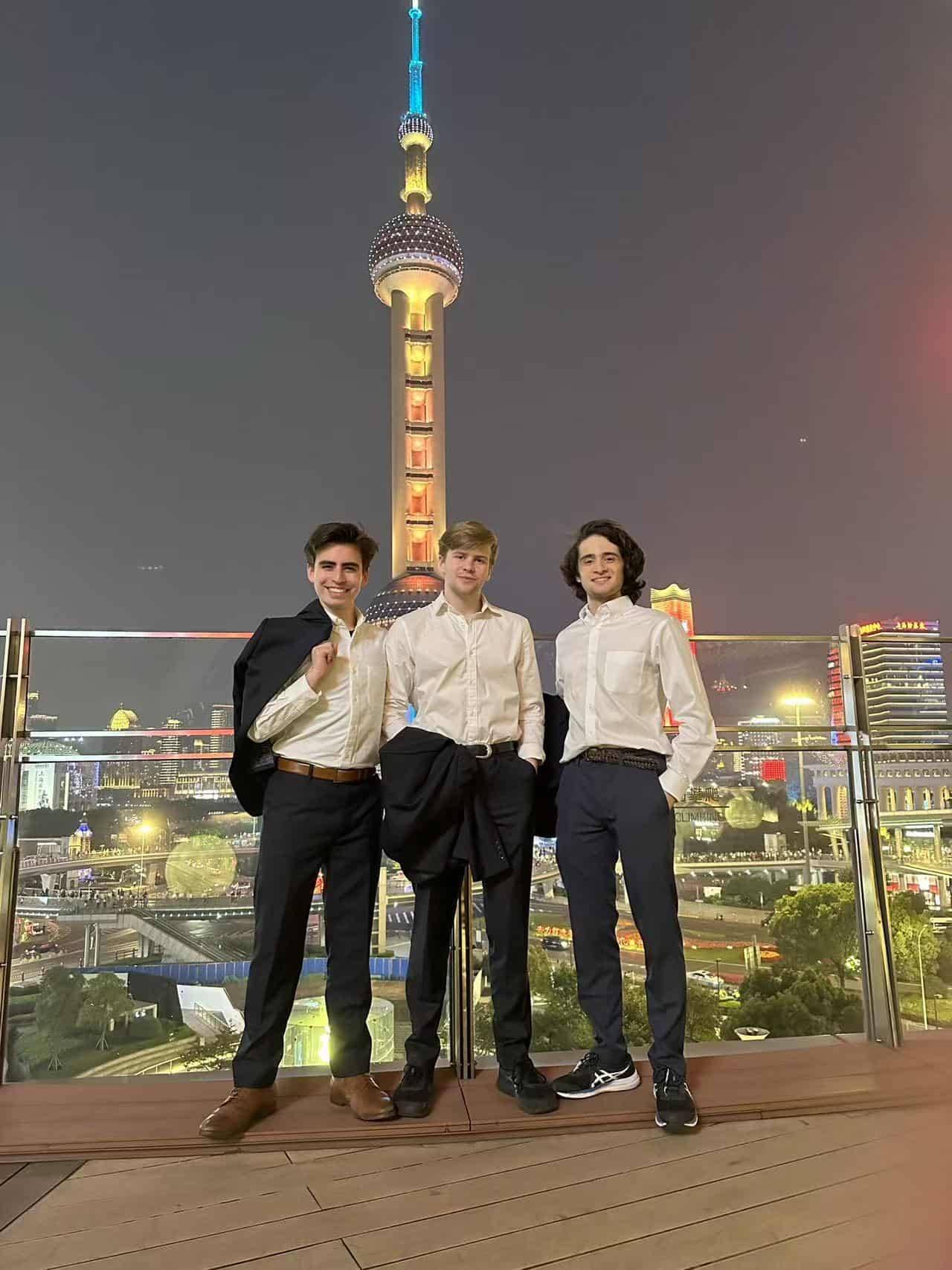
Noah, left, with DKU friends in Shanghai.
When Noah arrived at DKU after pandemic-related delays, the campus itself felt almost unreal. His class had spent months seeing images of the campus while studying remotely and abroad.
“I’m thinking, this is just generated by AI,” he said. “I’m going to show up and it’s not going to be real.”
Then he arrived.
“This is a pleasant surprise,” he remembered thinking. “I’m glad to know that it does, in fact, exist.”
Some adjustments were less romantic. The biggest challenge, he said, was not culture shock in the abstract, but something much more ordinary: payments. By the time he arrived, much of daily life in China ran through digital payment platforms, and getting WeChat Pay and Alipay set up was frustrating at first.
But once he figured it out, he began to see the convenience of daily life in China. Taxis were affordable. Cities felt walkable. Streets felt safe. The systems that once confused him became part of the rhythm of his life.
So did the places around campus.
There was the street about three kilometers from DKU where he got his dry cleaning done, ate noodles, took friends to dinner and talked about life, politics and relationships. There were dinners at Dayu Bay, a lakeside commercial street near campus whose European-style storefronts, coffee shops and restaurants have made it a familiar gathering place for DKU students. There were runs along the roads north of campus, where industrial stretches could suddenly give way to quiet parks.
“I need like 30 minutes by myself, just meditating when I run,” he said. “It’s very industrial, but in a weird way, it’s almost peaceful.”
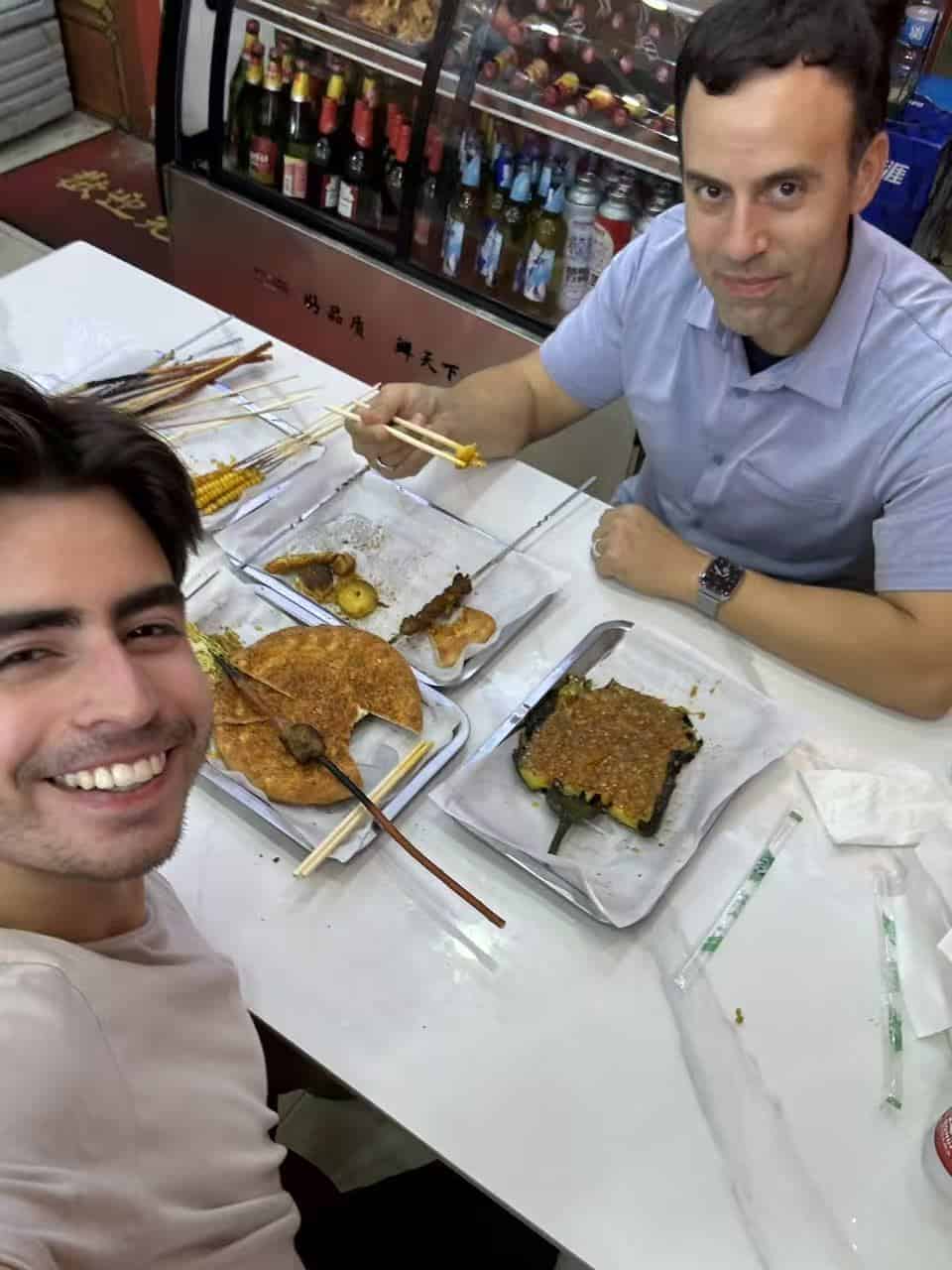
Noah with his father at a barbecue restaurant in Kunshan.
Learning the systems behind the headlines
Academically, Noah came to DKU to understand China, and he found himself drawn to courses that asked large, difficult questions. Environmental economics pushed him to think about food, health and sustainability. International development introduced him to the power of small interventions, such as how a modest loan for a bicycle could change someone’s ability to work, earn and support a family. A course on China’s economic development helped him understand reform, opening-up and the systems behind China’s rise.
“I came to DKU to better understand China,” he said. “That course helped me do it.”
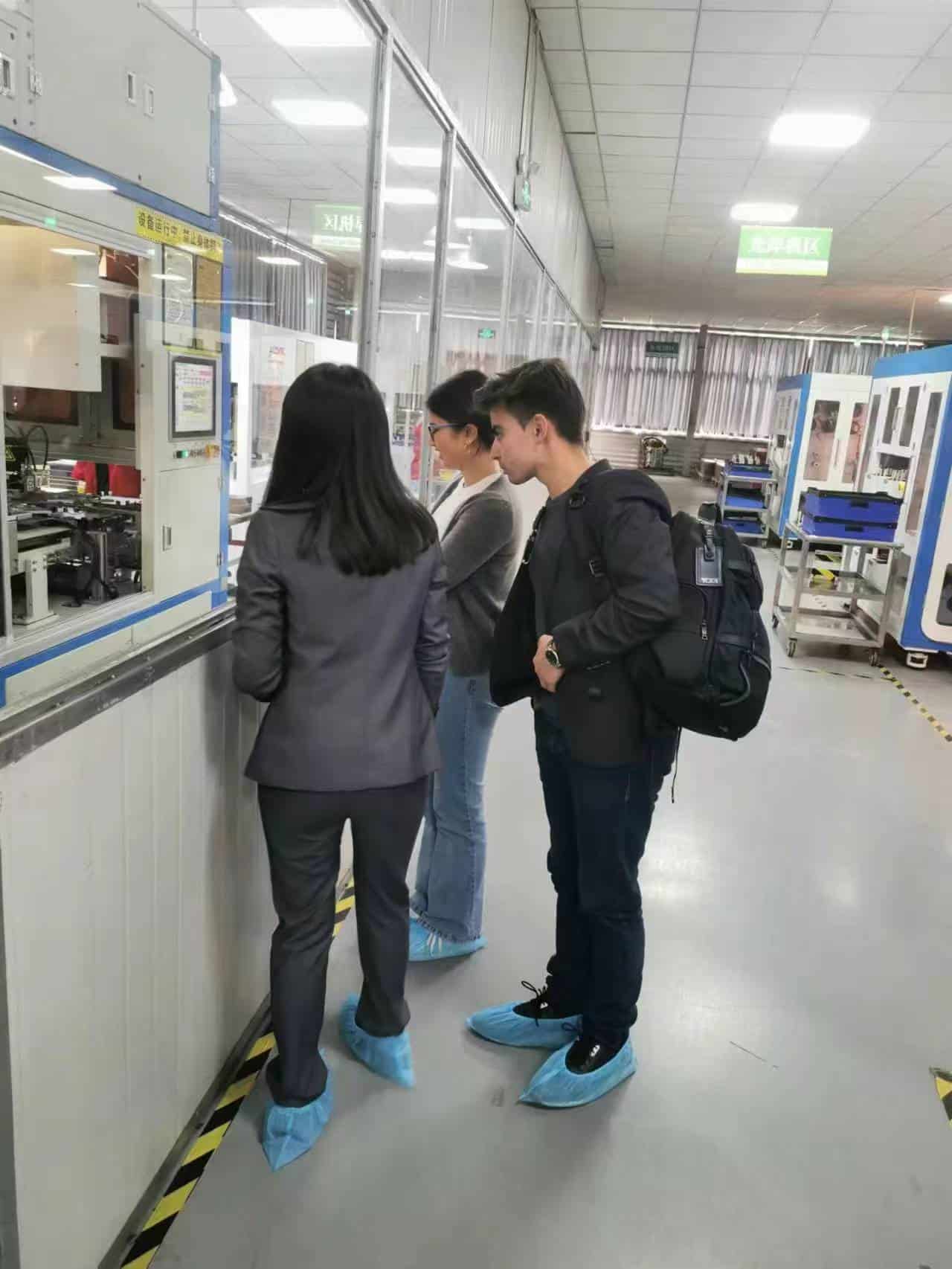
Noah during a visit to a solar panel factory in Linhai.
His most meaningful academic project was his senior thesis on U.S.-China trade and export controls in the semiconductor sector. The topic was not purely academic. His father works in semiconductors, and Noah sees the industry as central to the future of computing, artificial intelligence and global power.
The project also sharpened his view that U.S.-China relations require more careful understanding.
“People should be thinking about it, because it’s the most important bilateral relationship on earth,” he said.
Living in China, he said, gave him more clarity. It also changed the way he thinks about ambition. He was struck by the scale of China’s development over the past several decades and by what he sees as the country’s ability to build, adapt and think long term.
“If China could do that, then what’s this one project I have?” he said. “It breaks the mental barriers of what you think is impossible.”
TEDxDKU
One place he put that belief into practice was TEDxDKU.
What drew him in was the chance to help bring TEDxDKU back after the pandemic, and to do it with people he cared about.
Asked why he wanted to organize it, he answered simply: “Because it had to be done.”
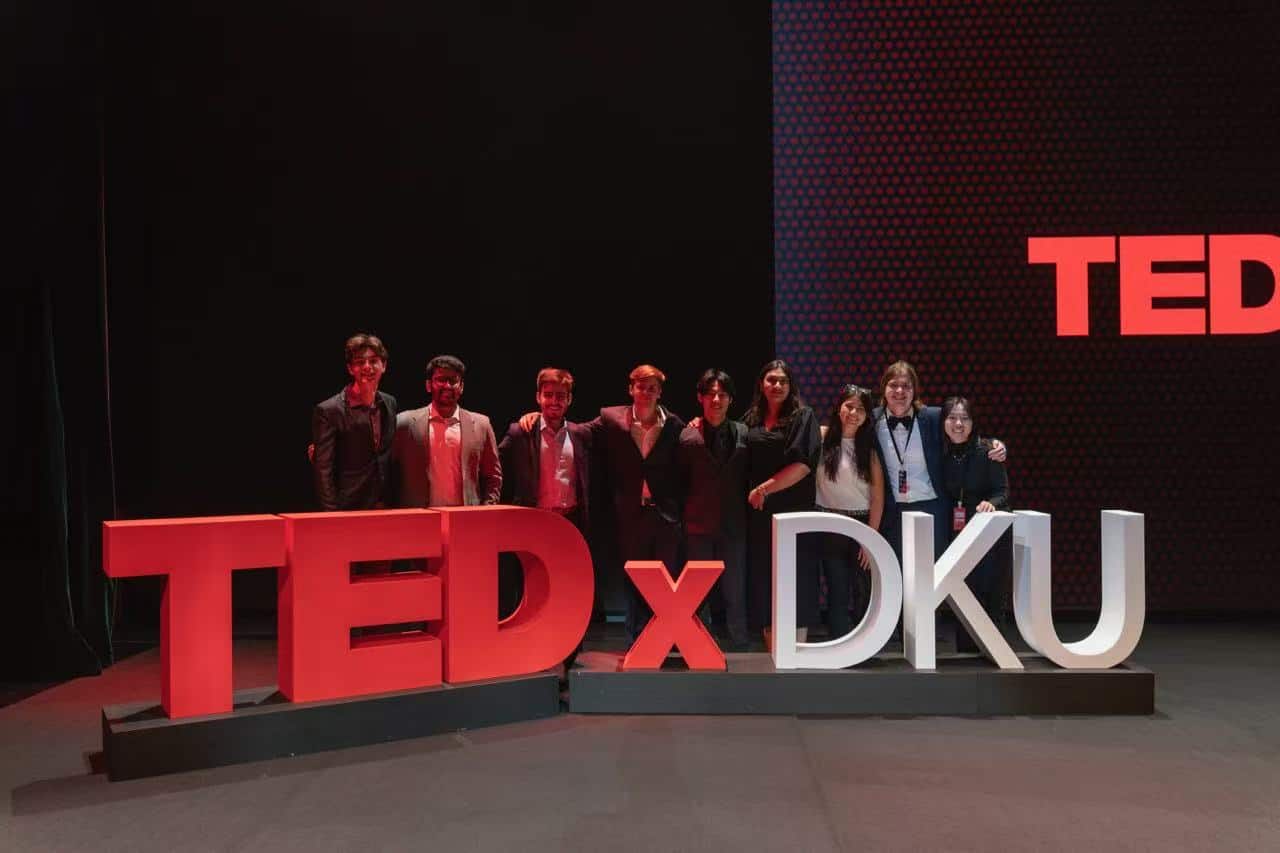
Noah with the TEDxDKU team.
TEDxDKU became the defining project of his undergraduate years. Noah had organized events before, including a large theater conference as a high school student in Georgia. But TEDx was different. It required learning the TED system, building teams, working with speakers, managing logistics and leading peers who were already balancing demanding academic lives.
“It almost never felt like work,” he said.
For Noah, TEDxDKU offered something he felt was increasingly rare: the chance to create something tangible with other people. He described the experience as deeply satisfying, not because of the brand, but because it allowed students to build something together and help students and faculty turn complex ideas into talks that could reach a wider audience.
“I love TED’s mission of platforming ideas worth spreading and incrementally making the world a better place,” he said.
Some of his favorite memories came during rehearsal week, when he sat in DKU Theater for hours working with speakers one-on-one. Public speaking coaching, he said, is something he loves. He remembers helping speakers refine talks on longevity, neuroscience, botany and the hidden beauty of plant life in the desert.
“It was great to just sit back and think about the bigger picture,” he said.
The conference also taught him how to lead without relying on authority. Because TEDx depended on volunteers balancing classes and other commitments, Noah learned that people could not simply be told what to do.
“I’m not a fan of micromanaging,” he said. “I’m a fan of micro reminders.”
His role, he said, was less about directing every detail than making sure people felt supported and understood why the work mattered.
“You need to really remind them of why this is important,” he said, “and ask them, what are the resources I can give you to help you succeed?”
There were technical glitches. There were stressful moments. There were problems that had to be solved in real time. Noah learned to stay calm, sort problems by urgency and keep moving.
“You just have to remain calm and tell yourself to look at it objectively,” he said.
By graduation, TEDxDKU had become the project Noah said he was proudest of from his four years at DKU.
Curiosity as a way forward
TEDx was only one part of a broader education. Noah said DKU made him calmer, more open and more willing to let go of the need to prove himself in every room.
At a place like DKU, he said, many students arrive having been the best in their high schools or hometowns. Then they find themselves surrounded by people who are equally talented, equally driven and often very different from them. That can be uncomfortable. It can also be freeing.
“You will never be the most intelligent person in the room,” he said.
What matters instead, he said, is building an identity around curiosity and work.
“You can always carry yourself with immense curiosity and with this immense drive to continue learning more,” he said. “And if you do that, then you automatically fit in in any setting with any group of people on earth.”
That curiosity shaped his friendships as much as his studies. Noah said the relationships he built at DKU are among the most meaningful parts of his college life. He learned to pay attention to cultural differences not as barriers, but as details: when to hug, when to reach for the check, how to make someone comfortable, how to listen when people see the world differently.
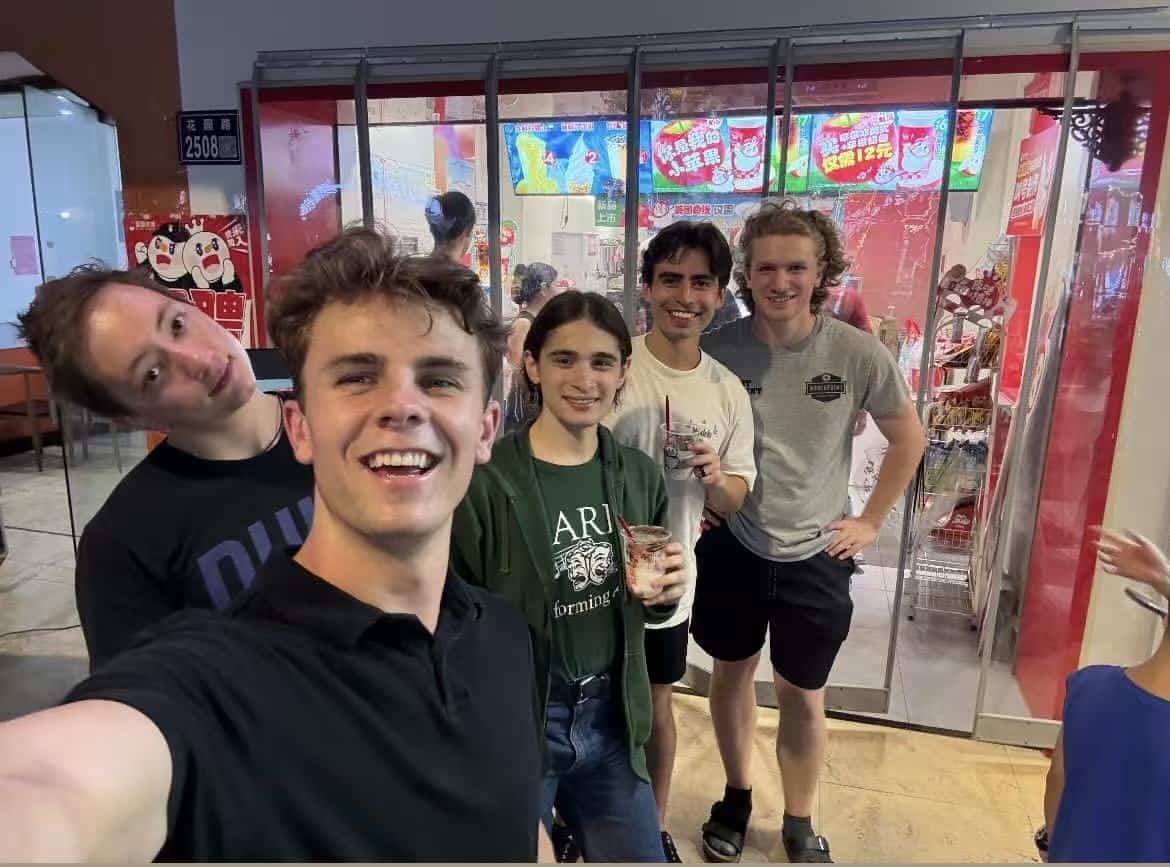
“For the most part, you just become friends with people you like,” he said. “And then you work with the little differences as you go along.”
In the days before commencement, Noah said his strongest feeling was excitement. He knew he would miss DKU, but he did not see leaving as a clean break. His friends are already spread across the world, and he believes many of those relationships will continue.
He is also looking ahead to Columbia, where he will study international affairs and continue Mandarin. The language, he said, remains unfinished business. He wishes he had built stronger foundations earlier, but now sees it as part of the work he still wants to do.
His advice to future international students is direct: decide whether Mandarin fluency matters to you. If it does, do not rely only on class.
“Start immersing yourself in it as early as possible,” he said. “Start watching movies you like that are too advanced for you in Mandarin. Start talking to people, even if it sucks. It’s about hours.”
He would also tell students to find ways to stay grounded: walking, journaling, meditation, routines that protect them from the pressure and uncertainty of college life.
“It’s very easy to do maintenance,” he said. “It’s very difficult to fix yourself when you get really stressed.”
When asked what he hopes people understand from his DKU experience, Noah did not point to prestige, grades or even career preparation. He talked about risk.
“I hope that they do things that they are afraid to do and to take risks,” he said.
Not reckless risks, he added, but calculated ones: moving to a new country, talking to someone unexpected, pursuing an opportunity that feels intimidating but meaningful.
“What do you have to lose?” he said. “And the answer is often you have everything to gain.”
If he had to summarize his DKU life in one sentence, Noah’s answer was simple:
“Seeking different experiences.”
By Chen Chen