
This story is part of a series featuring members of Duke Kunshan University’s Class of 2026 as they look back on their time at the university and ahead to what comes next.
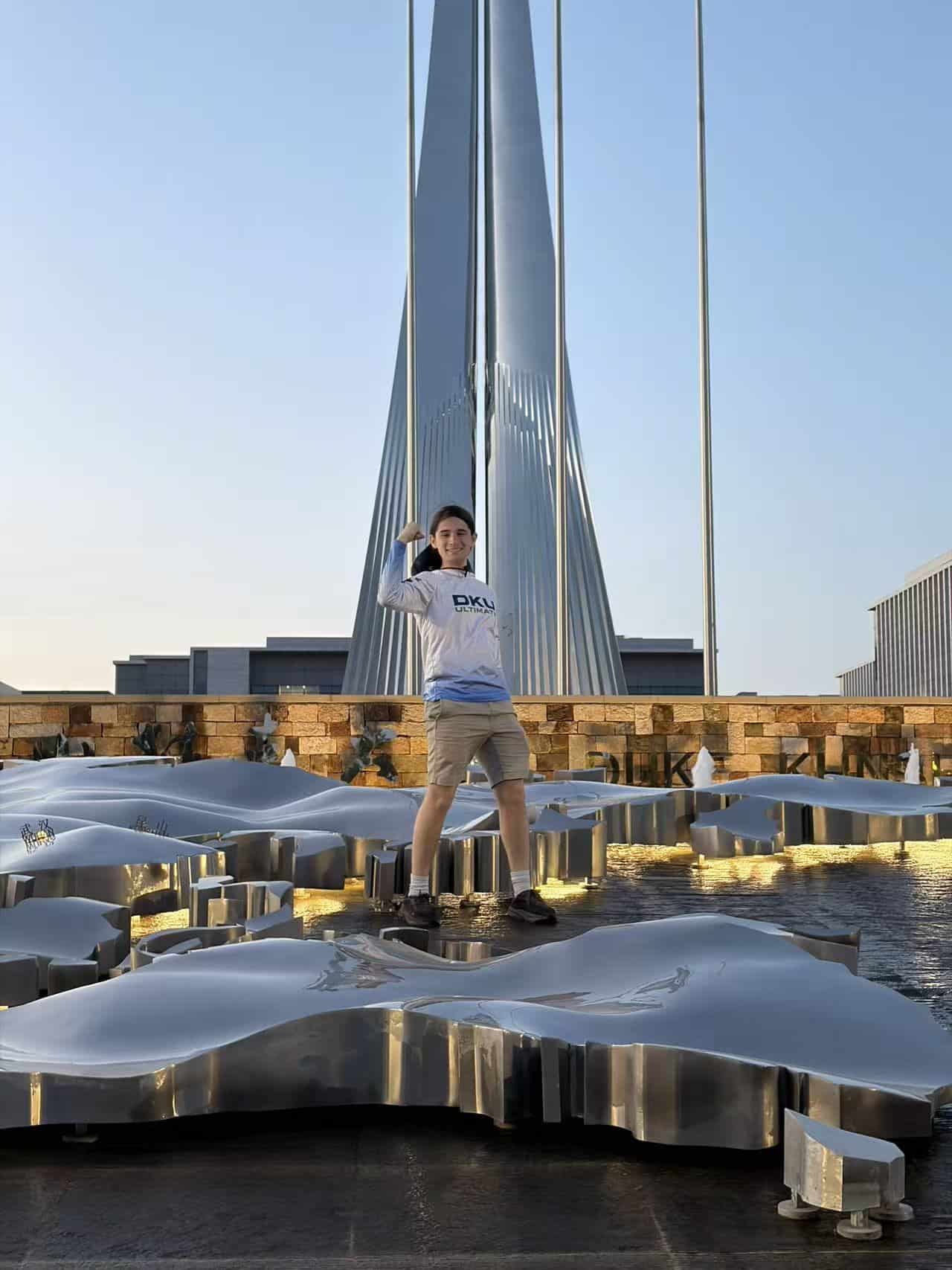
Krishna Thiagarajan at Duke Kunshan University
The first time Krishna Thiagarajan tried to handle a simple errand on his own in Kunshan, the Chinese city where DKU is located, he went looking for a SIM card.
It should have been simple. It took six hours.
New to China, still struggling with the language and unsure how daily systems worked, he walked from place to place, stopping strangers and trying to explain what he needed.
“SIM card store,” he would say, hoping someone understood.
Some people did not. Others pointed him in a direction. He followed, got lost, asked again and kept walking.
By the time he had the SIM card, he understood, in a very practical way, how much he still had to learn about living in China.
For much of his early time in China, daily life required a kind of constant translation. Krishna did not yet know how to use Taobao, a major Chinese shopping app. Paying, traveling, buying things, asking for help, even the small mechanics of ordinary life, felt unfamiliar.
“I just didn’t have the Chinese integration,” he said.

Krishna, a member of DKU’s Class of 2026, had crossed borders before. With Indian and American family roots, he grew up between India and the United States, moved to Washington, D.C., around age 10, and later returned to India for part of high school at a boarding school.
But China was different.
The challenge was not only language. It was the feeling of being dropped into a society where so much had to be learned from scratch.
Choosing China
When Krishna was applying to college, he did not want to stay only in the United States. His childhood had given him, as he put it, “eyes on multiple cultures, eyes on multiple worlds.” College seemed like a chance to add another.
He applied mostly to programs outside the U.S., including in the Middle East and China. DKU stood out because it was connected to Duke University and located in a country he felt he needed to understand.
Before he made the decision, Krishna and his father wrote a pros-and-cons list on the refrigerator. On one side was the Middle East. On the other was China. The question that settled it was not only where he would spend the next four years. It was what he would carry with him for the rest of his life.
“College is four years, but after that, I’m going to take something with me for a lifetime,” Krishna said. “If I am a child of the 21st century, I have to understand that the 21st century is going to be, at least in large part, dominated by China.”
He had fears about China. He came anyway.
“I said, hell with any fears or qualms,” he said. “Let’s get in there. Let’s try this out. Let’s see what’s there.”
Some of those fears came from the people around him. Krishna said relatives warned him not to speak too openly and worried that he might get into trouble. He himself arrived with images shaped by years of distant assumptions.
A different starting point
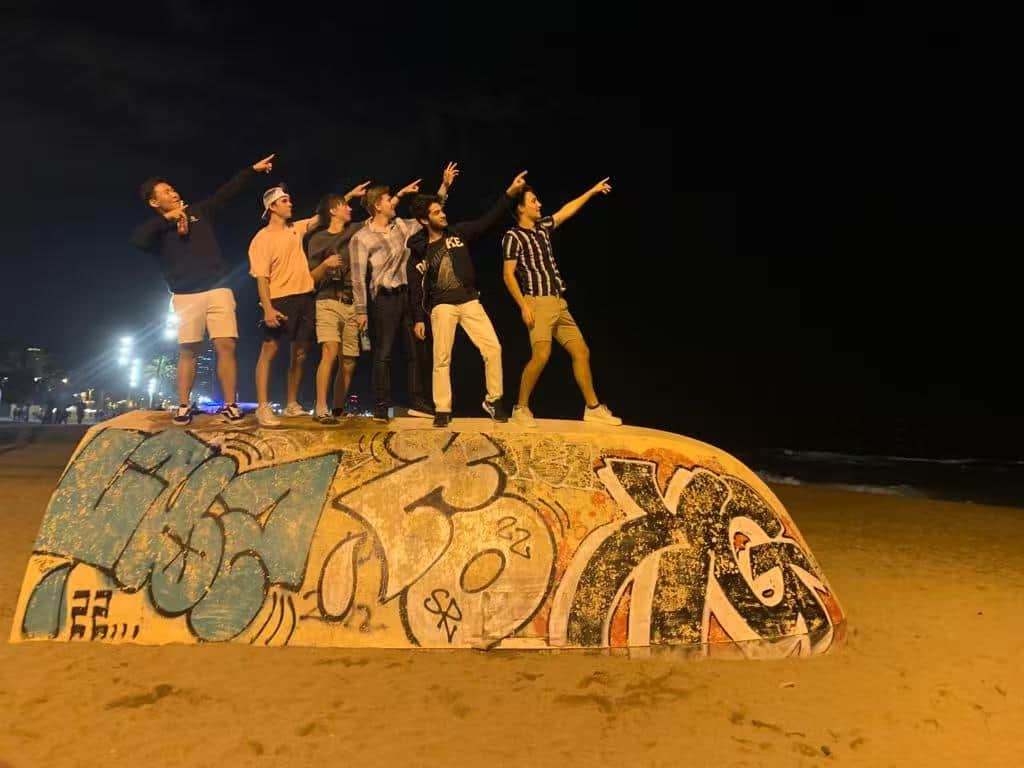
Krishna (second from right) with friends in Barcelona during DKU’s first semester
One of the first moments that stayed with Krishna happened in a dorm room.
In his first semester at Duke Kunshan University, he had a Chinese roommate from Xiamen, who ended up being one of his close friends. One day, Krishna remembered saying that he struggled to understand why China did not have the kind of political system he was used to in the U.S.
His roommate pushed back.
“What? No,” Krishna recalled him saying. “That would be terrible.”
His roommate explained that, from his view, such a change could disrupt social stability and create chaos. For Krishna, the shock was not simply that his roommate disagreed with him. The shock was that they were starting from different ideas of what a good society should protect.
Krishna had grown up in a culture where open expression and the right to challenge authority were treated as obvious goods, often more important than order or harmony. His roommate did not begin from the same hierarchy of values. To him, stability mattered in a way Krishna had not fully understood.
“My preconceptions of what was normally good were not universal,” Krishna said.
The conversation did not make Krishna abandon his own beliefs. It made him less certain that his beliefs were the only possible starting point.
“I still have my opinions about the society I would want to live in,” he said. “But I think I’ve developed a much deeper respect for the fact that others might genuinely want to live in a different sort of world.”
The lesson followed him beyond the dorm room. Again and again, Krishna found that people’s lives were more complicated than the stories told about them from far away.
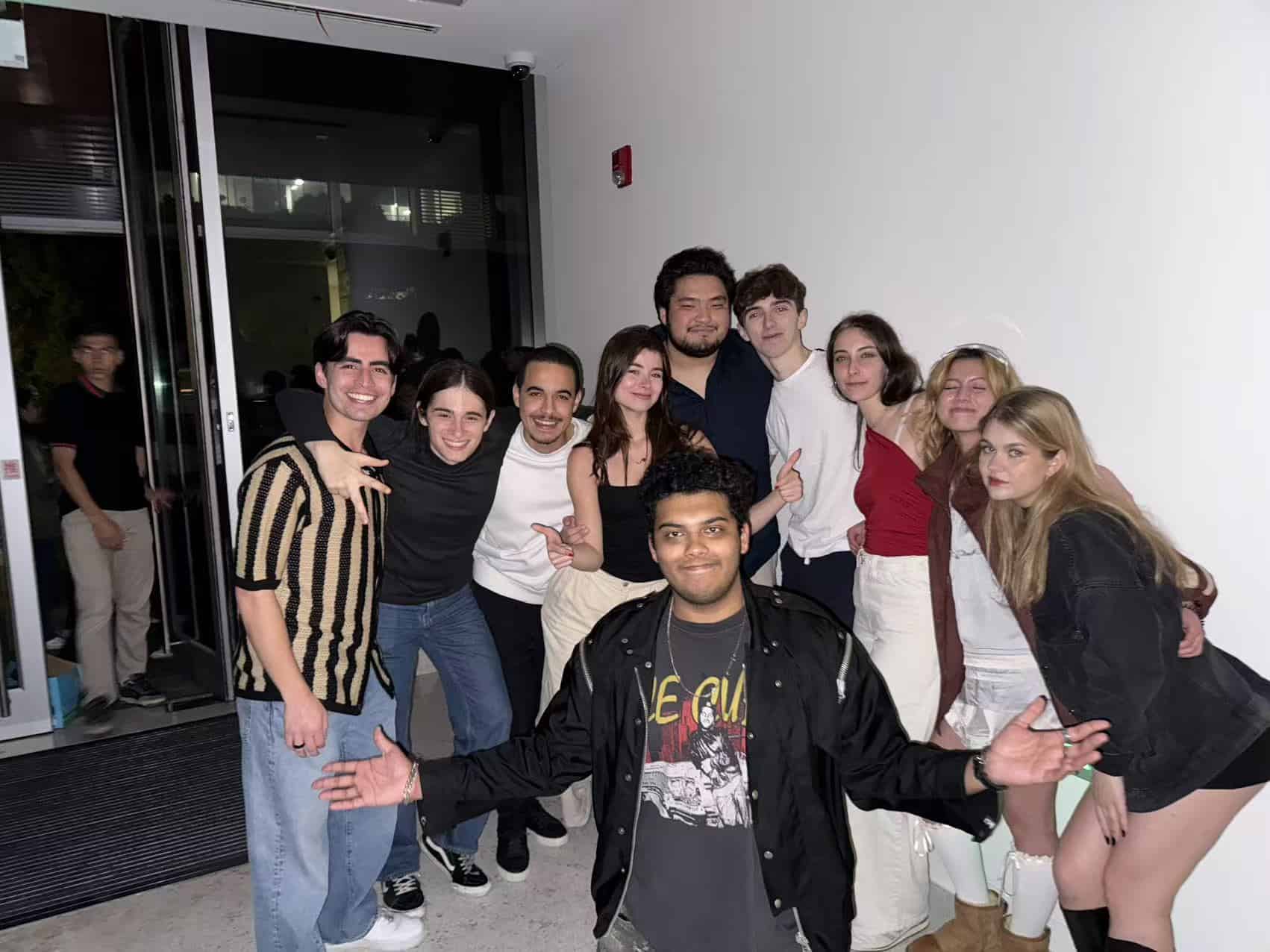
Krishna (second from left) with friends
Lessons outside the classroom
One of the clearest examples was the gaokao, China’s high-stakes national college entrance exam.
From a study room near his dorm, Krishna could see cars filling the intersection north of campus late at night. He eventually asked his roommate why so many cars arrived around 9:30 p.m. His roommate told him they were parents picking up high school students who had been studying late for the gaokao.
Later, Krishna noticed a timer on his roommate’s computer. It counted upward, day after day. Krishna asked what it was counting from.
His roommate told him he had set the timer 100 days before the gaokao, knowing the exam would be painful. After it ended, he left the timer running.
“He said, when he finished the gaokao, he left the timer up and it started to tick upwards instead of down, even though the gaokao had finished, because he never wanted to forget that experience,” Krishna said.
For Krishna, details like that gave him a more personal understanding of the pressure many Chinese students had experienced before DKU. His classmates were not simply hardworking students in a demanding academic culture. They were young people carrying histories he had never lived through.
“If I stayed in the U.S., I never would have understood that people lived such different lives,” he said. “Or the lives I would have understood for them would have been much flatter and less sophisticated than the real ones I have observed.”
Some lessons came from farther away.
In Sichuan, a province in southwestern China, while hiking with a friend, Krishna hitchhiked a man whose work took him through mountain villages to vaccinate piglets and deliver feed. The man let them join him for the day. They visited farms, watched piglets brought out in buckets, shared dinner with his friends and were invited to stay at his apartment.
In Shanghai taxis, Krishna talked with drivers who had left their home provinces for better pay, while their spouses and children remained elsewhere. In restaurants, study rooms and chance conversations, he met people who spoke with the openness of temporary fellow travelers, people he might never see again, but whose lives made the country less abstract.
“When I say outside-of-the-classroom education, I am talking about a lot of that,” he said.
Asking why people believe what they believe
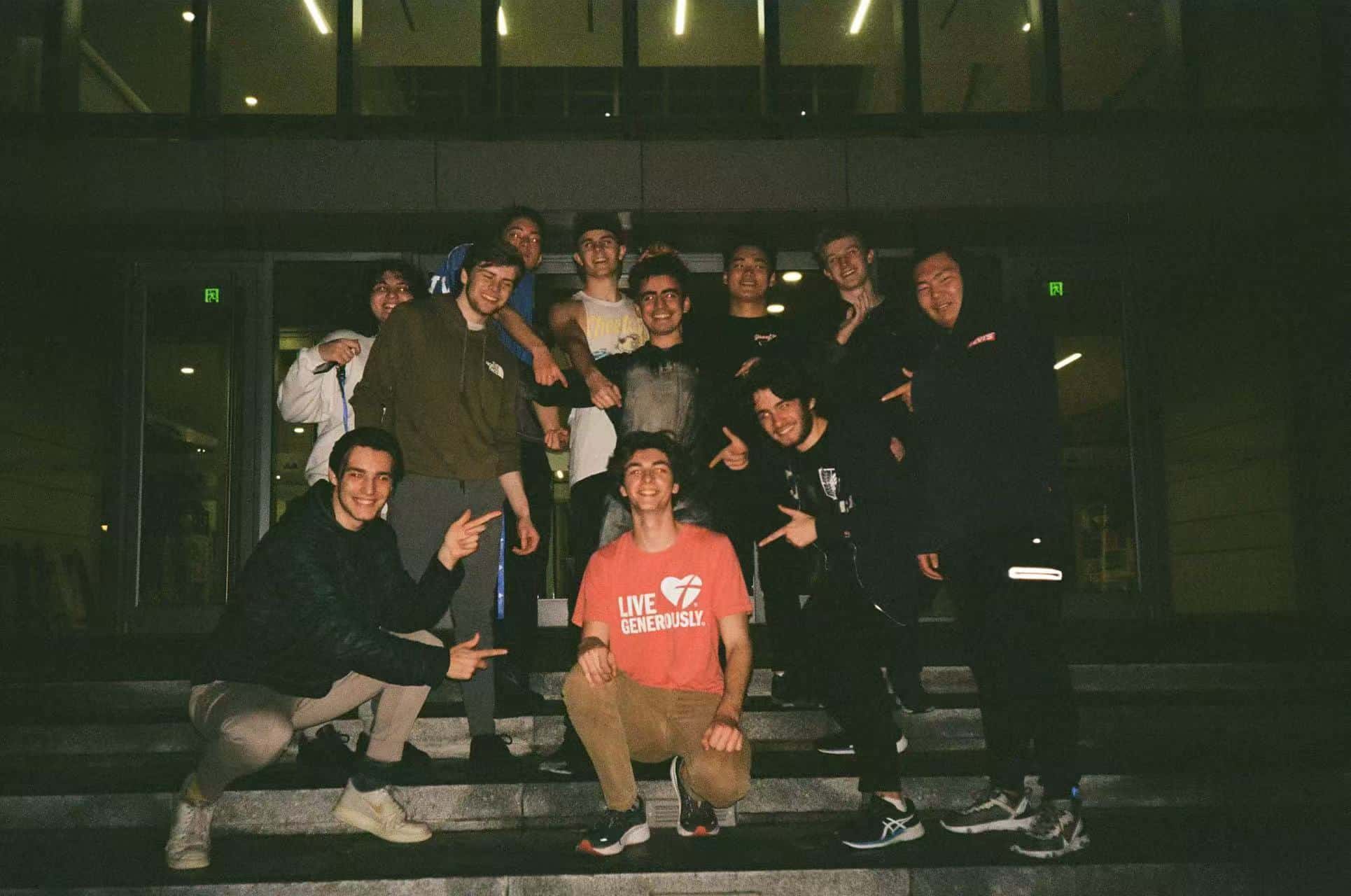
Krishna (front row, third from left) with classmates at DKU
The classroom gave Krishna another way to ask the question that had followed him since that first conversation with his roommate: Why do people believe what they believe?
He arrived at DKU with a strong interest in politics. In high school, he had worked on political campaigns in the United States, including the Biden campaign, local school board and city campaigns, and later as a student intern with the House Democracy Partnership, a U.S. congressional program, in Washington, D.C.
He first thought he would study political science. Instead, he chose philosophy.
“I believed a lot of things about politics, but I didn’t understand why,” he said.
Philosophy, he felt, could take him beneath political positions to the deeper question of where those positions come from.
At DKU, he continued exploring politics through research. His Signature Work examined Chinese public opinion on the Russia-Ukraine war by analyzing nearly 700,000 discussions on Zhihu, a Chinese question-and-answer platform often compared to Quora. With guidance from Jiahua Yue, assistant professor of political science, whom Krishna described as an important mentor, he studied how Chinese online discourse organized itself around security.
He found that many users were talking about security, but not for the same reasons. Some framed the war through human suffering and universal values. Others approached it through national power, order and geopolitical interest. One strand was more grassroots and internally varied; the other was more uniform.
For Krishna, the project continued a question that had followed him throughout DKU: how people come to believe what they believe.
Building something practical
At the same time, Krishna was building a more practical path.
After initially considering law school, he was encouraged by a professional contact to try finance. A summer internship changed his direction. He became interested in how finance and strategy could offer a form of real-world problem-solving, and after speaking with students involved in Duke Impact Investing Group, a student organization focused on finance, consulting and impact investing, he helped bring that model to DKU.
Together with Amanda Niza Gonzalez Mejia and Tomiris Bagdatkyzy, Krishna co-founded the DKU chapter of Duke Impact Investing Group, a student-run organization focused on venture capital and pro bono startup consulting that he now counts among the things he is most proud of.
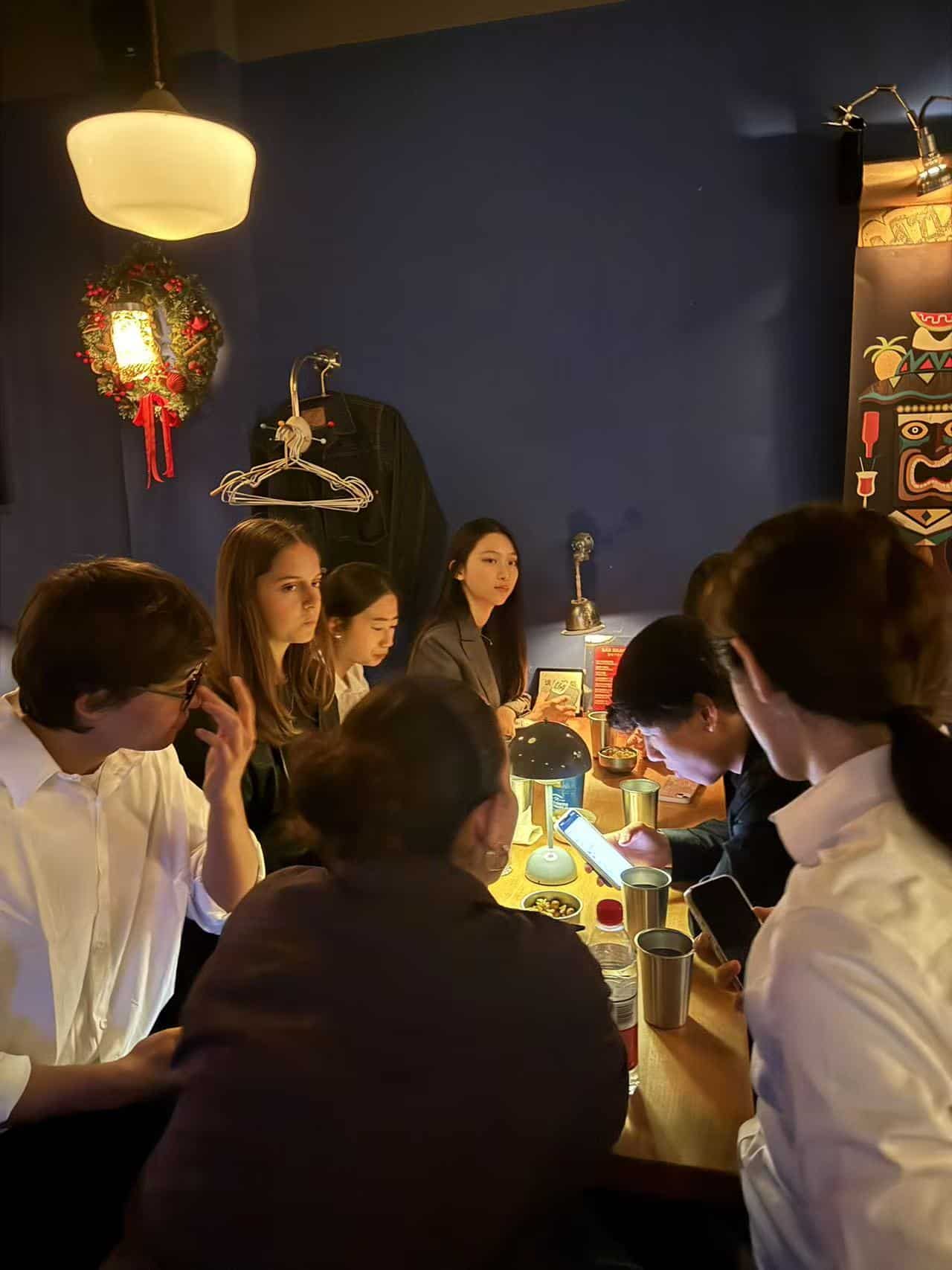
Members of the DKU chapter of Duke Impact Investing Group, which Krishna cofounded at DKU
The group was created to give students access to finance-related consulting projects, competitions, speakers and internships. Krishna said it uses a selective interview process so members can be placed on real client projects. Members work in teams on projects for startups and companies, while the organization builds direct internship pipelines with firms in Suzhou and Shanghai.
“We want students to get work experience and we want them to get actual work in the form of internships,” he said.
To Krishna, the organization was not only about finance. It was about building a structure that helped students turn interest into experience.
“We’re creating a group of very qualified people,” he said. “We provide access to the best resources and build a network through that. It’s something I’m very proud of.”
A wider world to carry forward
After graduation, Krishna plans to move to New York to join Stagwell Global’s M&A and Strategy team as an investment analyst, where he will help the organization acquire companies internationally and shape its business strategy.
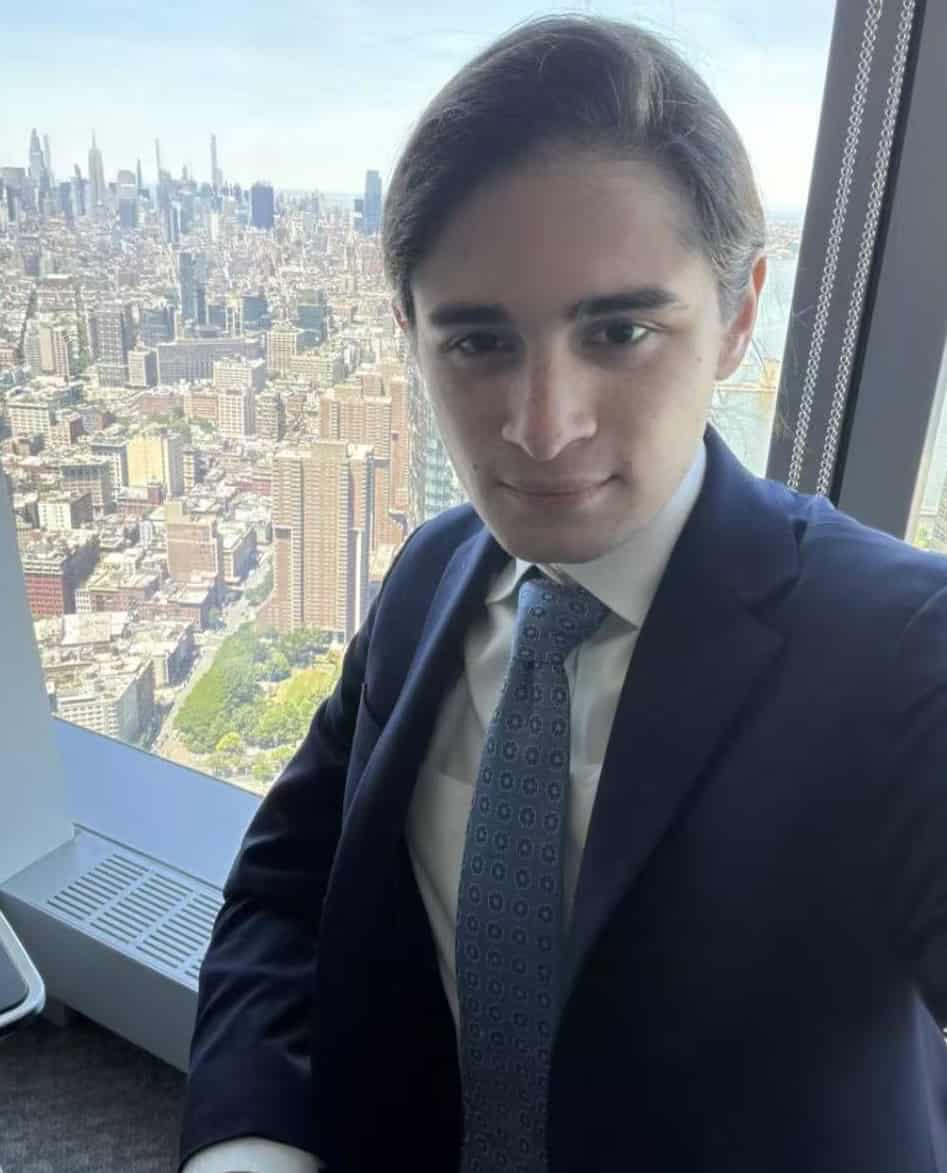
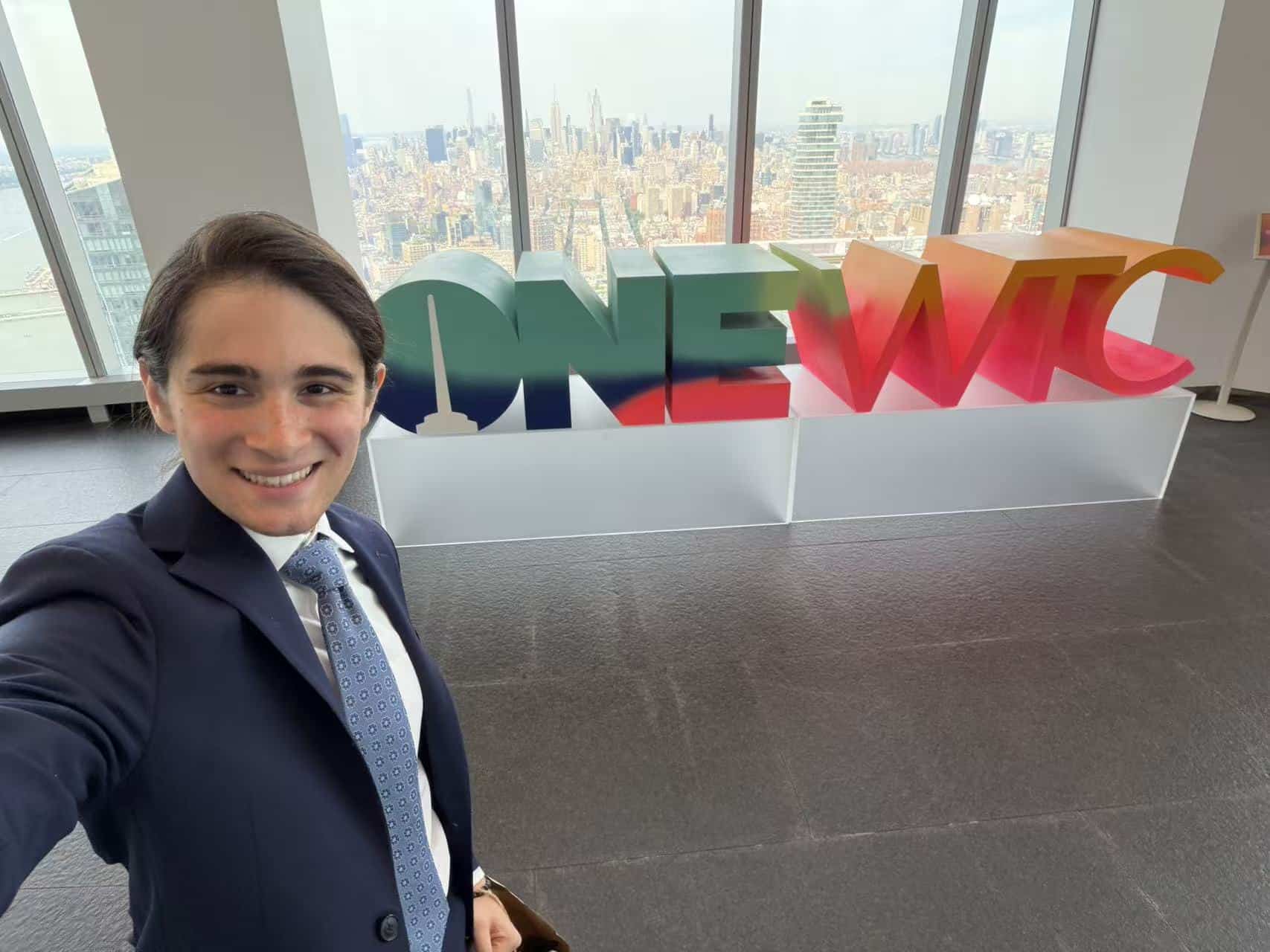
Krishna at his office in Manhattan
For a student whose life has moved between India, the United States and China, the next step feels less like a departure than a convergence. The role will draw on the finance, strategy and cross-cultural judgment he began developing at DKU.
Krishna said learning a new world this deeply is harder to do later in life.
At DKU, he encountered classmates while they were still maturing, young people emerging from one system and discovering themselves in another. They saw him while he was still figuring himself out, too.
If he had come to China at 35, he said, he might have met “already determined people.” Instead, he met classmates, friends and himself while they were still taking shape, giving him insight into something much deeper.
“Seeing people grow– growing alongside others – opens your eyes to a depth, complexity and humanity you may never see in someone already polished and fully formed,” he said. “College is a beautifully fragile time of life.”
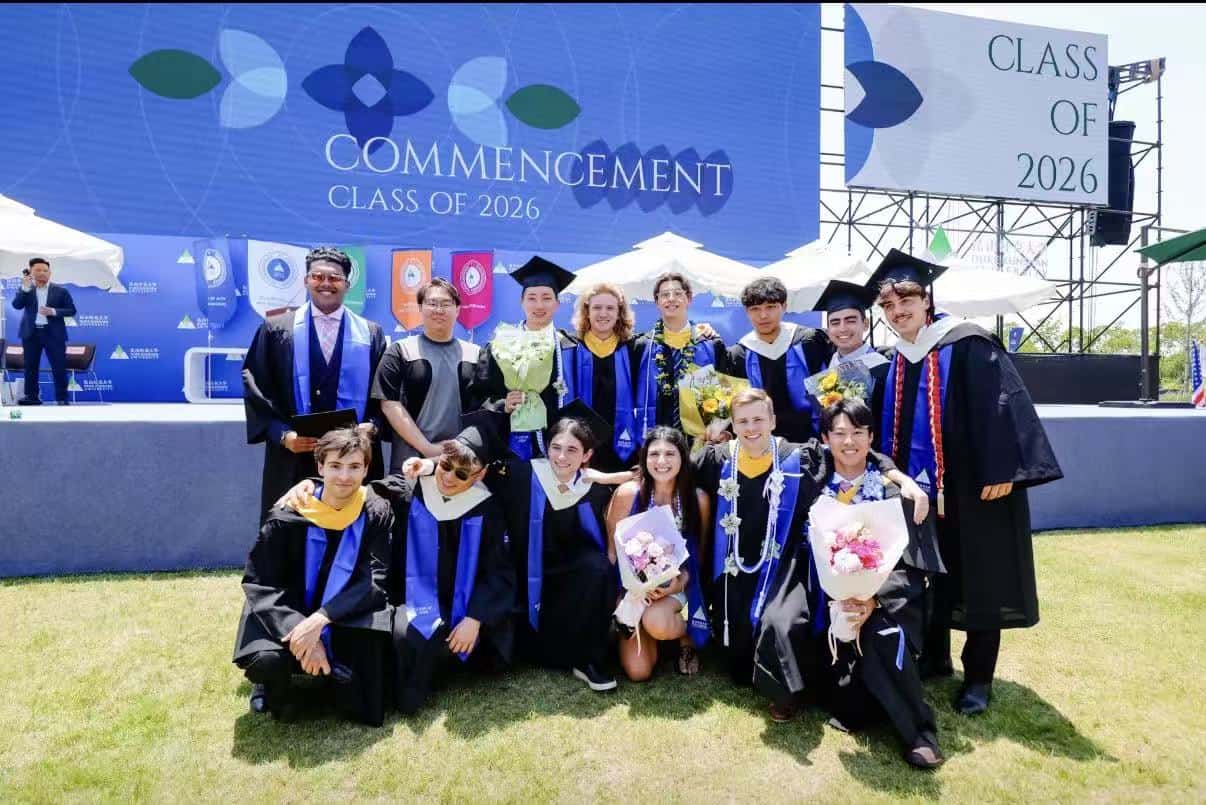
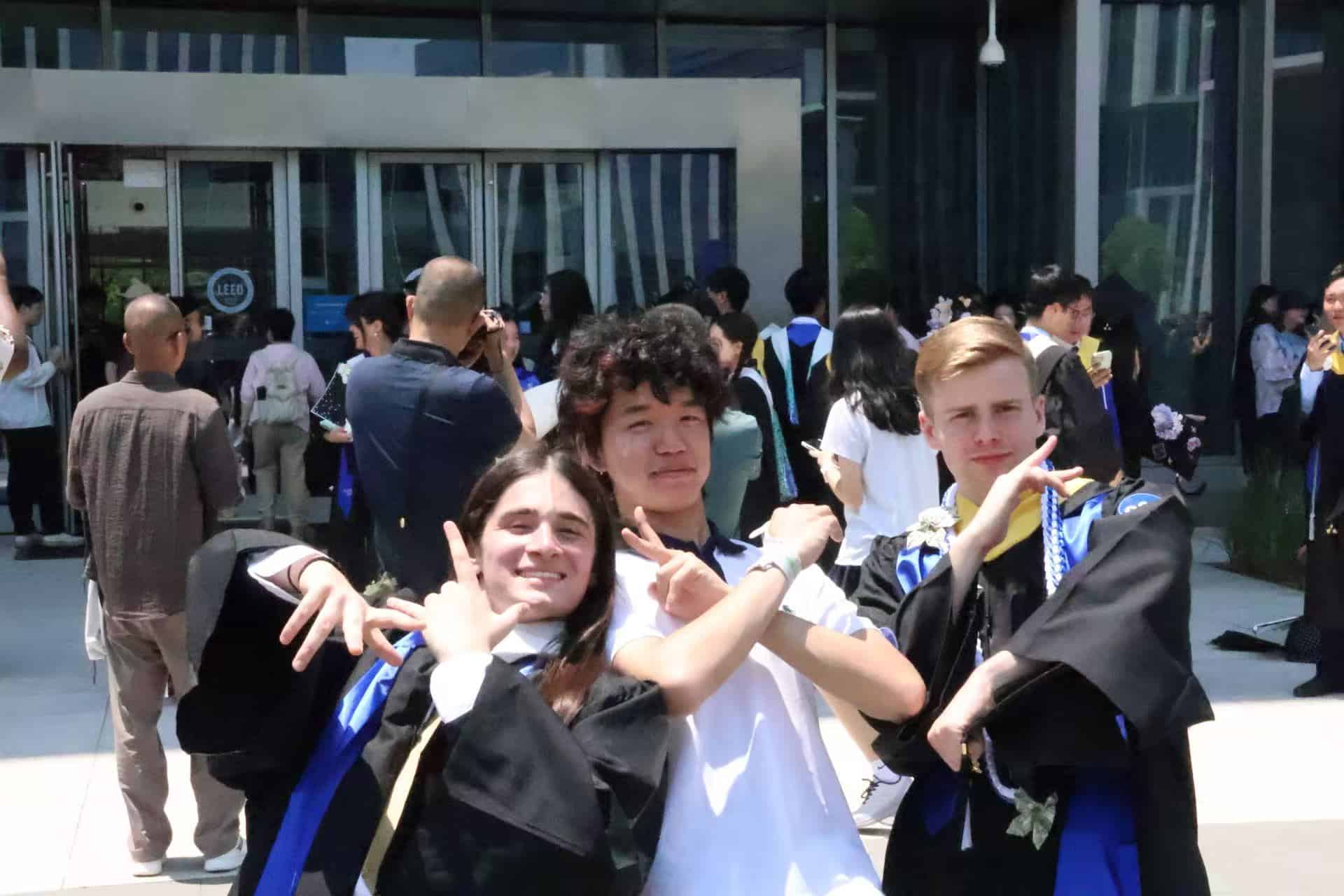
Krishna (third from left) with classmates at DKU’s Class of 2026 Commencement
By his final semester, the student who had once spent six hours trying to buy a SIM card had become someone others could rely on.
When a close friend was injured, Krishna took him to the hospital. This time, he knew where to go. He could explain what had happened to the doctor in Chinese. When he did not know something, he knew how to ask.
It was a small moment, but it showed how far he had come. The systems that once made ordinary life feel impossible had become navigable. The country that once felt distant and intimidating had become part of the practical, cultural and professional language he would carry forward.
And the student who once struggled to handle a simple errand alone in Kunshan now leaves DKU with something harder to earn than certainty: the habit of questioning the stories he was given, including his own.
By Chen Chen