
Editor’s note: This first-person essay is adapted from remarks by Travis Wilkerson, a filmmaker and 2025 Guggenheim Fellow at Duke Kunshan University, at the inaugural DKU Perspectives event on Oct. 28, 2026. It has been edited for length and clarity.
I grew up in a struggling copper-mining town in the Rocky Mountains of the United States. There weren’t artists or intellectuals around me, and the prospects for life weren’t particularly good.
When I was young, I kept telling people, “I’m going to go someplace else with my life. I’m going to see other countries. I’m going to go to other parts of the world.”
Everyone said, “No, you can’t do it. It’s impossible. No one here goes anywhere.”
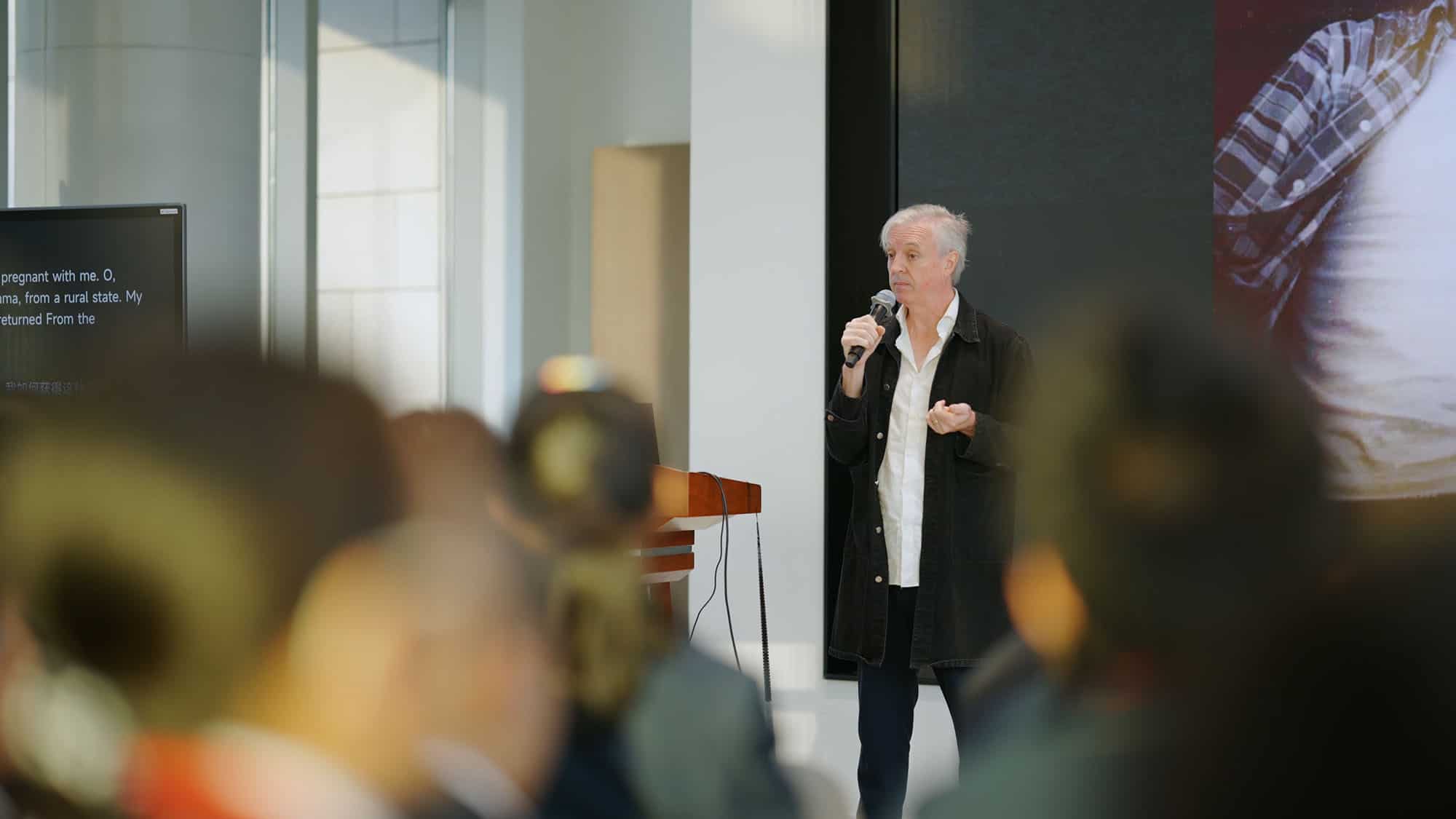
Yet here I am, decades later, teaching in China at Duke Kunshan University. The greatest honor of my life has been the opportunity to teach at this wonderful, special, experimental university.
How did I get here? I think the answer has a lot to do with persistence, and with two remarkable people who helped me understand what it means.
The moments between the frames
When I was a child, we watched movies at school on 16 mm film. A teacher would bring in a projector and show us films on reels.
At DKU Perspectives, I brought along a strip of film to show the audience. If you look closely at it, you’ll see a series of tiny, still images. Nothing is moving.
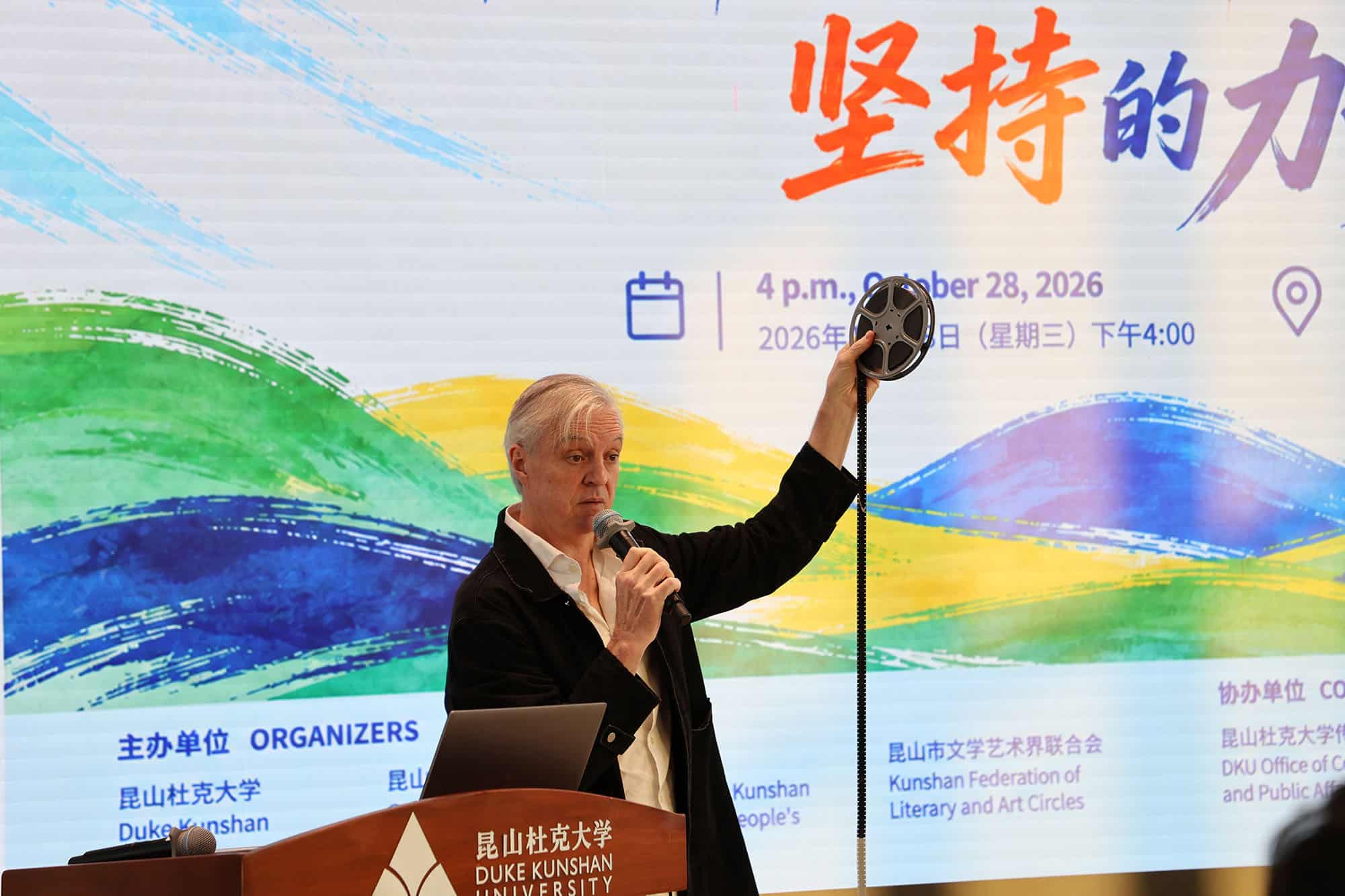
But when that film passes through a projector, the images appear to move.
Traditional film projection works by presenting still images in rapid succession, with brief intervals of darkness as the film advances from one frame to the next.
Think about that. We’re watching a movie, yet part of what we’re experiencing is darkness. We don’t perceive those interruptions. Instead, we see movement.
What we experience as movement comes from a series of frozen moments, interrupted by darkness.
To me, that’s a metaphor for progress in life.
There are moments when we seem to stand still. There are times when everything feels dark, and we can’t see where we’re going. Yet those moments don’t necessarily mean we’re going nowhere.
With persistence, those fragments can become part of a larger movement forward.
I learned that from two mentors. The first was my father.
My father: From war to healing
My father grew up in Chicago. When he was in high school, people didn’t think he was smart enough to attend college.
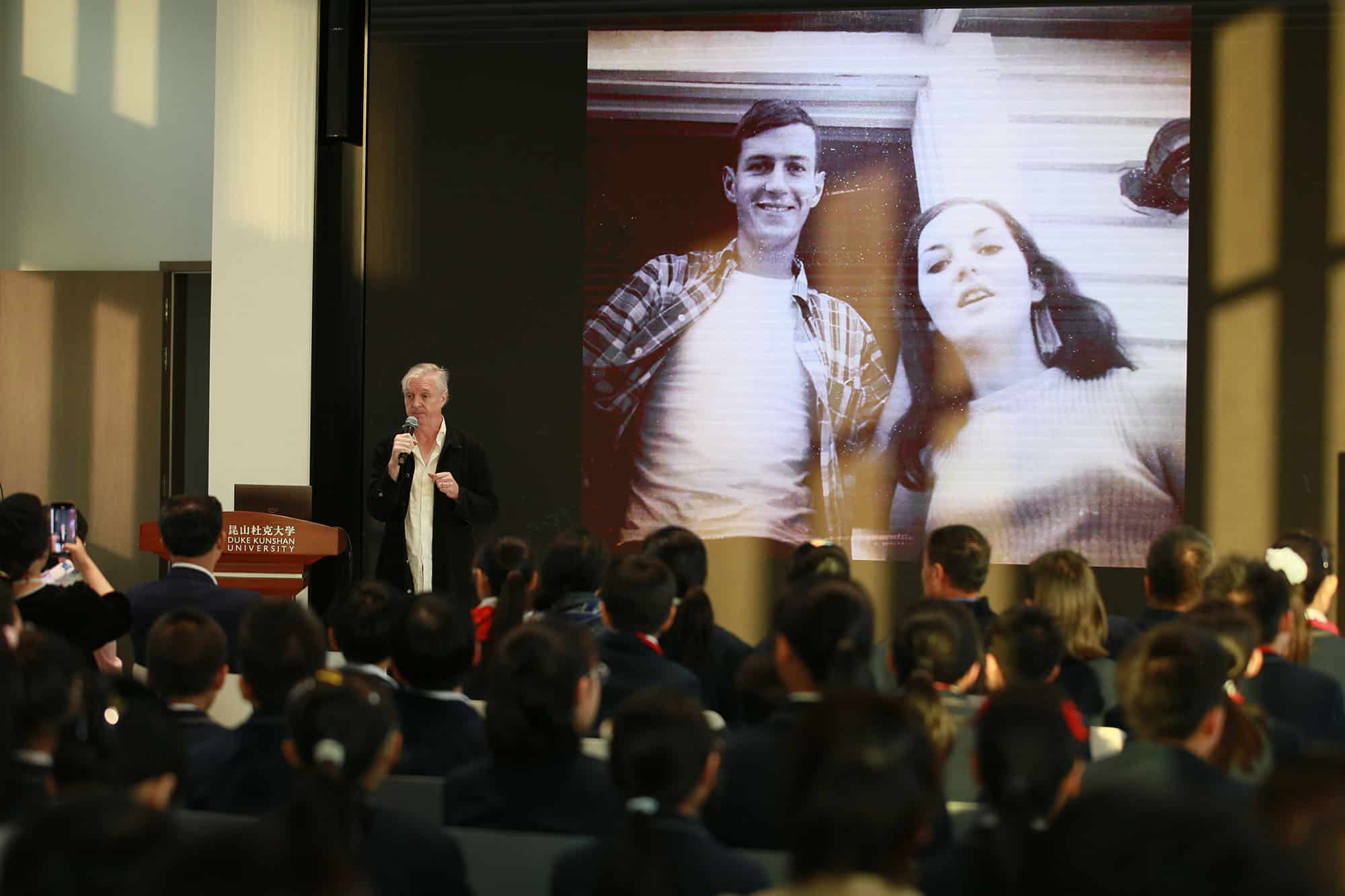
His high school adviser told him, “Not everyone needs to go to college.”
So he joined the Army. He became a helicopter pilot during the Vietnam War and received military honors for his service.
But his experience in Vietnam changed him profoundly. He came to believe that the war was wrong, and that he had participated in something that caused harm.
He decided he wanted to take his life in a different direction.
He wanted to heal people.
After returning from the war, he went to college, using his veterans’ education benefits to help pay for his education and medical training.
It turned out that his high school adviser had been completely wrong. My father was very good at college. He became an excellent physician and, later in his career, a professor of medicine at the University of Michigan.
He taught hundreds of people how to heal others.
There’s a story about my father that still makes me emotional.
Late in life, he developed a terrible form of cancer. After years of treatment, he was admitted to the hospital where he had worked and taught.
At one point, he had to be intubated. After his breathing tube was removed, the doctor who had performed the procedure came into his room.
“Dr. Wilkerson, do you remember me?” he asked.
My father was very sick by then. He couldn’t remember him.
The doctor said, “You were my teacher. You taught me how to intubate.”
And this kept happening. Throughout my father’s hospitalization, people came to see him and told him how he had taught them to save lives.
It was extraordinarily moving.
My father had saved many lives himself. But he had also taught others to save lives, and the knowledge he passed on continued to help people long after he had taught them.
I still get emotional thinking about what an extraordinary man he was.
The adviser who thought my father wasn’t suited for college was wrong. But it took the painful experience of war for my father to discover the path that would lead him to medicine.
And that path eventually allowed him to help thousands of people.
A chance encounter in Havana
My second great mentor entered my life almost by accident.
I’d always wanted to travel beyond the small town where I grew up. In college, I saw a film about Cuba that moved me deeply.
I wanted to see the country for myself, rather than understand it entirely through someone else’s perspective.
This was the mid-1990s, when Americans faced significant restrictions on traveling to Cuba. I eventually found a way to go by joining a delegation working on a farm.
I wasn’t a farmer. I wasn’t particularly good at farming. And the Cuban climate wasn’t well suited to my Irish skin.
It was difficult, but I made friends and connections there. I decided I would return.
A year later, I went back with a small camera, hoping to document some of what I saw.
There was one problem: I didn’t really know how to make films.
I’d told people that I wanted to become a filmmaker, and one person had responded, “Well, I’d like to be world chess champion, but I’m not going to be world chess champion.”
It reminded me of what my father had been told about college.
I wanted to prove that I could do it, even if I didn’t yet know how.
I spent months in Cuba, meeting fascinating people and having extraordinary experiences. But about two-thirds of the way through my trip, I still hadn’t made anything.
My Spanish wasn’t very good. I didn’t have many resources. And I lacked the skills to turn my experiences into a film.
Then something unexpected happened.
One day, I was standing in line at a famous ice cream parlor in Havana. I started talking to a man in front of me.
He told me he worked at the Cuban Film Institute and asked whether there was anyone there I wanted to meet.
I mentioned a filmmaker whose work had inspired my first trip to Cuba, but the man told me the director was seriously ill.
Then I asked about Santiago Álvarez.
I’d read about Álvarez, a legendary Cuban documentary filmmaker, although I’d never actually seen any of his films.
“Oh yes, I know Santiago,” the man said.
He gave me Álvarez’s telephone number.
So I called, using my very limited Spanish. To my astonishment, Álvarez himself answered.
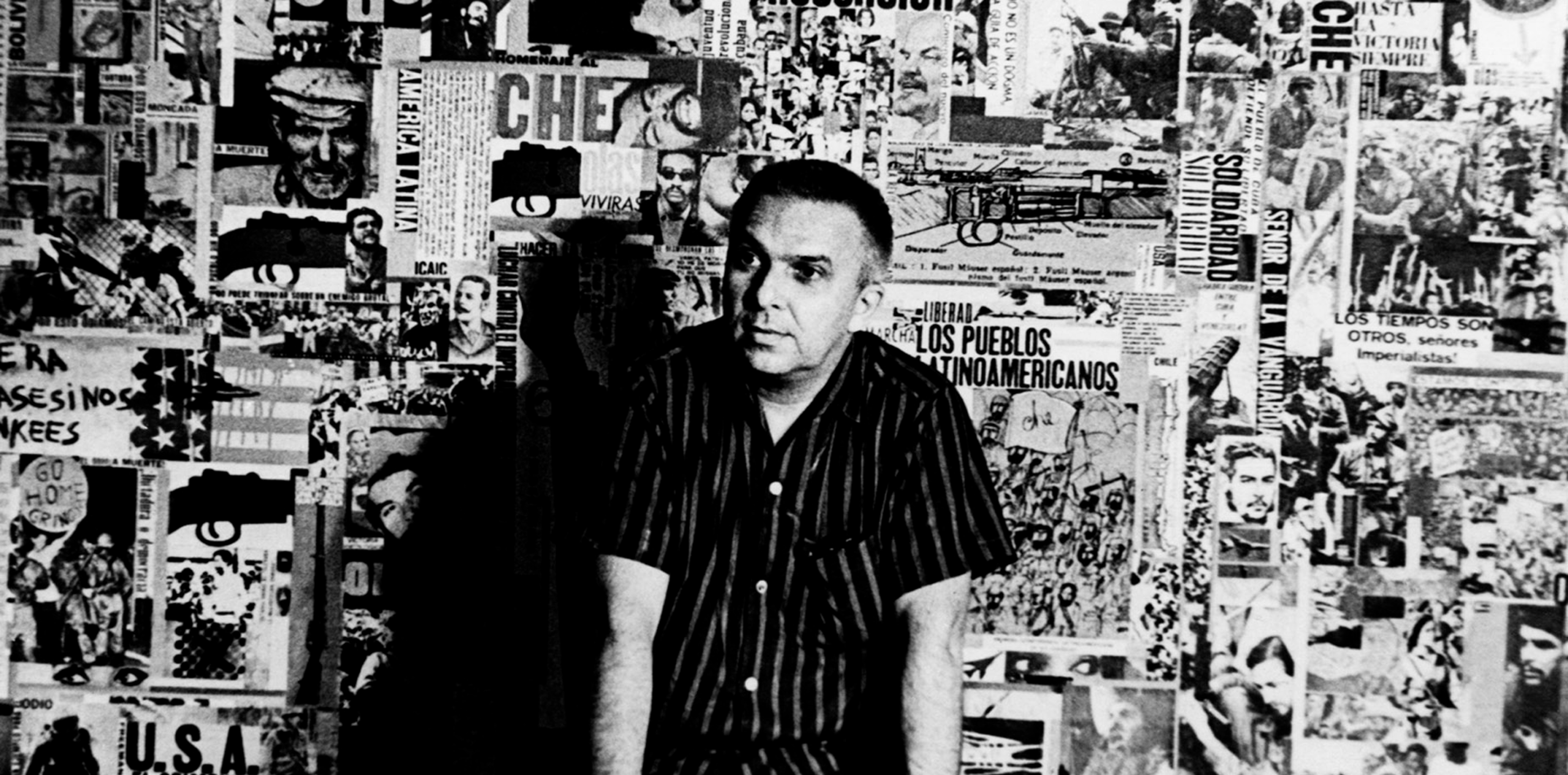
I was 25 years old. He was about to turn 77.
He invited me to his birthday party the following day, where we could talk about what I wanted to do.
When we met, I told him I’d love to make a documentary about him.
Remember, I had never made a documentary. I barely knew how to operate my camera.
He looked at me and asked, “Well, how many of my films have you seen?”
I said, “I’ve seen one.”
I was lying. I’d seen none.
But he didn’t turn me away.
Instead, he said he’d like me to see more of his films. If I still wanted to make something afterward, we could talk about it.
The next six weeks were among the most extraordinary, magical weeks of my life.
Álvarez showed me 50 of his films. He shared his knowledge, his experience and his understanding of cinema.
I had no reputation, no professional experience and no particular reason to expect his generosity. I was simply a young American who wanted to learn.
Yet he gave me his time.
And those six weeks changed my life.
Start with what you have
Álvarez had faced obstacles of his own.
He came from a poor family and had few educational or professional opportunities. He loved movies, but for years, making them was beyond his reach.
It wasn’t until he was 40, following the Cuban Revolution, that he began working in filmmaking.
He started making short documentaries, often on a weekly schedule. He went on to make about 700 films, developing his abilities as a director, editor and storyteller through continuous practice.
When I watched his work, I began to understand what I wanted to do with my life.
One of the first films he showed me was about the Vietnam War. I remember being struck by the connection between what I was seeing on the screen and my father’s experiences.
It felt as if different parts of my life were suddenly coming together.
But Álvarez taught me something even more important about the creative process.
Most of us approach filmmaking by asking two questions: What film do I want to make? And what do I need to make it?
Álvarez approached it differently.
He asked: What film do I want to make? And what do I already have available to me?
He didn’t have a lot of money. As a Cuban filmmaker, he couldn’t travel to the United States to shoot the footage he wanted.
But he still wanted to make a film about the American civil rights movement.
So he worked with photographs and a song to create “Now!,” a remarkable short documentary about racial injustice in the United States.
Instead of saying, “I can’t make that film,” he asked, “How can I make that film?”
That distinction changed how I thought about creativity.
The limitations he faced didn’t simply obstruct his work. They became a source of innovation.
When I think about the two most important mentors in my life, I see something they shared.
My father was told he couldn’t go to college. Álvarez loved movies but didn’t have the opportunity to start making them until he was 40.
But neither allowed those circumstances to determine what he would ultimately do.
They taught me something I’ve carried throughout my life:
No one can tell me what I can’t do. They can tell me the challenges I will face, but I will decide what I can do.
What I hope my students will discover
Now I find myself teaching at DKU, and I try to share these lessons with my students.
I often tell them that they have more resources available to them than they realize.
They have a beautiful campus, extraordinary classmates and wonderful teachers. They’re living in China at a time of tremendous change and innovation, surrounded by stories waiting to be told.
I encourage them to approach their creative work the way Álvarez approached his.
What do you want to make? And what do you already have that could help you make it?
One of my students, Yinan, has made what I consider the most beautiful student film I’ve ever seen.
He didn’t make the kind of films I make, or the kind Álvarez made. He made something uniquely his own, drawing on the stories and resources around him.
He had his hometown in rural China, stories from his family and friends he had worked with. Using those resources, he created something extraordinary.
That, to me, is the point.
I want my students to recognize what is possible within their own experiences and find their own ways of expressing it.
When I think about my father, Álvarez, my students and my own journey, I return to that strip of film.
Each frame is only a frozen moment. Between the frames, there is darkness.
Yet together, they create movement. They create images that can reveal something beautiful about the world.
Whether it’s my story, my father’s, Santiago Álvarez’s or Yinan’s, I think about those fragments of life separated by darkness, somehow coming together to create forward motion and a beautiful image of the world.
Whatever our age, I believe we can learn from those experiences and accomplish things we never thought possible.