
At DKU’s intensive summer Chinese program, students from around the world found new ways to connect with strangers, friends and members of their own families.
Bronze Urfrig, a Duke Kunshan University student from Colorado, was walking around the lake beside DKU when he passed a group of older women having a picnic and making hot pot.
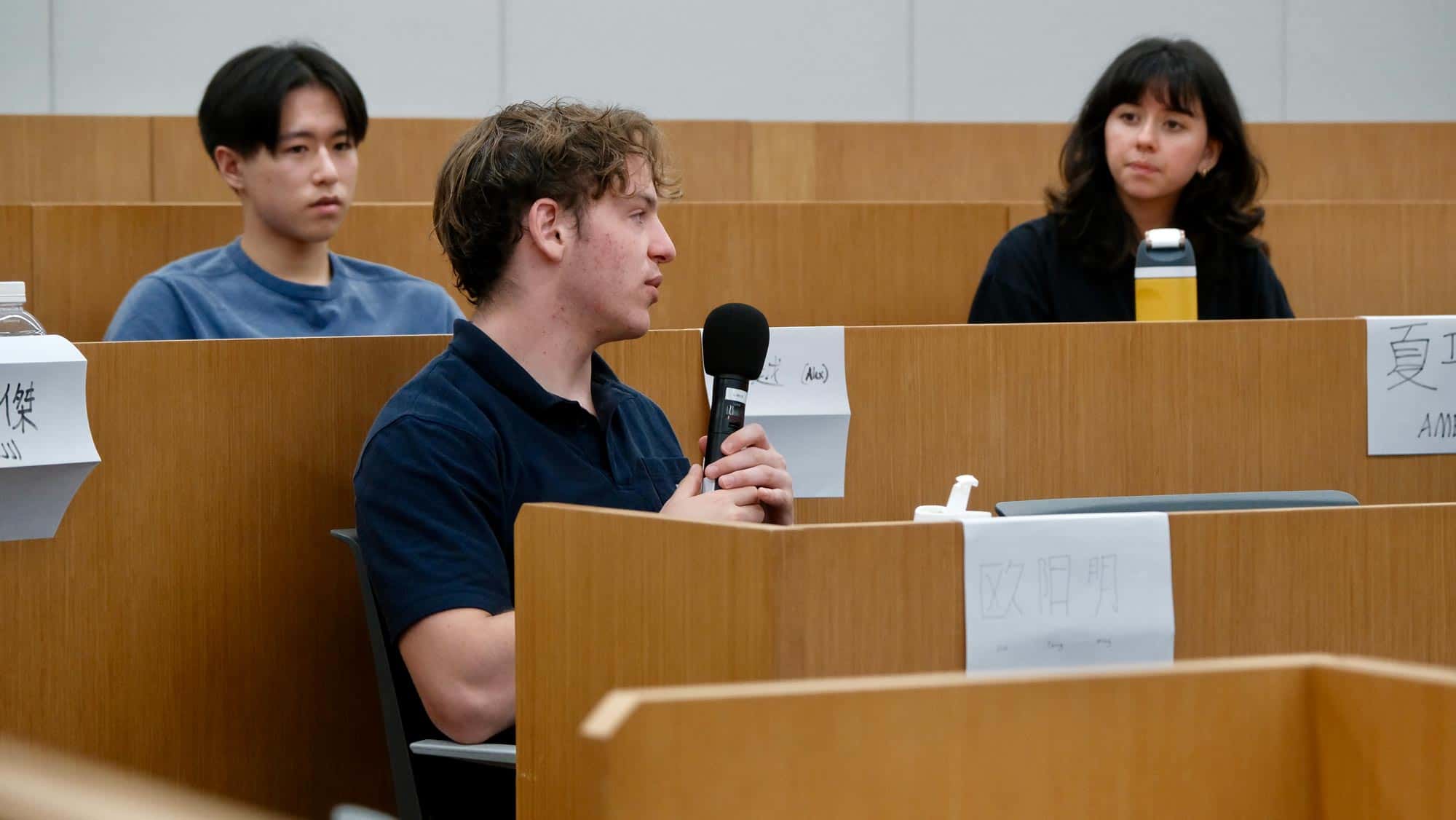
They invited him to sit down.
Soon they were asking about his life, his studies and how a grandson might one day attend DKU. Before he left, one of the women added him on WeChat. Later that week, she invited him to her home to meet her family.
Bronze went.
In DKU’s Chinese Intensive Summer Language program, the classroom was only part of the work. Students interviewed local residents, traveled to places connected with their coursework and used Chinese in daily life.
Speaking for himself
Joshua Wang, a Chinese American student at Duke University, joined the program partly because he did not know when another opportunity would come.
He expected his future summers to become busy and uncertain. This might be his last chance for some time to travel to China and see his relatives.
On previous visits, Joshua had relied on his father to translate conversations with them.
This summer, he visited them by himself.
“When I visited my relatives by myself, I could actually make conversation with them,” Joshua said, “as opposed to previous times when I relied on my dad to translate for me.”
He had not set himself the goal of speaking only Chinese. But during the program, he spoke more of it than ever before.
Toward the end of the summer, drivers for Didi, a Chinese ride-hailing app, were sometimes surprised when he told them he had grown up in the United States and was not a native Chinese speaker.
Being mistaken for a native speaker boosted his confidence. Speaking directly with his relatives mattered more.
The conversation no longer had to pass through his father first.
Beyond the classroom
Tianshu He has taught Chinese at Duke University for more than 20 years. This was her first summer teaching in the intensive program at DKU.
“We connect language, culture and daily life through cultural activities, field trips and interactions with local people,” said He, senior lecturer of Asian and Middle Eastern Studies at Duke.
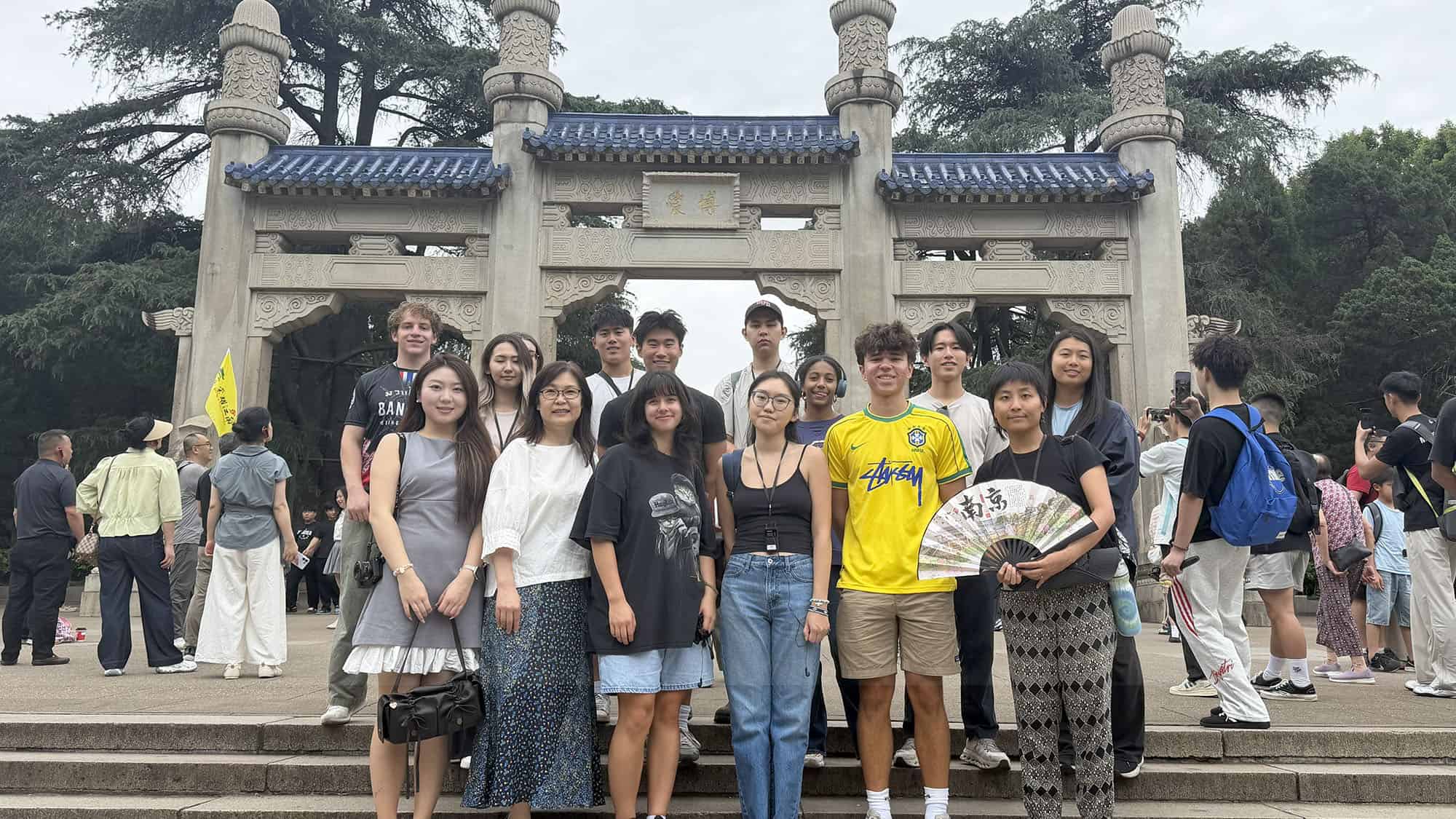
The program is a collaboration between DKU’s Language and Culture Center and Office of Global Education. Duke’s Chinese language program is also closely involved in designing and teaching the courses, according to Xin Zhang, assistant professor of Chinese language and intercultural communication at DKU.
Students can choose a four- or eight-week track. Zhang said the four-week track includes about 56 hours of instruction, along with daily one-on-one tutoring, roughly the equivalent of a semester of Chinese study compressed into four weeks.
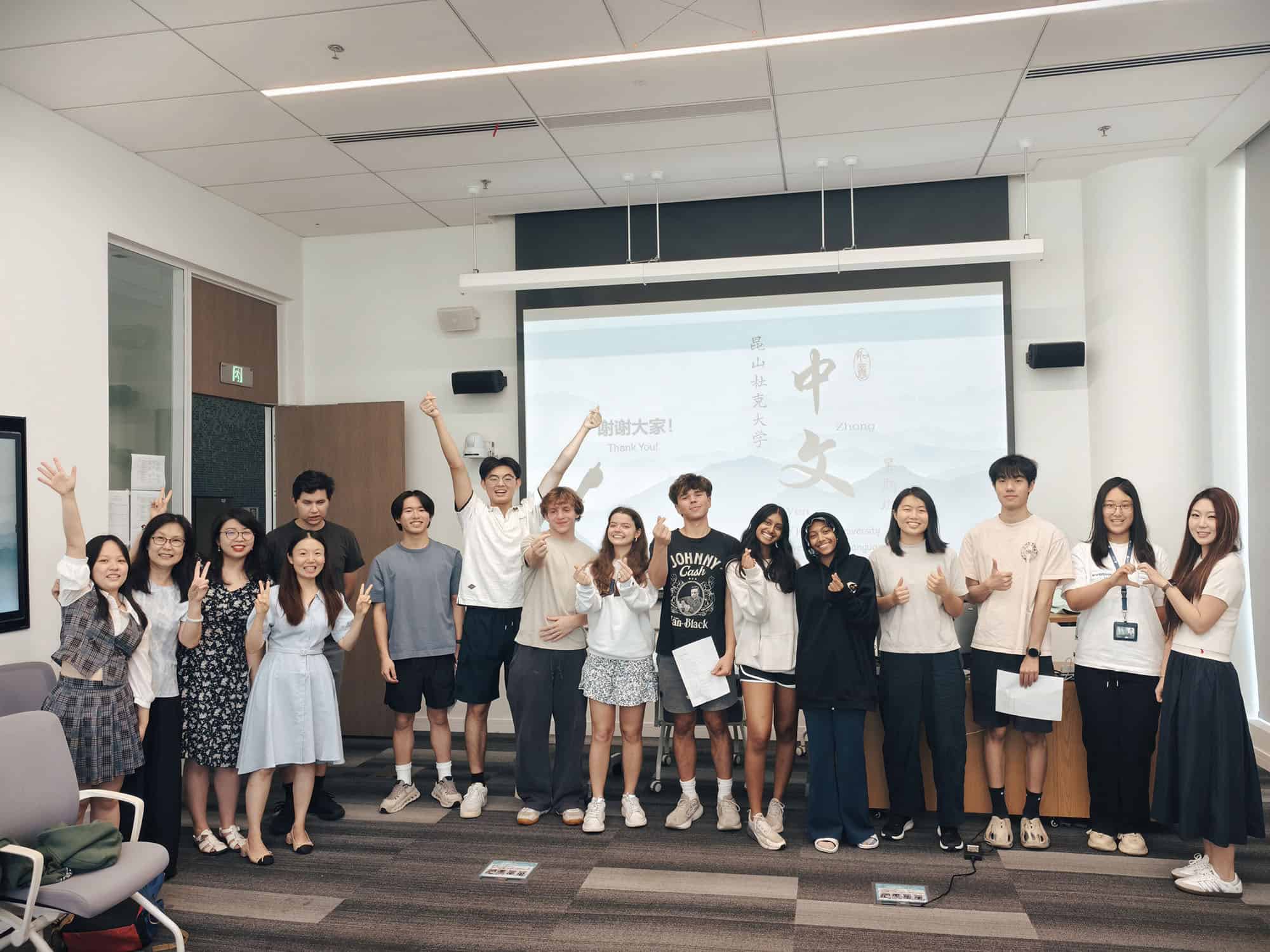
Bronze estimated that classes, tutoring, assignments and practice added up to about eight hours a day studying or using Chinese.
The program also uses the Oral Proficiency Interview, or OPI, a standardized assessment, to measure students’ spoken Chinese. Zhang said that after listening to students’ pre-program and post-session recordings, she was impressed by their language proficiency, their confidence speaking Chinese and the observations they had made about China during the summer.
But the intensive schedule was only part of the design. Zhang said students also visited a water town, talked with people in the community, learned local songs, visited a teahouse and interacted with students at a local high school. The coursework prepared students to observe, reflect on and make the most of those encounters.
The excursions followed the curriculum. After studying a chapter on education, students traveled to Nanjing, interviewed local students and visited the China Imperial Examination Museum and Confucius Temple. There, they learned about the history of Chinese education and its influence on society.
Anulen Ulzii-Erdene, a DKU student from Mongolia, said the program helped her see how closely language and society are connected.
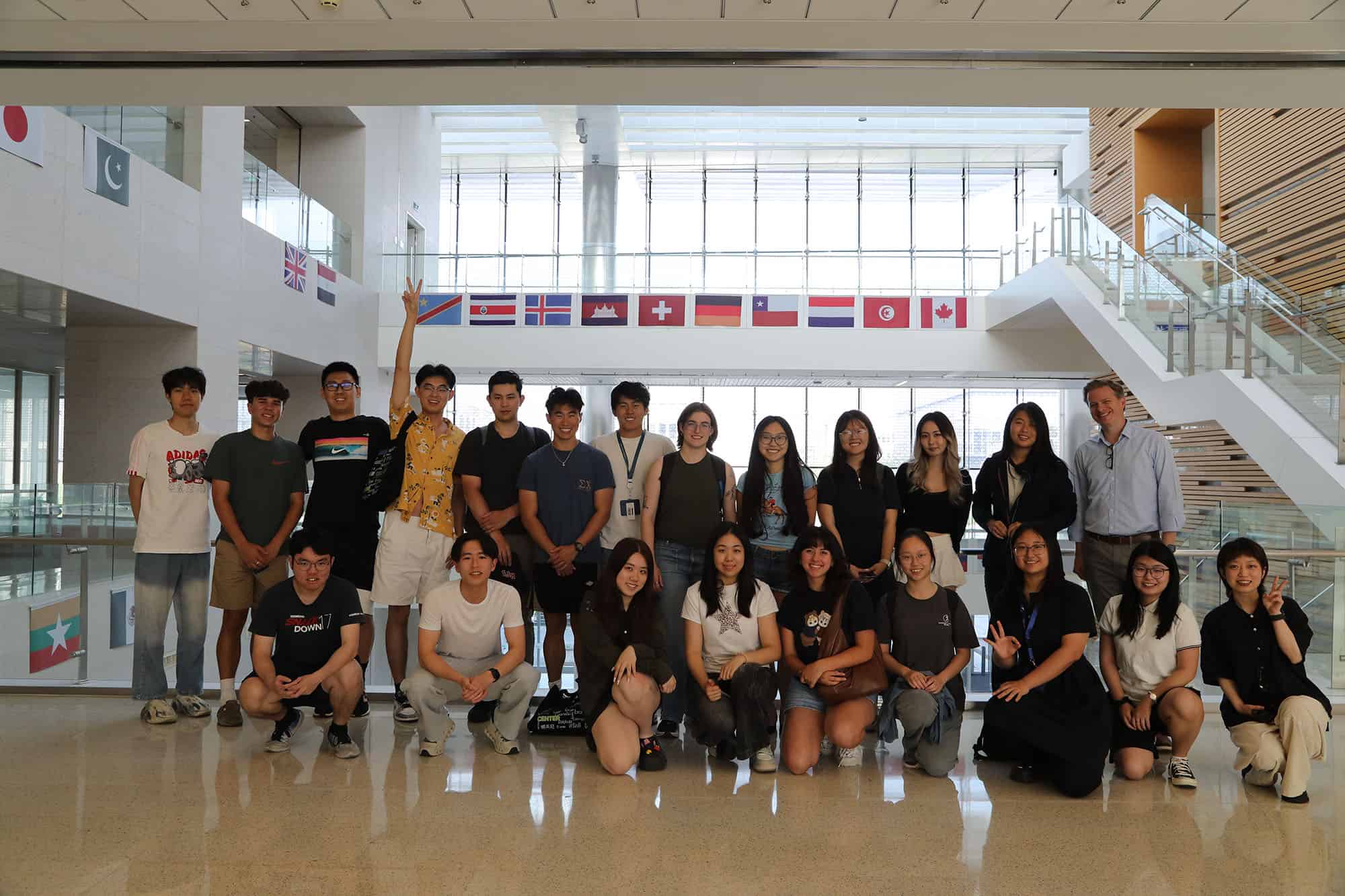
“Language is not just the words,” she said. “It is also a reflection of the whole country itself.”
Amelia Barr, a second-year Duke student in the program, wanted to move beyond everyday conversation and find the Chinese words for more complicated thoughts and feelings. She spoke about wanting vocabulary for ideas such as “reflect,” “express” and “discover.”
She saw another connection between language and culture during a visit to Bacheng, a water town in Kunshan.
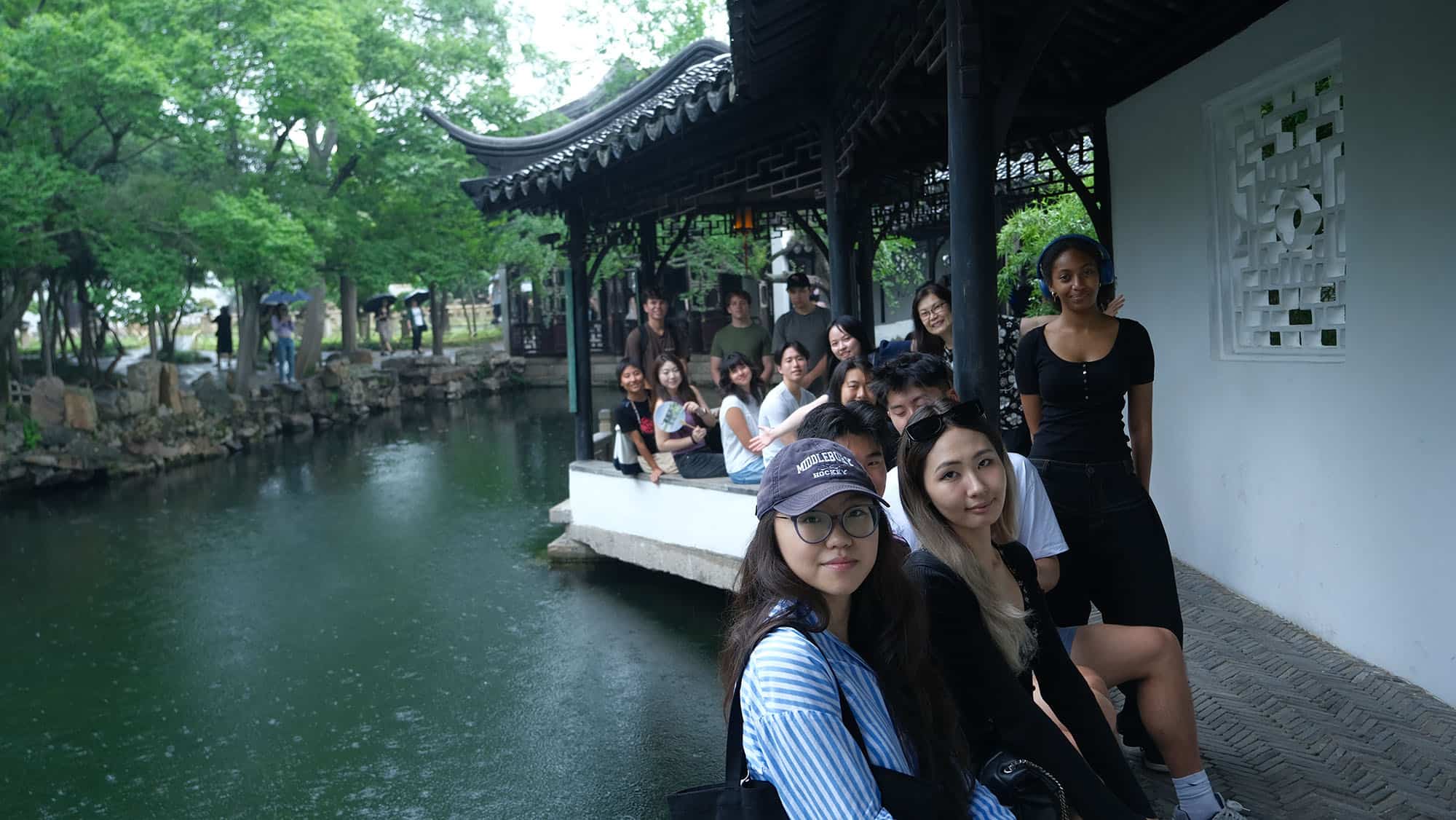
“It’s one thing to learn about it in a class,” she said. “It’s another thing to leave the classroom and immediately see what you’re learning being played out right before your eyes.”
In Bacheng, students learned local songs. It was Amelia’s first exposure to traditional Chinese music, and she discovered that she loved it and that she could sing it.
“This kind of music is actually incredibly beautiful,” she said. “I’m so glad that I had the opportunity to learn this, because I don’t think I would have gotten that anywhere else.”
David Llera, a first-year Duke student from New York, had started learning Chinese only nine months earlier. He hoped eventually to pursue political or business work connected with China and saw the summer as a chance to accelerate his learning.
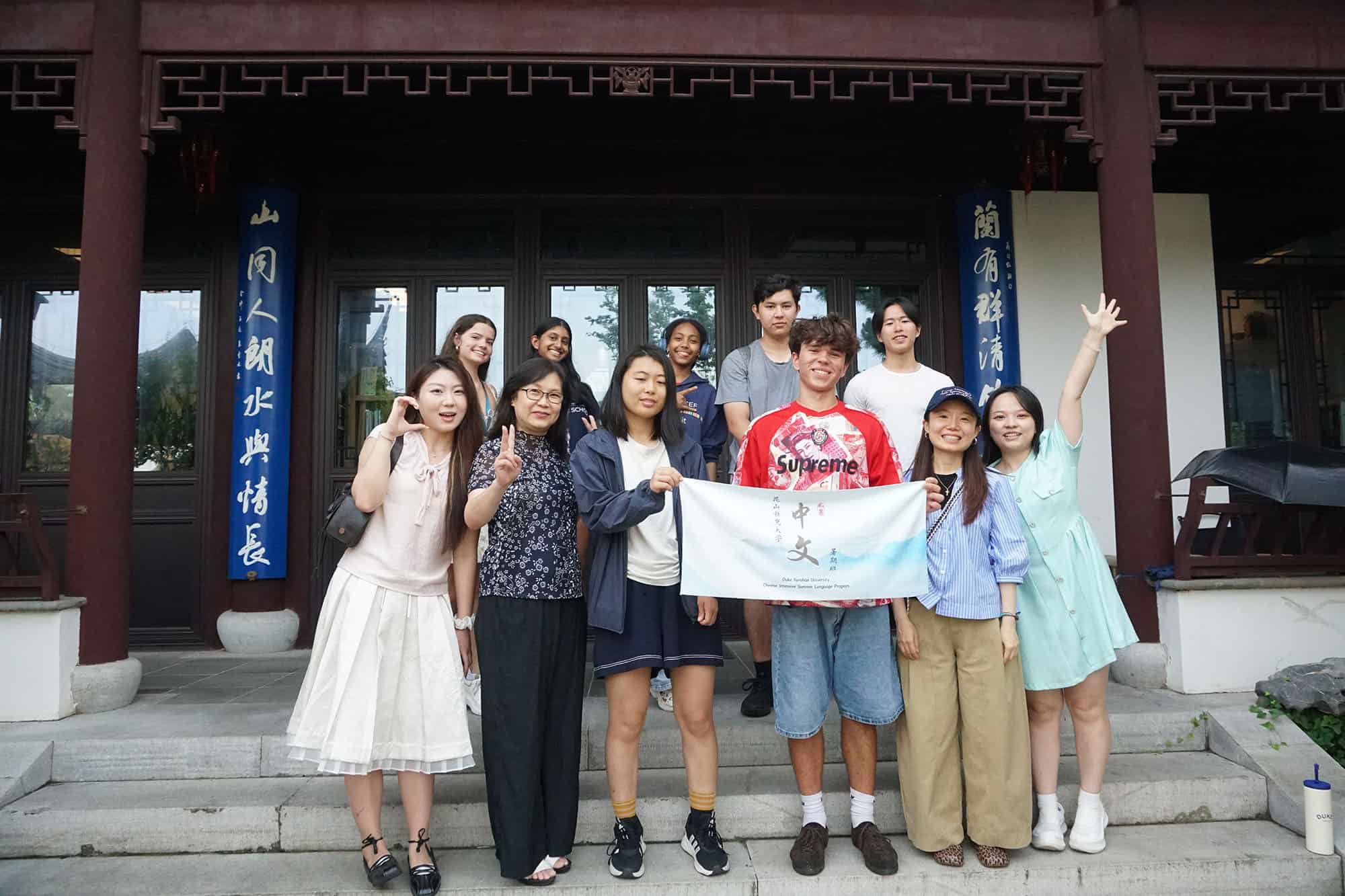
It was also his first time in Asia.
For David, the program offered a way for Duke students to experience China and DKU without immediately committing to a full semester abroad. He described it as a chance for Duke students to “dip their toes into China” and into life at DKU.
The workload still left time for him to travel with friends to Beijing, Nanjing and Shanghai.
Between Kunshan and Durham
When Duke student Alex Chang arrived at DKU, he was paired with Yucheng Zhu, a DKU computer science student preparing for a future semester at Duke.
Alex, who is ethnically Chinese and grew up in the United States, had come partly to explore China and improve the Chinese he had learned as a child but later largely forgotten.
Their first conversations covered familiar roommate territory: where to eat, what sports they played and what they might do after class.
“Pretty quickly, we became friends,” Alex said.
Yucheng asked Alex what to expect when he arrived in Durham. Alex learned about Yucheng’s childhood in Dalian and what daily life had been like for him growing up in China.
Alex explained American slang and aspects of fraternity culture. When he used an unfamiliar expression, such as “head over heels,” Yucheng would stop and ask what it meant.
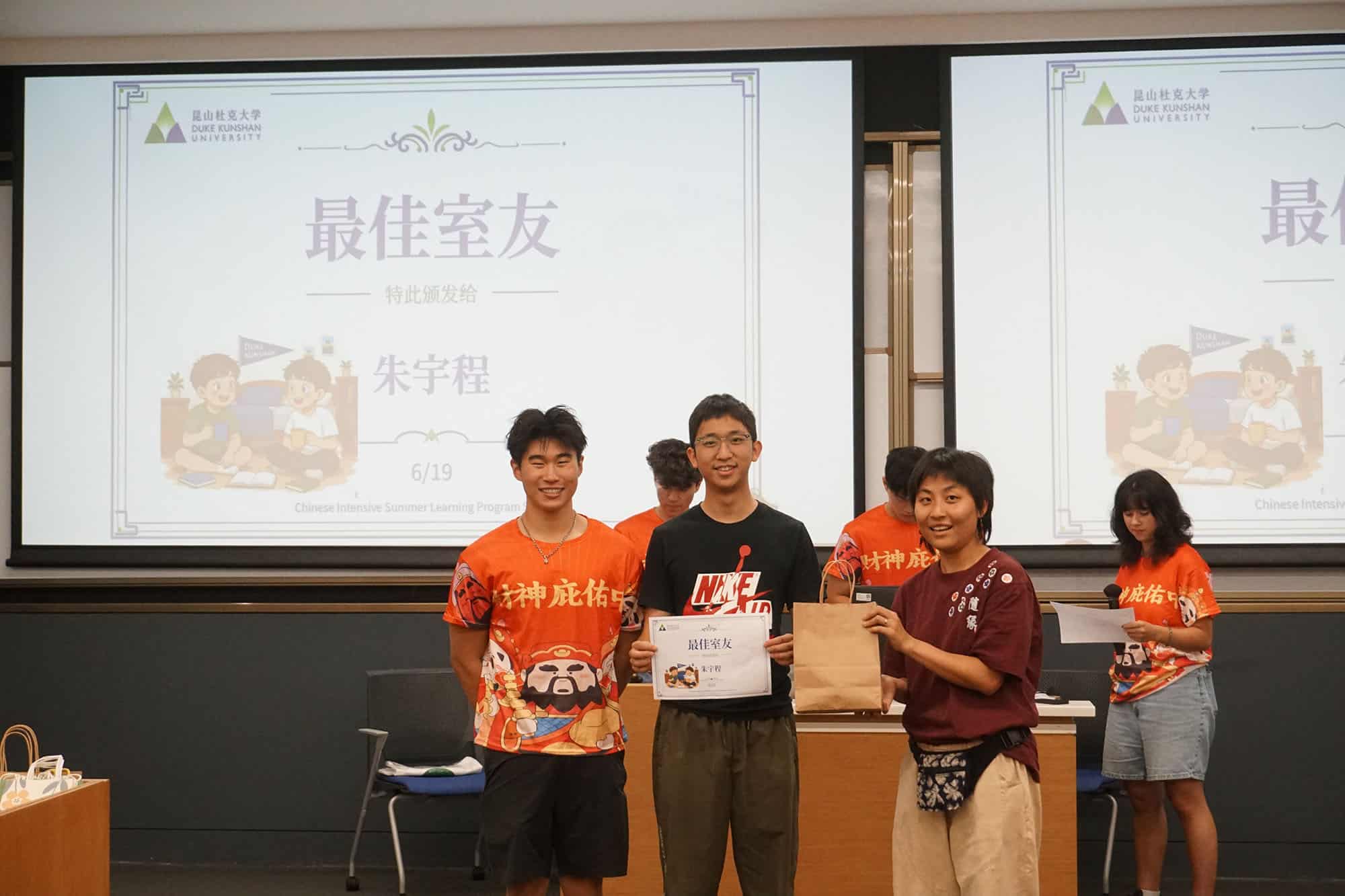
Yucheng helped Alex navigate Chinese apps and lent him a spare phone after Alex encountered problems setting them up with a foreign number.
By the end of the summer, they were no longer just comparing life at Duke and DKU. They were making plans for when Yucheng arrived in Durham.
They hoped to take a class together.