
Twenty-six Duke Kunshan University undergraduates have been selected for the Millennium Fellowship Class of 2026 from a global pool of over 76,000 applicants. This marks the fifth consecutive year that DKU students have been named Millennium Fellows, with this year’s cohort the largest in the university’s history.
More than 76,000 applicants from over 6,000 campuses across 170-plus nations applied to the program. Just over 330 campuses across 60 countries, about 5% of applicant campuses, were selected to host more than 5,500 Millennium Fellows in the 2026 cohort.
The Millennium Fellowship is jointly organized by United Nations Academic Impact and the Millennium Campus Network. Applicants enter the program with a proposed or existing social impact project aligned with the U.N. Sustainable Development Goals and work to advance it over the course of the semester.
This year, DKU’s Millennium Fellows are tackling issues ranging from public health and climate change to educational equity, mental health and social services, turning their interests and experiences into action.
DKU’s newly selected Millennium Fellows include Class of 2027 undergraduates Chen Yiwen, Cheng Gele, Ge Yi, Mustafa Ayub Khan, Ling Rui, Xavier Monroy, Anastasiia Titarova, Philip Yanakiev and Zhang Yufei; Class of 2028 undergraduates Chen Chen, Janvi Khandelwal, Liang Guanyi, Oyu-Erdene Purevdorj, Shen Yongqi and Zhang Qianyi; and Class of 2029 undergraduates Roberto Adames, Alexandra Fumerton Porter, Mohamed Ismail Loukili, Lei Qirui, Liu Yihan, Abay Nygmetullin, Rakhat Omirbek, Erika Smead, Wei Siyu, Wen Yilin and Wu Yutao.
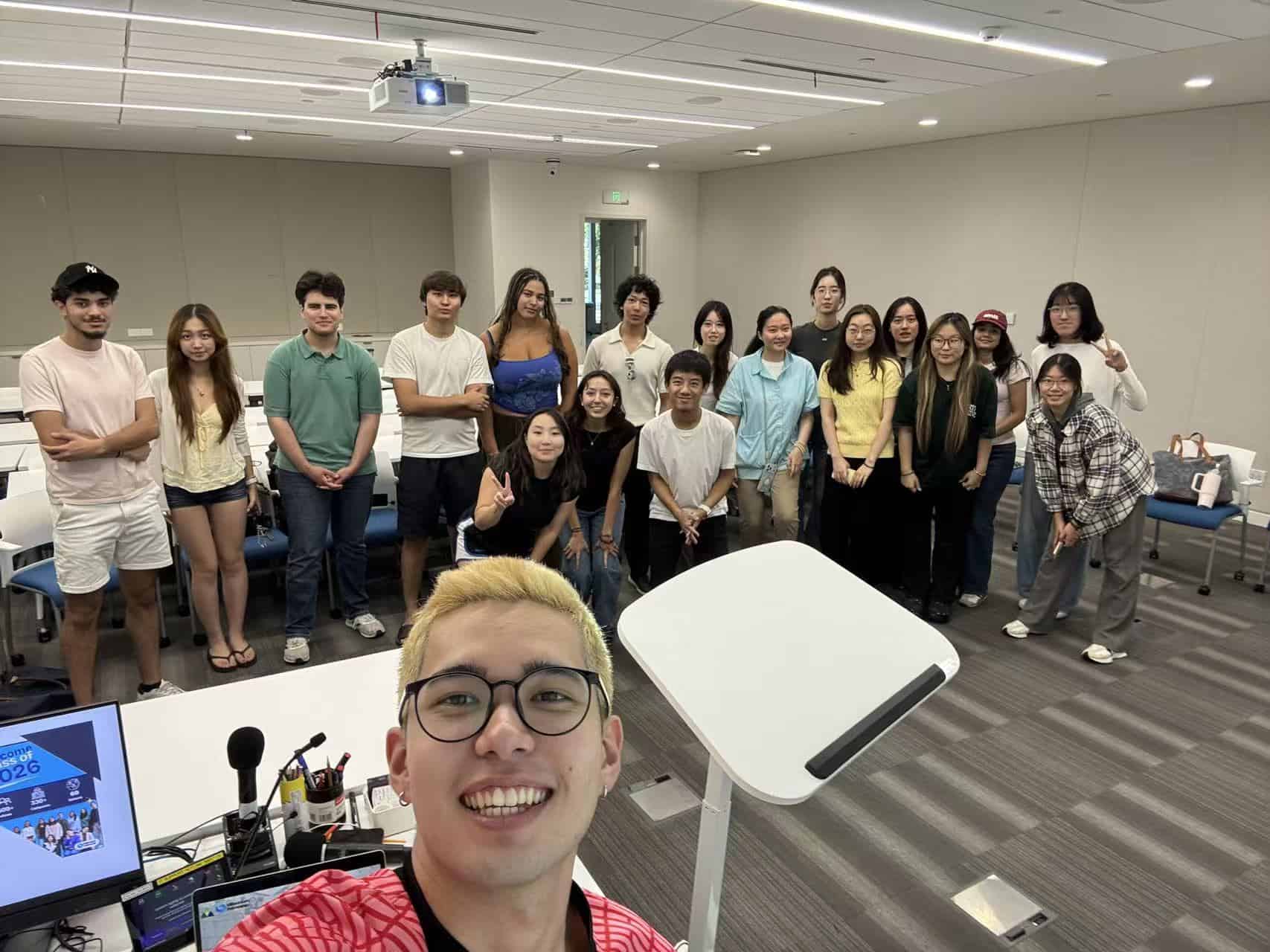
Among them, Xavier Monroy from the Class of 2027 and Oyu-Erdene Purevdorj from the Class of 2028 are serving as the two campus directors for this year’s DKU Millennium Fellowship cohort.
From Knowledge to the Real World
For Oyu-Erdene Purevdorj of Mongolia, an interest in public health grew not from the classroom, but from what she had witnessed in her own community.

“Growing up, I saw many people around me develop noncommunicable diseases such as diabetes, often because of low awareness or late diagnosis. The Fellowship seemed like a great opportunity to turn my ideas into action while learning from other students who are also passionate about creating positive change.”
Her project focuses on preventing noncommunicable diseases and improving public health awareness, with the aim of encouraging people to act before illness takes hold.
This year, she is serving as one of DKU’s Millennium Fellowship campus directors.
“The Fellowship has reminded me that even small projects can make a meaningful difference when they’re connected to real community needs.”
Her interests have also extended beyond public health and into international collaboration.
Through the Trans-Altai Sustainability Dialogue, Oyu-Erdene participated in the 17th Conference of the Parties to the United Nations Convention to Combat Desertification in Mongolia. During the conference, she supported discussions with experts from Stanford University on research related to water security and desertification.
“Working alongside researchers and professionals from different countries gave me valuable insight into international collaboration and the importance of interdisciplinary research in solving global challenges.”
From community health to environmental sustainability, these experiences have led her back to the same question: how can knowledge respond to the needs of the real world?
The other campus director, Xavier Monroy, has focused his efforts closer to home, working with the local community in Kunshan.
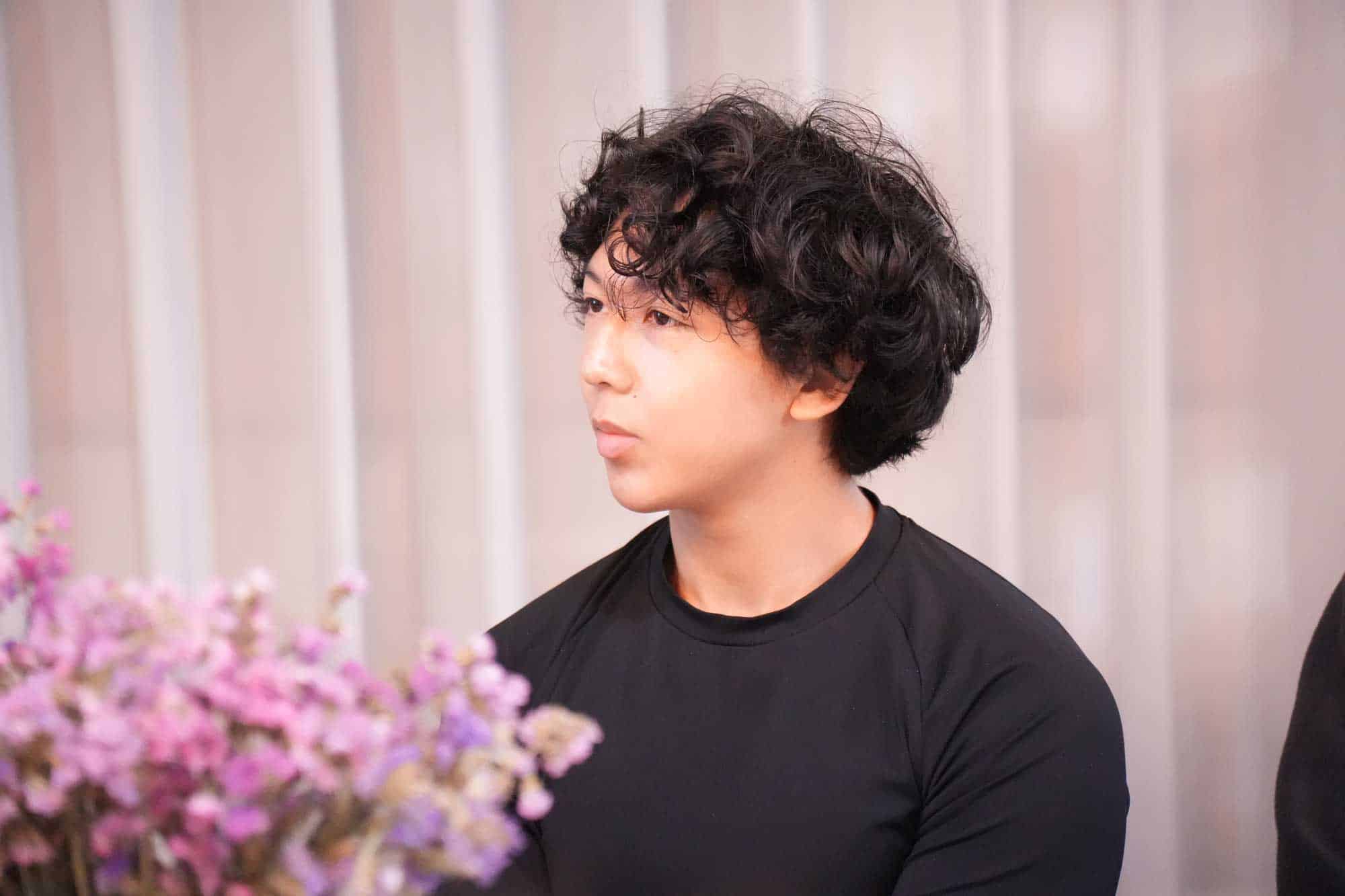
For people living abroad, a doctor’s visit can come with an added difficulty: explaining symptoms clearly and understanding medical advice.
The Medical English Program, or MEP, seeks to narrow that gap.
Launched in 2019 and led by DKU undergraduates, the program helps local medical professionals strengthen their medical English so they can communicate more effectively with international patients. The goal is simple: reduce language barriers and make it easier for people from abroad to access care in Kunshan.
Before applying for the Millennium Fellowship, Xavier had already served as a co-director of MEP. Rather than starting from scratch, he entered the Fellowship with an existing project and a different question: how could it be improved and taken further?
“Since the program is only one semester long, every week you need to be making progress. As a campus director you especially need to be an active communicator to keep up with all the other members and host sessions,” said Xavier.
For Xavier, that may be one of the fellowship’s central lessons: social impact does not stop at identifying a problem; it requires sustained action.
Together, the projects reflect an effort to take learning beyond the classroom and into the real world.
“The key value of the Millennium Fellowship is that it gives DKU students a structured opportunity to connect their academic interests with real-world challenges and the Sustainable Development Goals,” said Meifang Chen, assistant professor of health policy, who advises undergraduates applying to the program.
Yaolin Liu, chancellor of DKU, congratulated the students on being selected from a global pool of more than 76,000 applicants. “Today’s world needs more than people who possess knowledge. It needs young leaders who can turn knowledge into action, differences into collaboration, and ideals into meaningful change. We are proud of what these students have achieved and look forward to seeing them put what they have learned to the test in the real world, respond to the needs of society and create positive, lasting change.”
John Quelch, executive vice chancellor of DKU, said: “Global leadership begins with the ability to work with people who see the world differently and to turn shared purpose into meaningful results. Our Millennium Fellows have demonstrated that capacity: to learn from peers across countries and disciplines while deepening the impact of work rooted in their own communities. That combination of local commitment and global perspective is central to a DKU education.”