
Duke Kunshan University unveiled “Rocky Zero,” a large-scale outdoor sculpture by Dutch artist Tom Claassen, on Nov. 11.
The work traces its origins to a rock Claassen encountered in 2005 on the coast of Xiamen, a city in southeastern China.
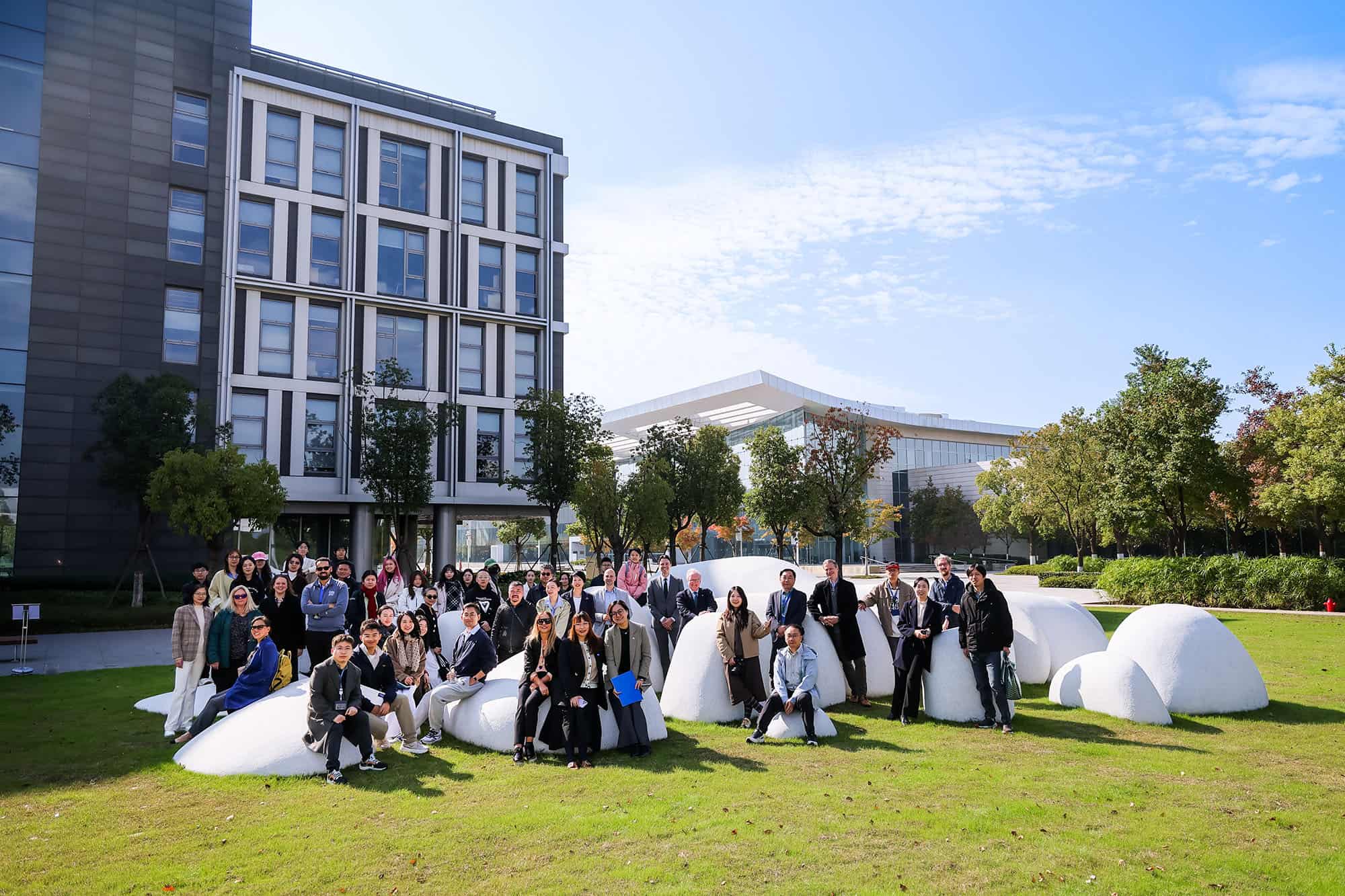
While visiting Xiamen for a sculpture festival, Claassen came across a large rock emerging from the sand. Shaped by erosion and time, it was warm to the touch and wide enough for several friends to sit side by side. Its form reminded him of an open palm.
Claassen was fascinated that nature, rather than an artist, had shaped the rock. That idea inspired “Rocky Zero,” a work meant to be experienced up close.
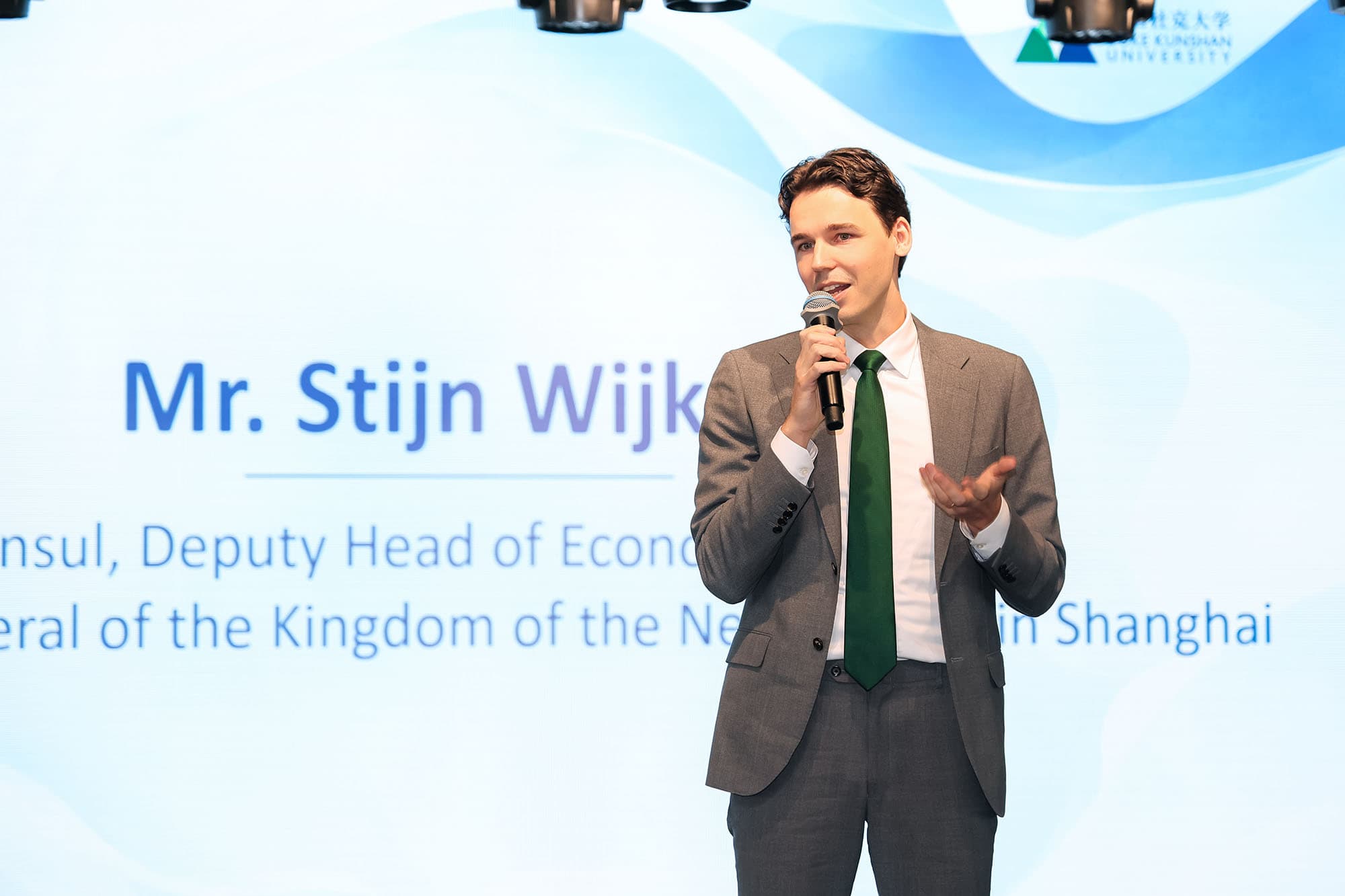
At the unveiling at DKU, Stijn Wijker, deputy head of economic affairs at the Consulate General of the Kingdom of the Netherlands in Shanghai, drew a connection between the sculpture and China’s long tradition of appreciating rocks and gardens.
“We don’t just look at this as an artistic contribution, but also as a way to connect our two countries,” he said.
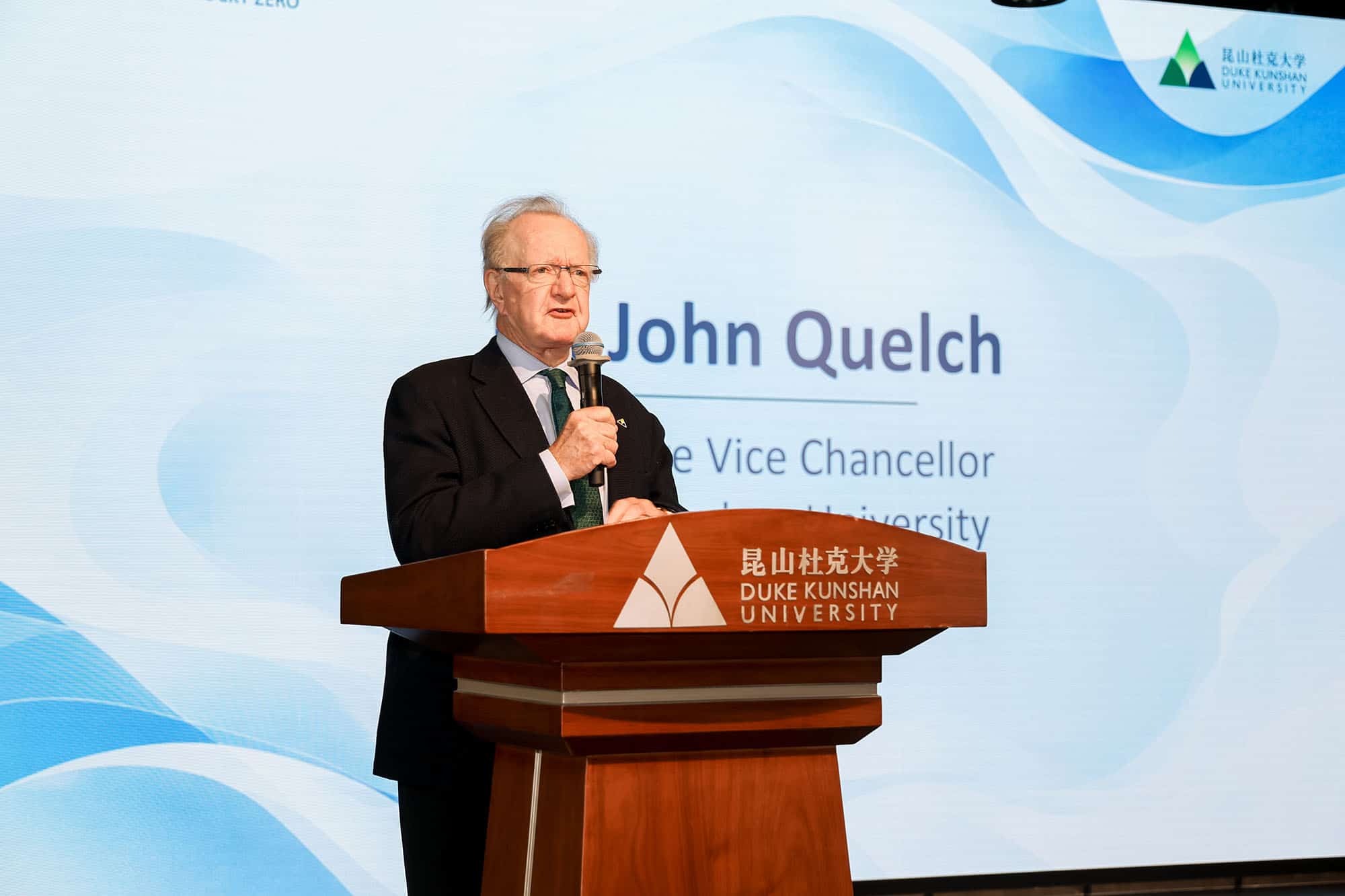
John Quelch, DKU’s executive vice chancellor, said education extends beyond classrooms, laboratories and libraries. Campus architecture, landscapes and public art also influence how people learn, interact and understand the world.
“Art can begin a conversation before we have found the right words,” Quelch said. He added that public art encourages people to slow down, look closely and consider different perspectives, helping create the conditions for learning and community life.
Quelch also thanked an anonymous donor whose generosity made the installation possible, along with the artists, project partners and DKU staff who helped bring the sculpture to campus.
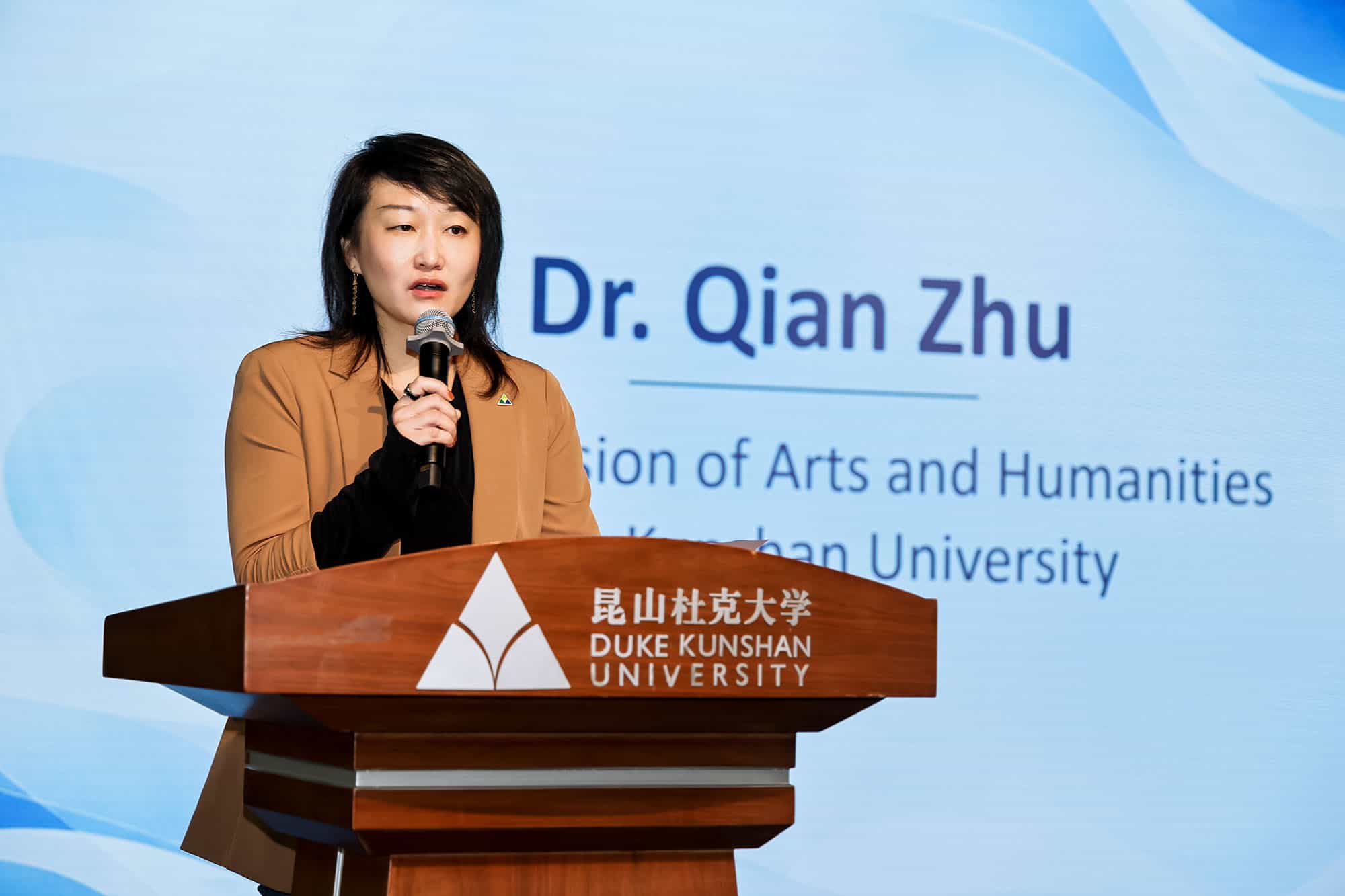
Qian Zhu, chair of the Division of Arts and Humanities and associate professor of history, asked how an artist’s idea can become a place where people gather. She said “Rocky Zero” connects nature, the human body and campus life, creating opportunities for people from different disciplines and cultural backgrounds to observe and exchange ideas.
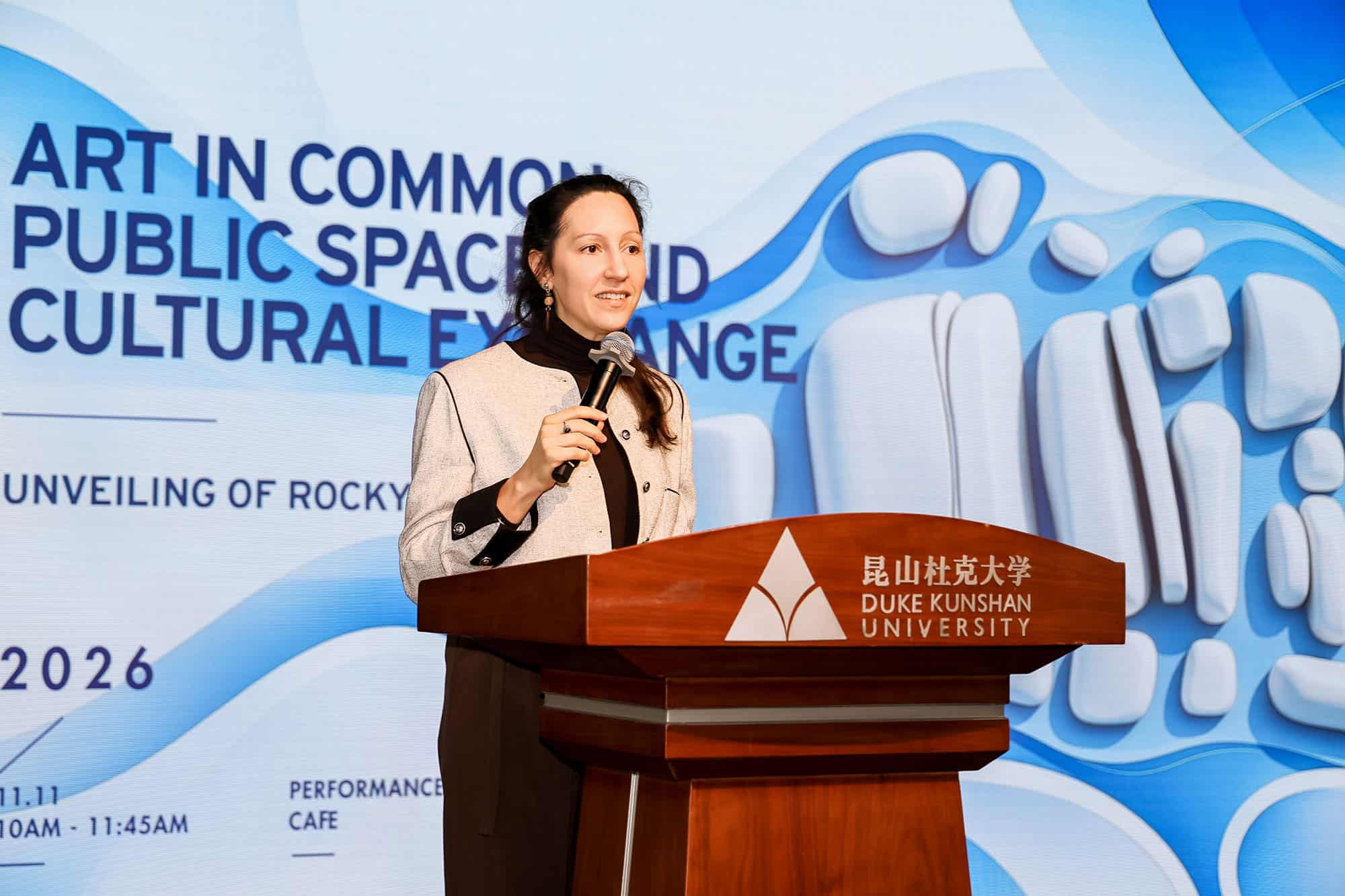
Coraline Goron, assistant professor of environmental policy and director of the Climate and Sustainability Initiative, also outlined plans for an ecological garden in the area around the sculpture. The project seeks to combine research and teaching with outdoor recreation and community life, and the project team is gathering feedback on the initial design from students, faculty and staff.
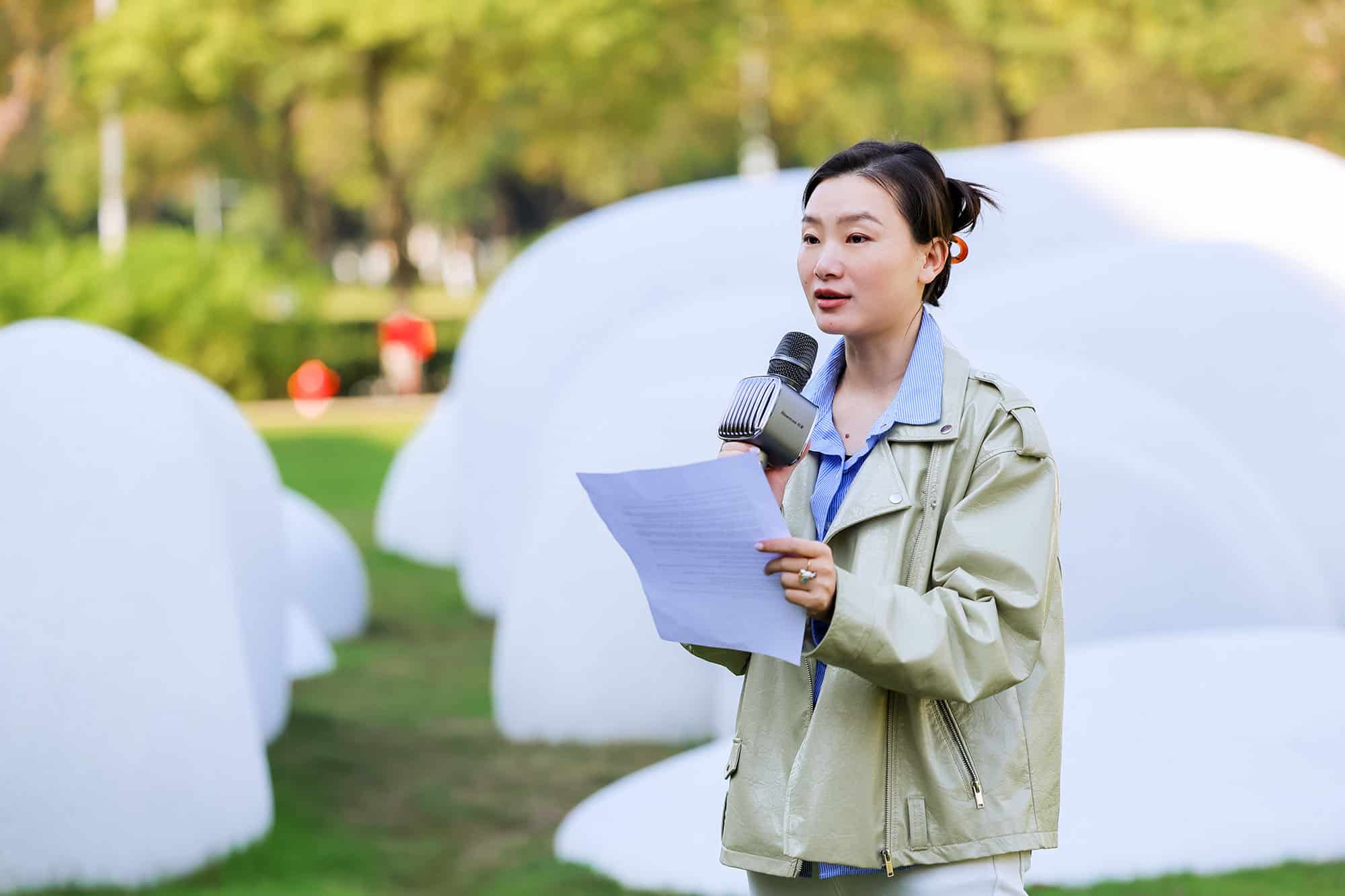
At the sculpture site, art adviser Ader Wu explained how Claassen’s rounded forms encourage people to touch, lean against and gather around his works.
A panel discussion on public space and cultural exchange followed the unveiling. Moderated by Jung Choi, associate chair of the Division of Arts and Humanities and assistant professor of visual and media studies, it brought together artists and scholars to explore how public art enters everyday life.

In a video message played at the unveiling, Claassen said he hoped students would stop by “Rocky Zero” on their way to class, sit with friends and enjoy a coffee. Their memories, he said, might have little to do with the sculpture itself.