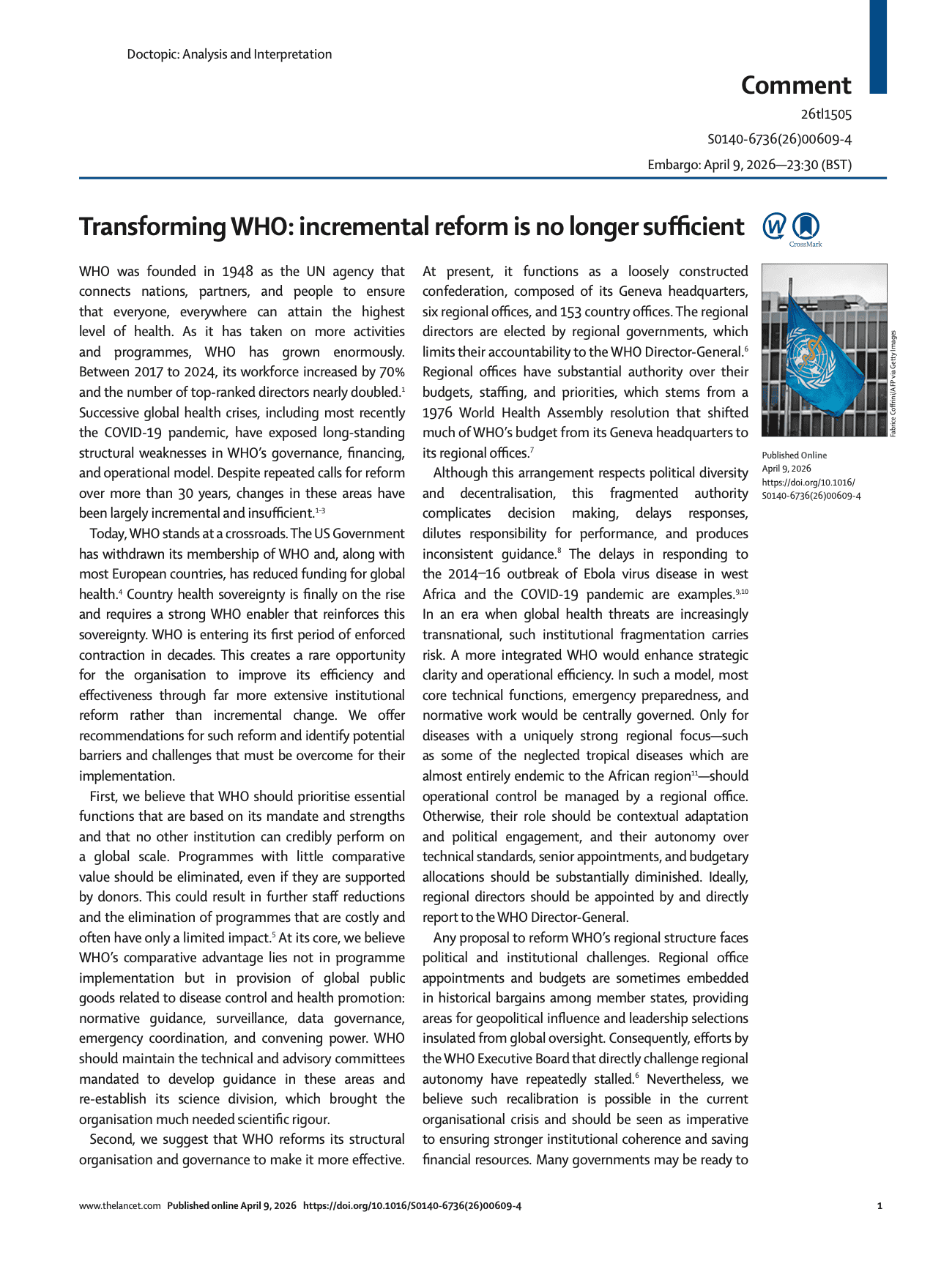
Shenglan Tang, co-director of the Global Health Research Center at Duke Kunshan University, has co-authored a new commentary in the Lancet with Michael Merson calling for more far-reaching reform of the World Health Organization.
The commentary, “Transforming WHO: incremental reform is no longer sufficient,” was published April 10.
Tang is also Mary D.B.T. and James Semans Professor at Duke University School of Medicine and research professor of global health at the Duke Global Health Institute. He previously worked for WHO in China and at its headquarters in Geneva.
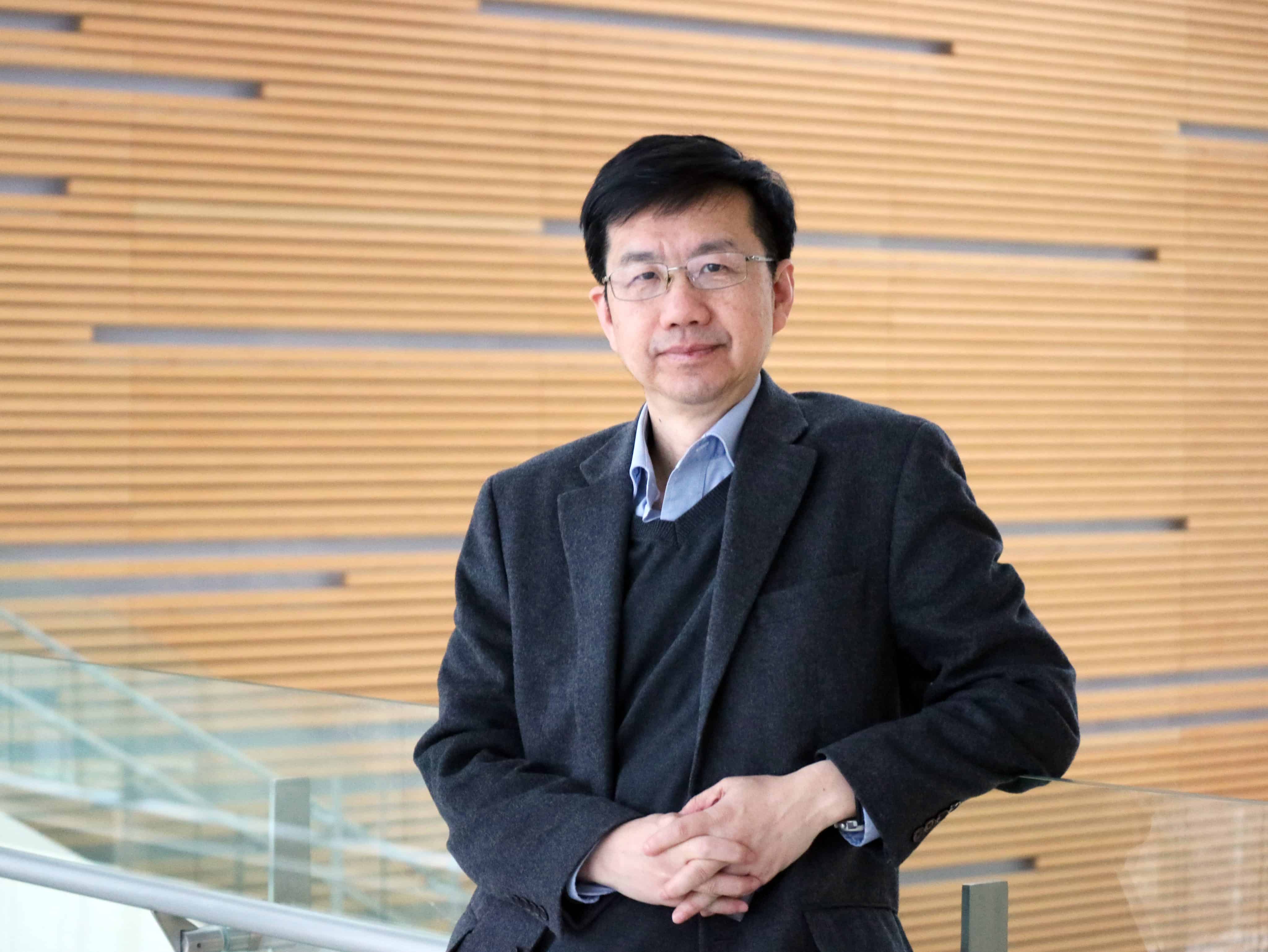
Shenglan Tang
Co-director of the Global Health Research Center and professor at Duke Kunshan University
Mary D.B.T. and James Semans Professor at Duke University School of Medicine
In the commentary, Tang and Merson write that while calls to reform WHO have surfaced for decades, the changes made so far have been too limited to meet today’s global health challenges. They argue that recent crises, especially the COVID-19 pandemic, exposed long-standing weaknesses in the organization’s governance, financing and operating model.
The authors say WHO is now at a turning point. As global health funding tightens and the organization enters what they describe as its first period of forced contraction in decades, they argue that the moment offers a rare chance to rethink how WHO works and what it should prioritize.
The commentary focuses on three main areas for reform.
First, Tang and Merson argue that WHO should narrow its focus and concentrate on the functions only it can credibly perform at the global level. That includes setting standards and guidance, monitoring disease threats, strengthening health data governance, coordinating emergency responses and bringing countries together to address shared public health priorities. They write that programs offering limited added value should be phased out, even when they have donor support.
Second, they call for a more unified organizational structure. WHO currently operates through its headquarters in Geneva, six regional offices and 153 country offices. The authors argue that this fragmented structure can slow decision-making, weaken accountability and lead to inconsistent guidance, especially during global health emergencies. A more integrated model, they write, would improve both strategic clarity and operational efficiency.
Third, the commentary urges WHO to rethink its country-level presence. Rather than maintaining the same model everywhere, the authors propose a more tailored approach: full country offices in fragile and low-income countries, smaller technical liaison offices in some upper-middle-income countries, and periodic technical missions and structured policy dialogue in countries with stronger domestic public health capacity. They argue that such a model would allow WHO to direct more of its limited resources to places where they can have the greatest impact.
The authors also acknowledge that meaningful reform would face significant obstacles. They point to political sensitivities, donor restrictions, internal resistance and concerns about equity among the major barriers to change. Even so, they argue that modest adjustments will no longer be enough. Without more substantial reform, they write, WHO risks being trapped between expanding expectations and diminishing capacity.