
Inside a virtual reality headset, Rittik Barua’s program uses small changes in a person’s head and body movements as signs that their attention may be drifting. It does not decide whether someone is paying attention. Instead, it offers feedback intended to gently guide the user back to the task.
Barua has spent much of his life living with attention-deficit/hyperactivity disorder, or ADHD.
In another project, Dominika Wilczok, from Poland, compared fresh, conventionally frozen and vitrified mouse brain tissue, searching for molecular structures that may be especially vulnerable to cryopreservation.
Zheng Zeng returned through research to his hometown of Huangshi in Hubei province in central China. He wanted to understand how cities built on mineral wealth might recover after decades of resource extraction.
Yuting Zeng turned to writings produced more than 300 years ago. Through the work of poet Shen Yixiu, who mourned the death of her 17-year-old daughter, Ye Xiaoluan, Yuting began to reconsider a deceptively simple question: Is a mother-daughter relationship shaped only by the years two people spend together?
The projects crossed science, technology, public policy and literature. What united them was the desire to understand something that genuinely mattered to the student asking the question.
At Duke Kunshan University, Signature Work can take the form of an experiment, a software prototype, a policy proposal or a study of literature or society. With guidance from faculty mentors, undergraduates turn personal interests and public concerns into questions that can be investigated, tested and refined.
Research rarely produces a perfectly neat answer. More often, it teaches students to revise the question, support a claim with evidence and recognize what remains unknown.
The experiment that nearly did not happen
Dominika Wilczok originally planned to study different types of brain cells.
She soon discovered that obtaining the right samples would be far more difficult than expected. DKU did not yet have an established research process for the work she wanted to conduct, so she contacted research organizations across China, visited facilities and, at one point, came close to working with a company in New York on the experiment’s most technically demanding steps.
Even with project funding, she had to weigh cost, reagent availability and technical feasibility.
This was different from her previous research experience. Laboratory managers and principal investigators had usually handled such decisions. This time, she had to confront the practical realities behind an entire research project.
After many anxious, sleepless nights, she came close to abandoning it.
Her mentor, Ferdinand Kappes, associate professor of biology, helped her reconsider the design. If isolated brain cells were too difficult to obtain, he asked, why not study intact brain tissue containing those same cells?
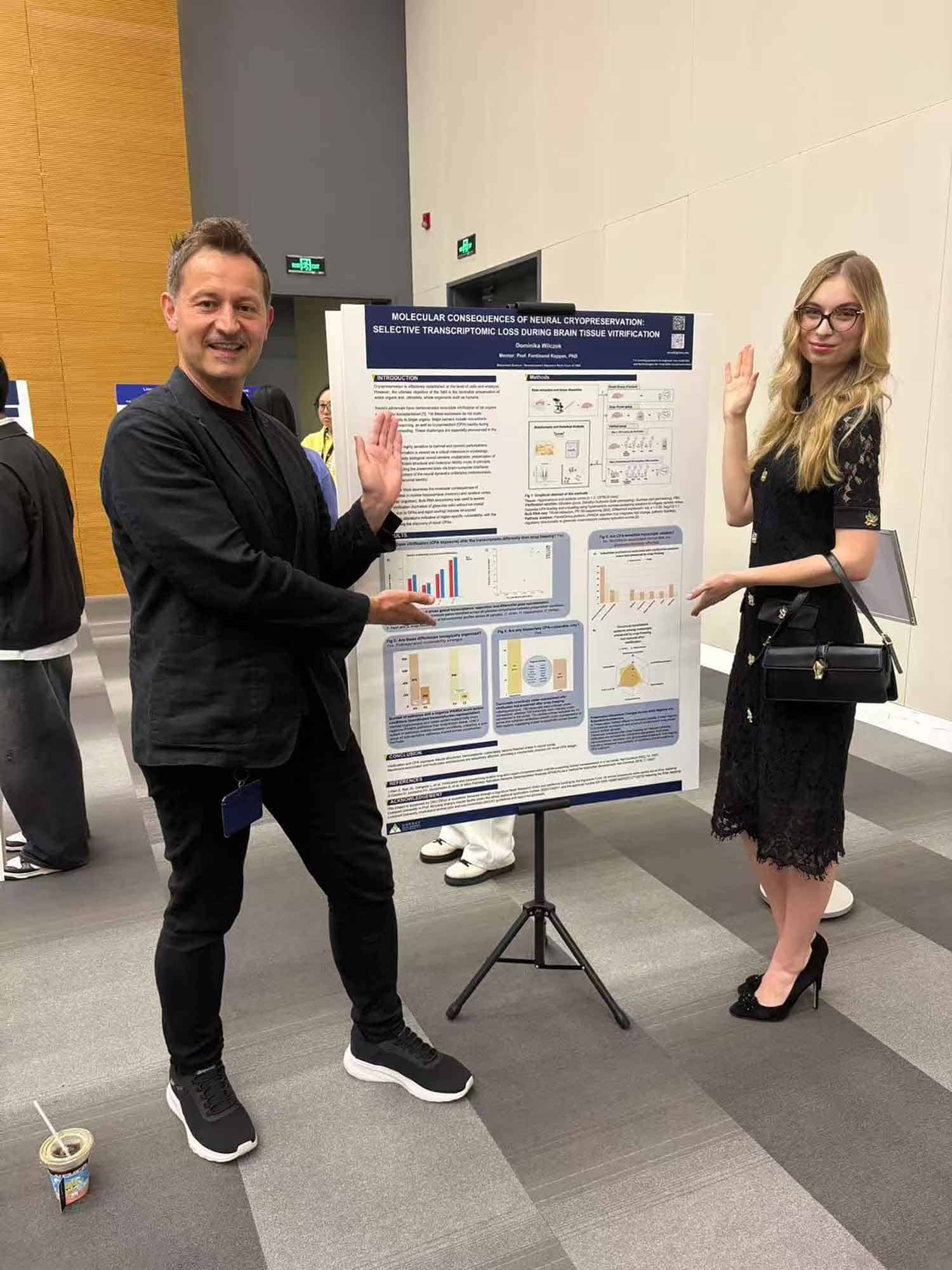
Dominika Wilczok (right) with Professor Ferdinand Kappes
That change allowed the project to move forward.
Wilczok compared samples from the cerebral cortex and hippocampus of mouse brains under three conditions: fresh, conventionally snap-frozen and vitrified.
Vitrification uses cryoprotective agents and rapid cooling to place tissue in a glasslike state, reducing the ice crystal damage that can occur during ordinary freezing. It is an important area of research in the preservation of biological tissues and organs.
Her analysis found that vitrification was associated with the selective loss or underrepresentation of a group of RNA molecules linked to cell membranes, receptors, transport systems and cellular signaling. The hippocampus appeared more vulnerable than the cortex.
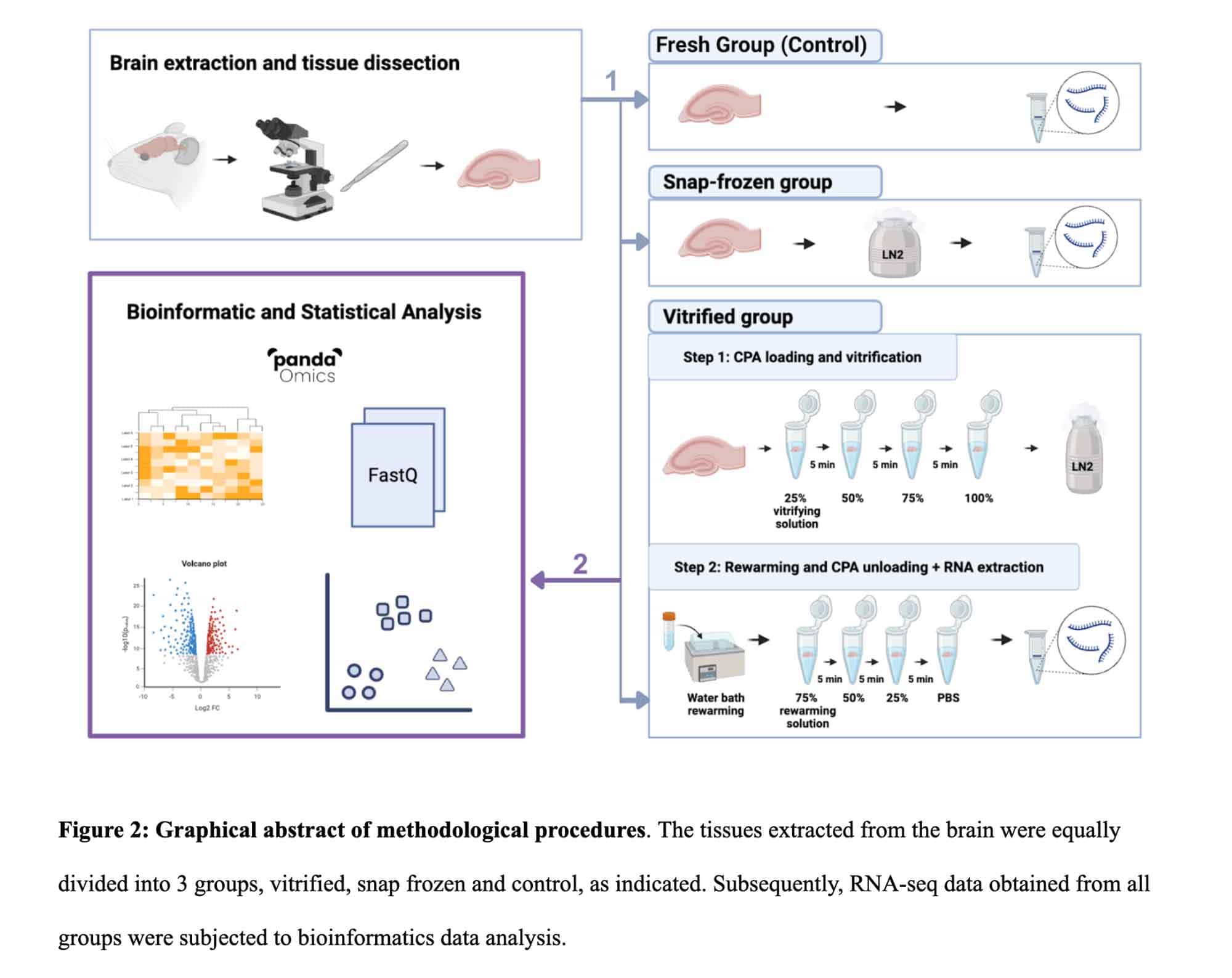
The findings suggest that membrane-related structures may be among the molecular barriers limiting the recovery of neural tissue after vitrification. They may also point toward future research on cryoprotective agents designed to preserve those structures more effectively.
Wilczok’s project grew from her interest in longevity and the possibility of preserving biological systems until medicine advances. The immediate importance of cryopreservation, however, is far less speculative. Modern biomedical research already depends on the ability to store, transport and study cells, tissues and other biological materials. Researchers are also working to preserve whole organs for longer periods, which could give transplant teams more time to use donated organs.
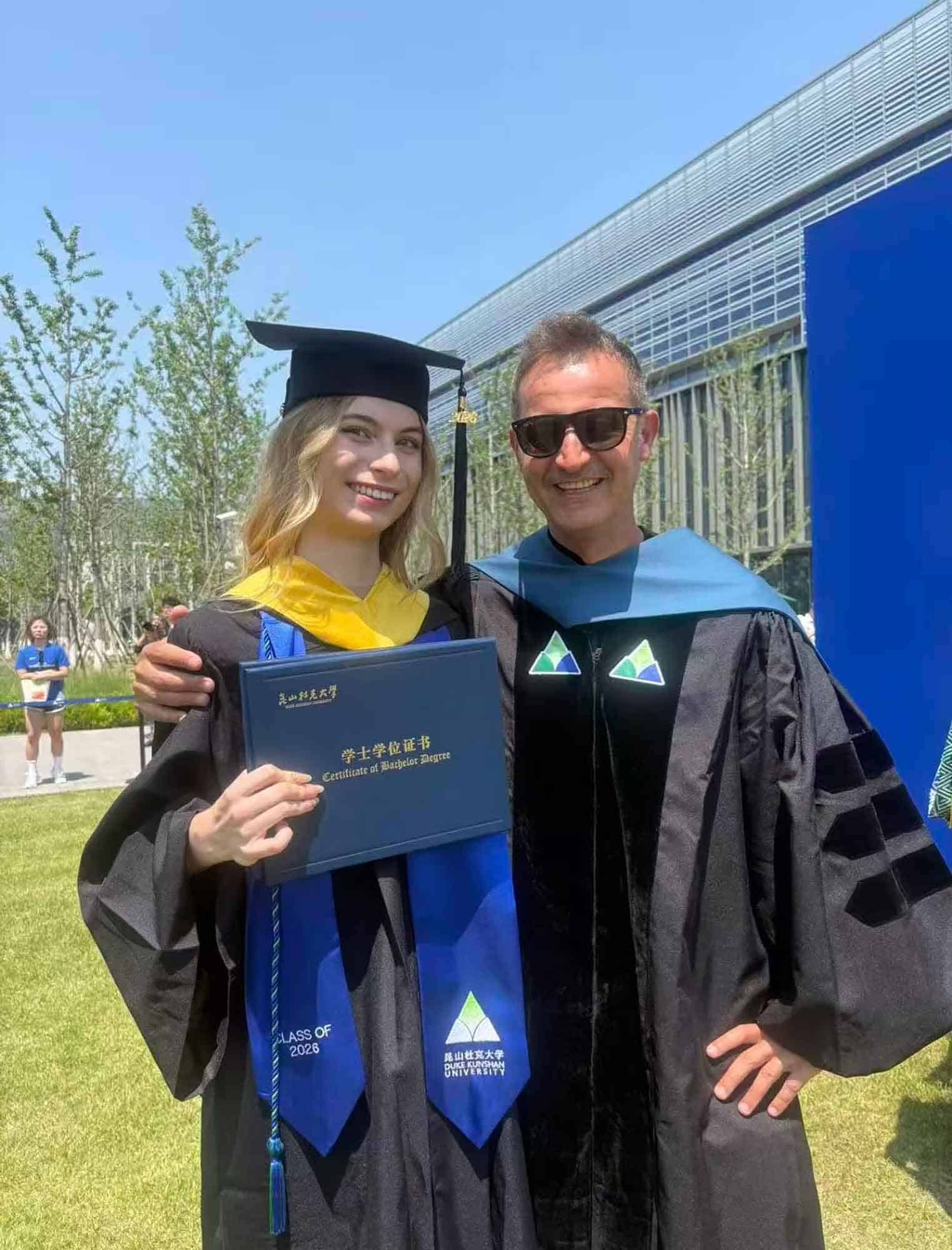
Dominika Wilczok (left) with Professor Ferdinand Kappes
The project eventually extended beyond a single campus. Wilczok worked with researchers at Xi’an Jiaotong-Liverpool University and the University of Minnesota, drawing on their expertise in mouse tissue and cryobiology.
Looking back, she said Kappes had changed her understanding of mentorship. A good mentor did not remove every difficulty. He offered enough support to make the next step possible while requiring her to develop the judgment and independence to take it.
Revising the experiment became part of learning how research works.
Training attention in virtual reality
Rittik Barua compares his virtual reality program to the training wheels on a bicycle.
The purpose is not to control users or decide whether they are paying attention. The program works alongside them, using changes in head and body movement as signs that their focus may be shifting.
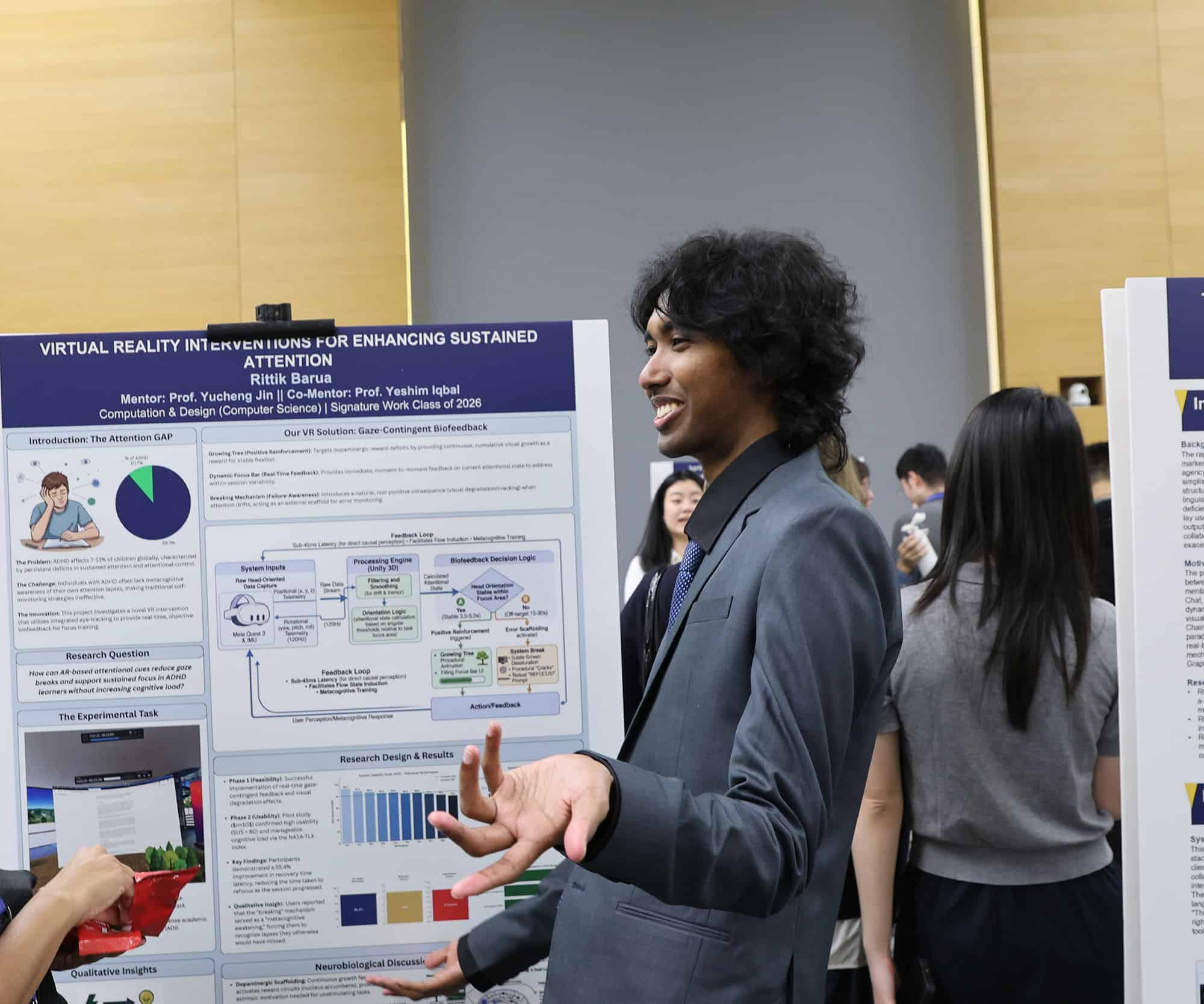
Barua has lived with ADHD for much of his life. Studying and working often meant wrestling with thoughts that repeatedly pulled him away from the task in front of him. Medication did not resolve every difficulty, and he began to wonder whether technology could provide another kind of support.
He spent nearly two years developing the program. He built its three-dimensional environment in Blender and Unity and created its central mechanisms using C++ and C#.
As the project progressed, Barua found that some of its hardest questions were not technical.
Testing the system required careful attention to privacy, stigma and research ethics. In exploratory testing involving about 15 participants at DKU, including students diagnosed with ADHD, he asked users to experience the program and describe whether they found it comfortable and helpful.
The study focused on participants’ perceptions rather than clinical outcomes. It could not establish that the program treated ADHD, but it allowed Barua to examine whether users found the approach acceptable and worth developing further.
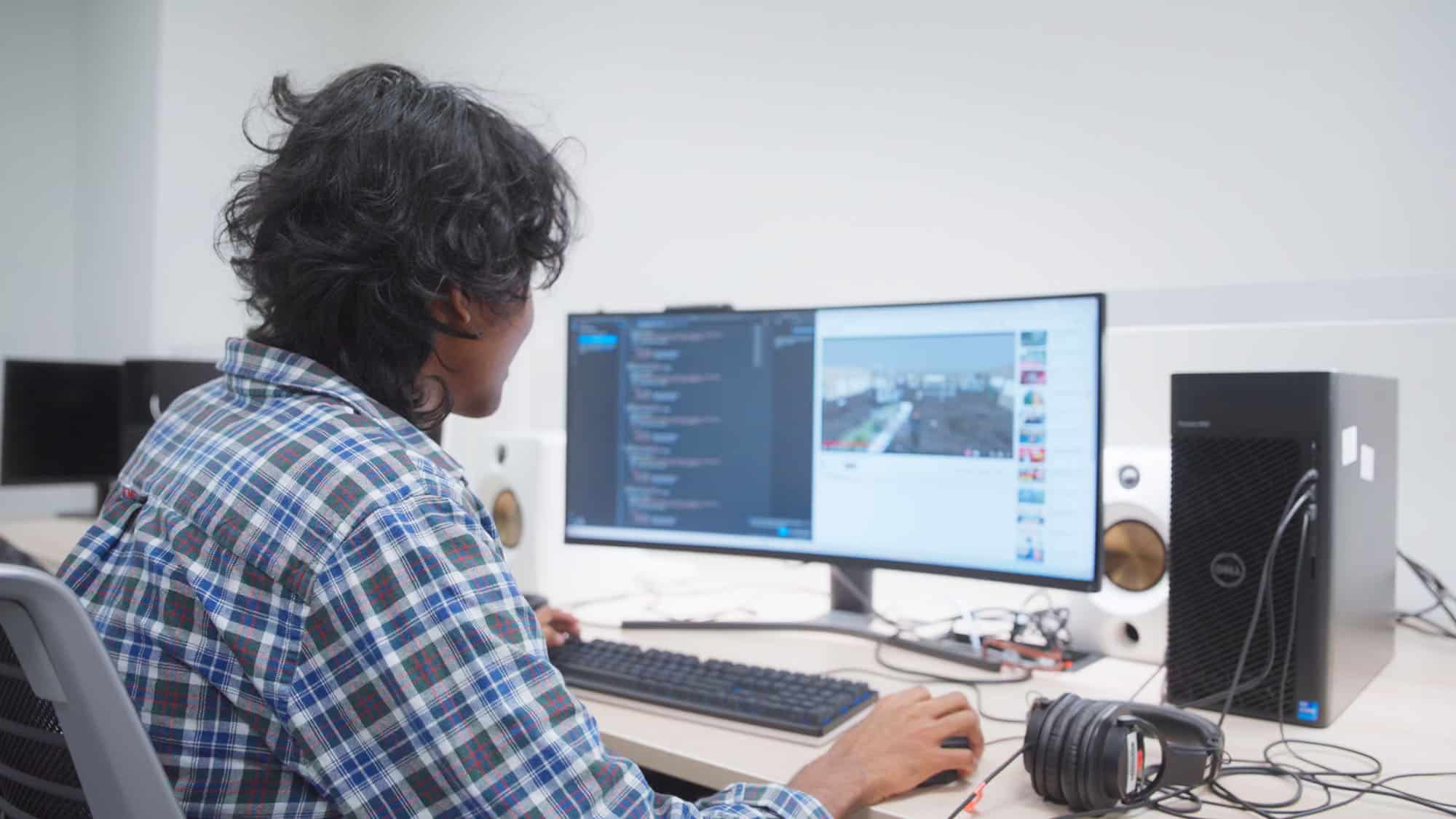
His interest in accessibility is also personal. His brother has a disability, and Barua’s experience with ADHD has made the idea of “a level playing field” more than an abstract principle.
He hopes the program can continue to be tested, revised and adapted for people with a wider range of learning and accessibility needs. He does not want it to become a student prototype that is completed and then put away.
When realism looks like a promise
When Wenyi Zhang began building an interactive 3D system for consultations before facial procedures, she assumed that greater realism would make the technology better.
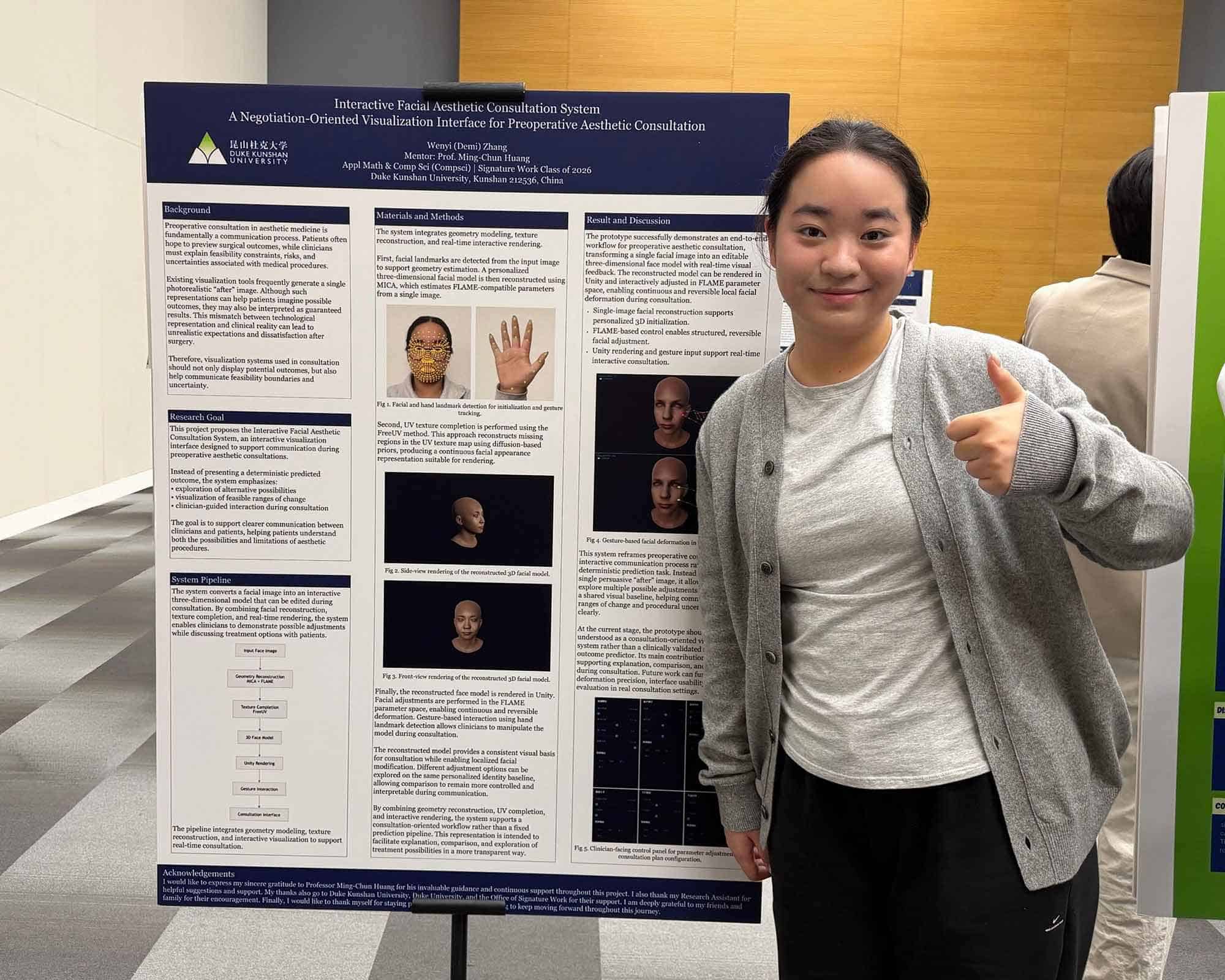
Her system allows users to create a three-dimensional facial model and manipulate it through gestures. They can rotate the face, enlarge details and adjust specific features. The project brought together 3D modeling, texture generation, parameter controls and real-time interaction.
As the prototype became more sophisticated, Zhang began asking herself a different question: Was each new feature improving the consultation, or merely making the system look more impressive?
In aesthetic medicine and facial reconstruction, a highly realistic simulation can easily be mistaken for a promise. A patient may look at an idealized image and assume that it represents an achievable or guaranteed result.
Actual procedures are more complicated. Skin condition, soft tissue, blood vessels, healing and individual variation all affect outcomes. No digital model can fully reproduce those factors.
Zhang gradually changed the purpose of the system. Rather than producing a seemingly definitive future face, she began designing it as a shared space for discussion. Clinicians and patients could explore possible changes while also recognizing uncertainty and limits.
“What surprised me most was that realism is not always the final goal,” she said.
The project changed her understanding of engineering.
“A good system does not always turn a complex issue into a simple answer,” she said. “Sometimes, it should help people see the complexity more clearly.”
Seeing his hometown differently
Zheng Zeng grew up in Huangshi, a city in Hubei province in central China that was shaped by copper, iron and cement.
Mining and heavy industry brought prosperity to the city. They also left Huangshi facing a difficult transition as resources declined, industries weakened and environmental pressures accumulated.
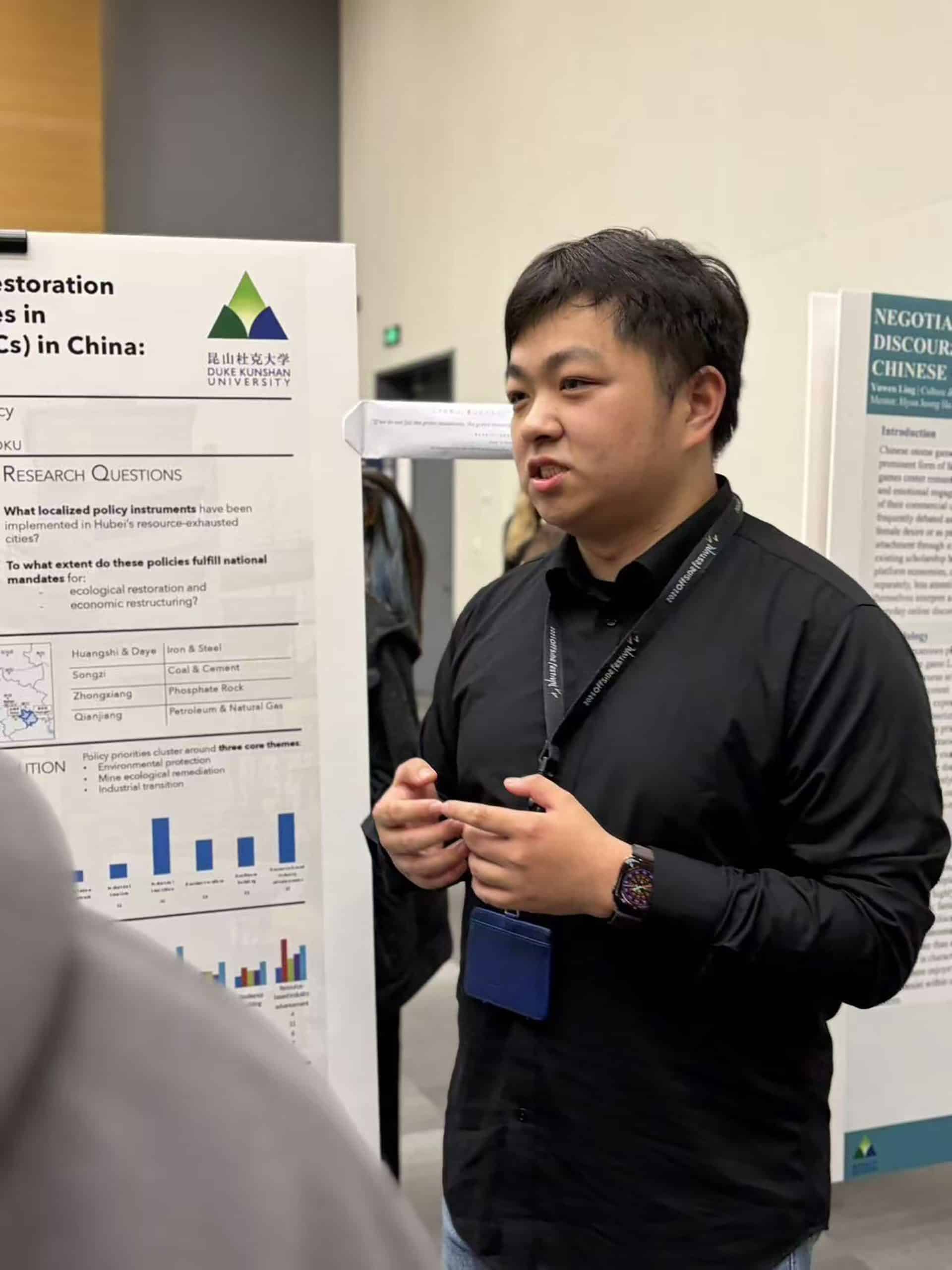
Zeng made Huangshi and four other resource-dependent cities in Hubei the focus of his Signature Work. He wanted to understand how places shaped by decades of mining and extraction were responding to economic decline and environmental damage.
He initially planned to conduct a quantitative study, using a common set of indicators to compare the cities’ economic and environmental transitions.
The available data did not support that approach. Public statistics for smaller cities were incomplete and fragmented. Figures released by different agencies or in different years did not always align. A quantitative model might have produced an orderly set of numbers without accurately representing the cities themselves.
Zeng changed his method. He examined local news reports, policy documents and development records to compare the paths the five cities had taken.
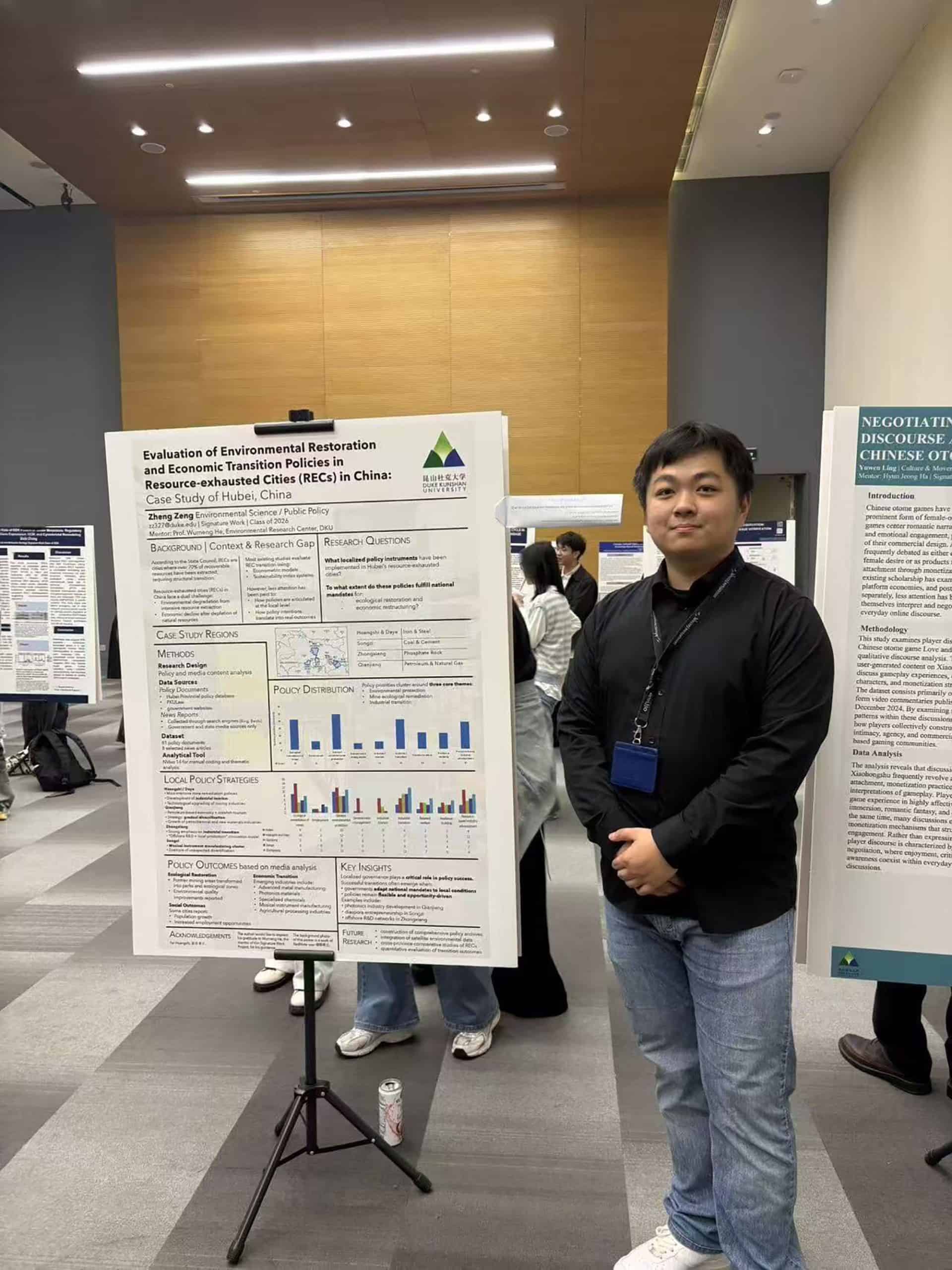
The new approach revealed differences that his original model might have obscured. Cities facing similar problems under the same national policy framework did not necessarily respond in the same way.
Some repurposed mining and industrial sites for tourism. Others retired outdated production capacity and attracted advanced manufacturing. Some began investing in emerging industries, including photonics, despite having little previous foundation in those fields.
Zeng concluded that no single approach could work for every city. Successful transformation depended on local adaptability, the ability to mobilize existing resources and the capacity to recognize new opportunities.
The research also changed his relationship with Huangshi. After years away, he found himself connected again to his hometown and to its efforts to imagine what might come after the industries that had defined it.
Writing policy for a moving target
For Abdullah Bin Javed, the subject was already entering classrooms everywhere: artificial intelligence.
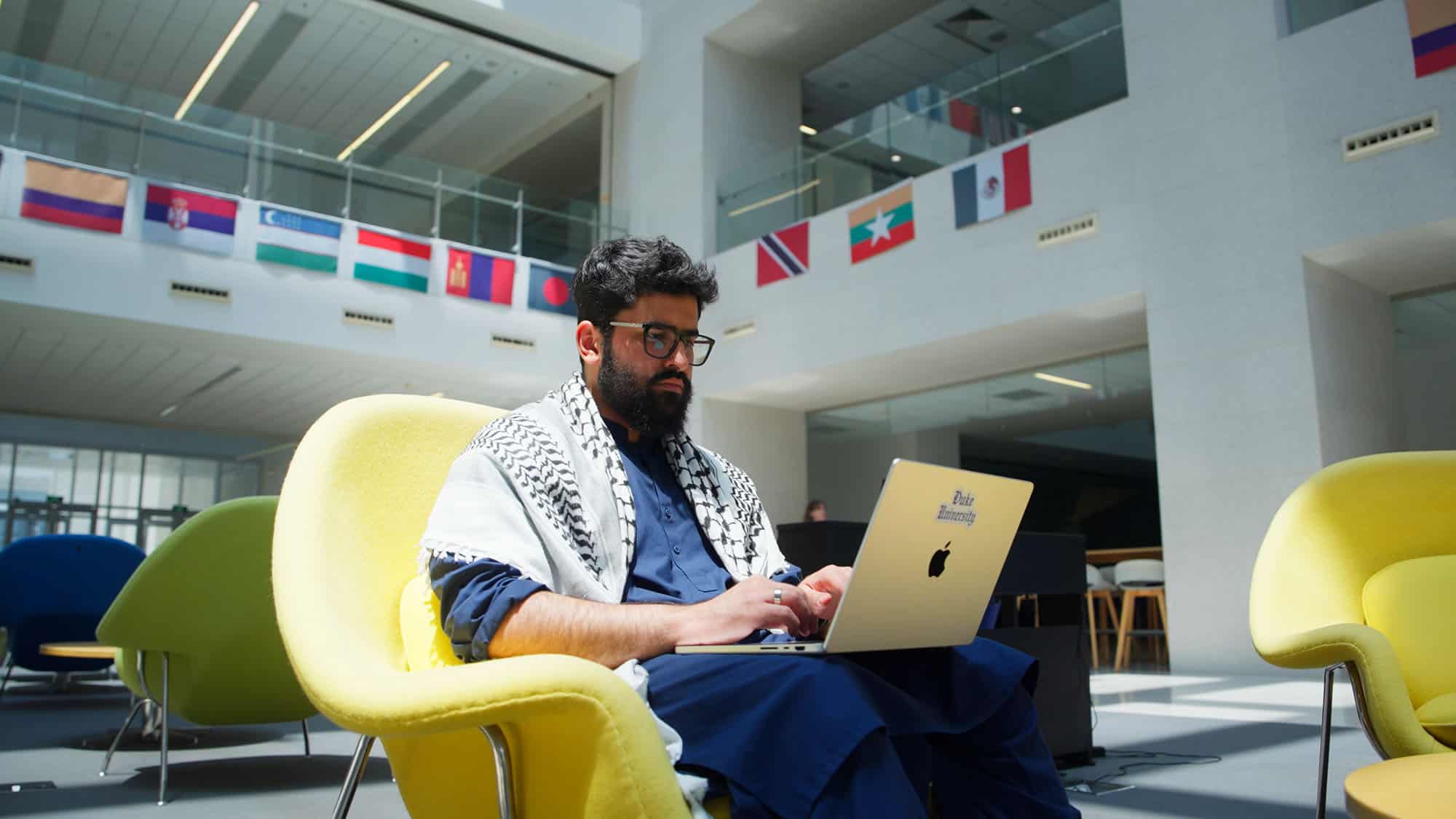
During a summer at Duke University, Javed contributed to artificial intelligence policy work involving a North Carolina state government office. The experience led him to ask how universities might use AI to support learning without allowing it to weaken the thinking that education is meant to develop.
A single rule could not provide the answer.
Students in different disciplines and at different stages of study use technology in different ways. AI tools are also changing too quickly for a fixed policy to remain useful for long.
Javed developed a policy proposal intended as a starting point rather than a final set of rules. Institutions could adapt it to their educational aims, test it in practice and revise it as the technology and available evidence changed.
One of the hardest parts of the project was accepting that no policy could fit every university or remain appropriate indefinitely.
For Javed, the central question was not simply whether students should use AI. It was how universities could make room for a technology that is unlikely to disappear while continuing to protect students’ ability to think for themselves.
Understanding her mother through an old text
Yuting Zeng’s research began with the person closest to her.
“My mother is very important to me,” she said.
Their relationship led her to think about how bonds between mothers and daughters shape a person’s development. A course on Ming and Qing literature taught by Wenting Ji, assistant professor of Chinese, gave her a way to bring that question into her study of the past.
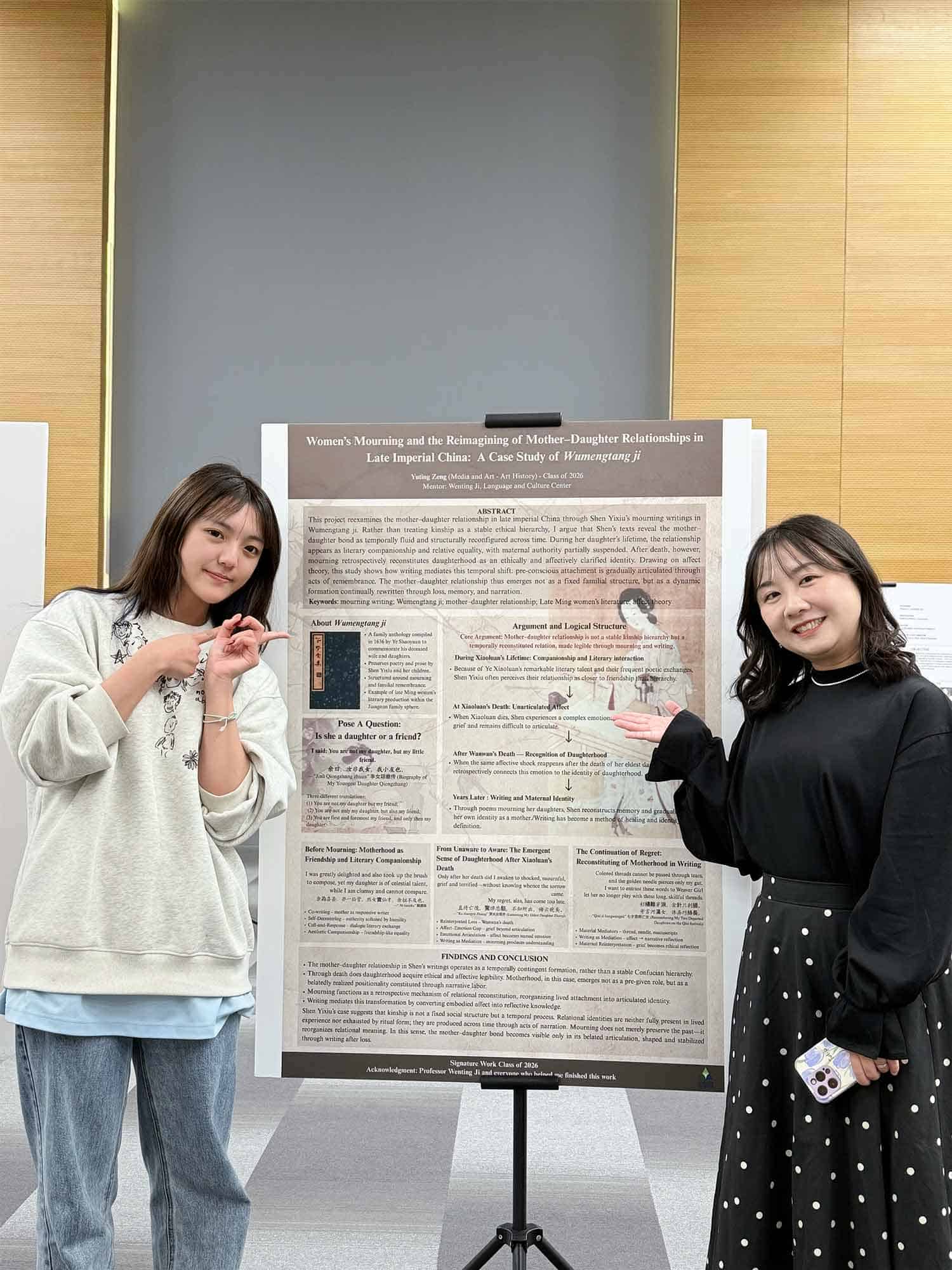
Yuting Zeng (left) with Professor Wenting Ji
Zeng chose to study poet Shen Yixiu and her third daughter, Ye Xiaoluan.
Ye died at 17. Shen later produced numerous writings in her memory.
Through close reading, Zeng developed an interpretation of how the relationship between the mother and daughter continued to take shape after Ye’s death.
In Zeng’s reading, Shen continued to build their bond through memory and writing. By recording her daughter’s life, returning to her loss and preserving her presence in words, Shen gave the relationship a life beyond the years they had shared.
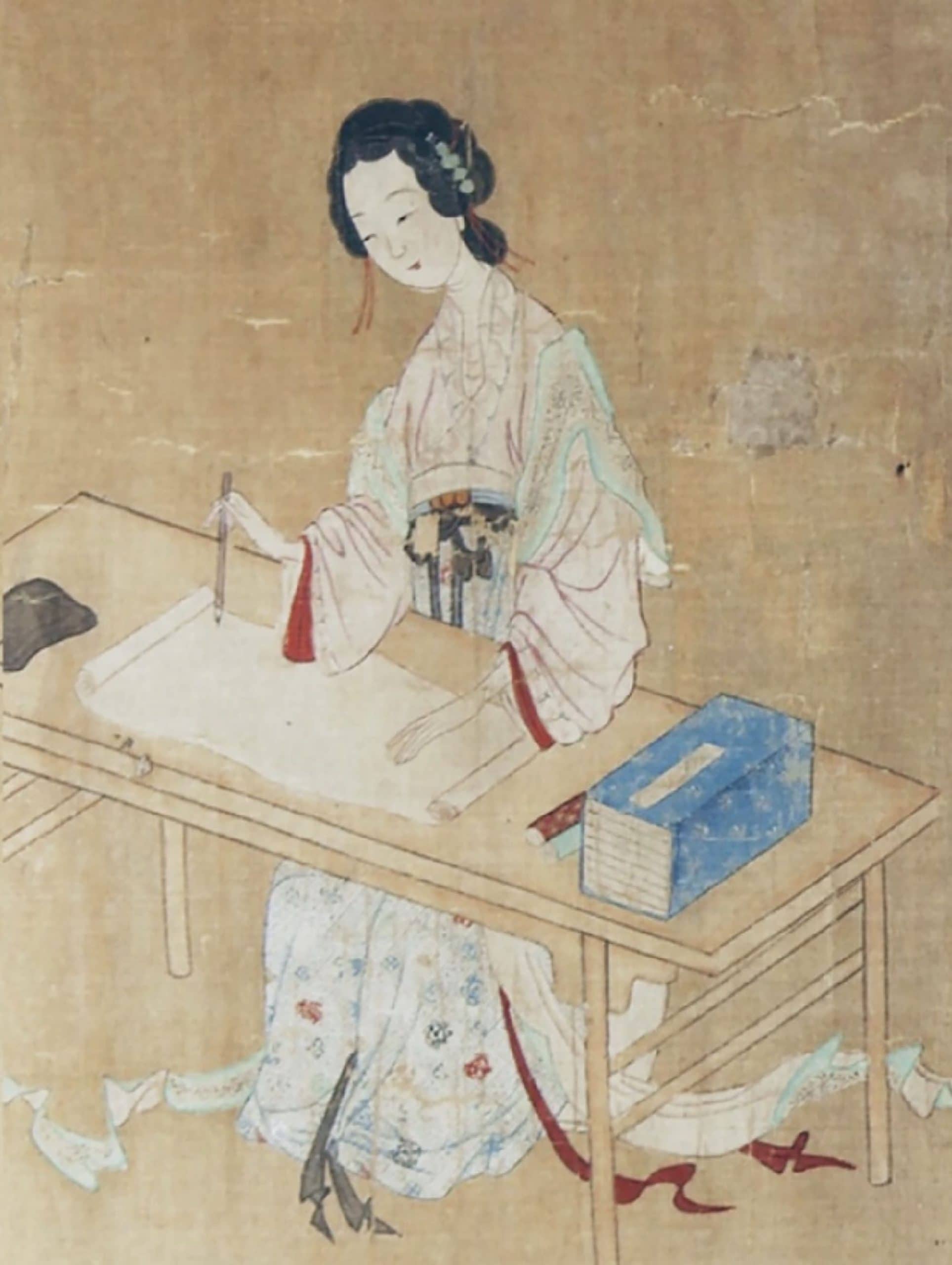
Zeng was not always confident that she could accurately understand the emotions of a woman who had lived more than 300 years ago.
That uncertainty became one of the most difficult and productive parts of the project. She kept asking whether a modern reader could truly interpret Shen’s grief. Was the connection she felt present in the historical text, or was she projecting her own experience onto it?
The project became Zeng’s first academic paper of more than 50 pages. She revised its structure and argument repeatedly with feedback from professors and classmates.
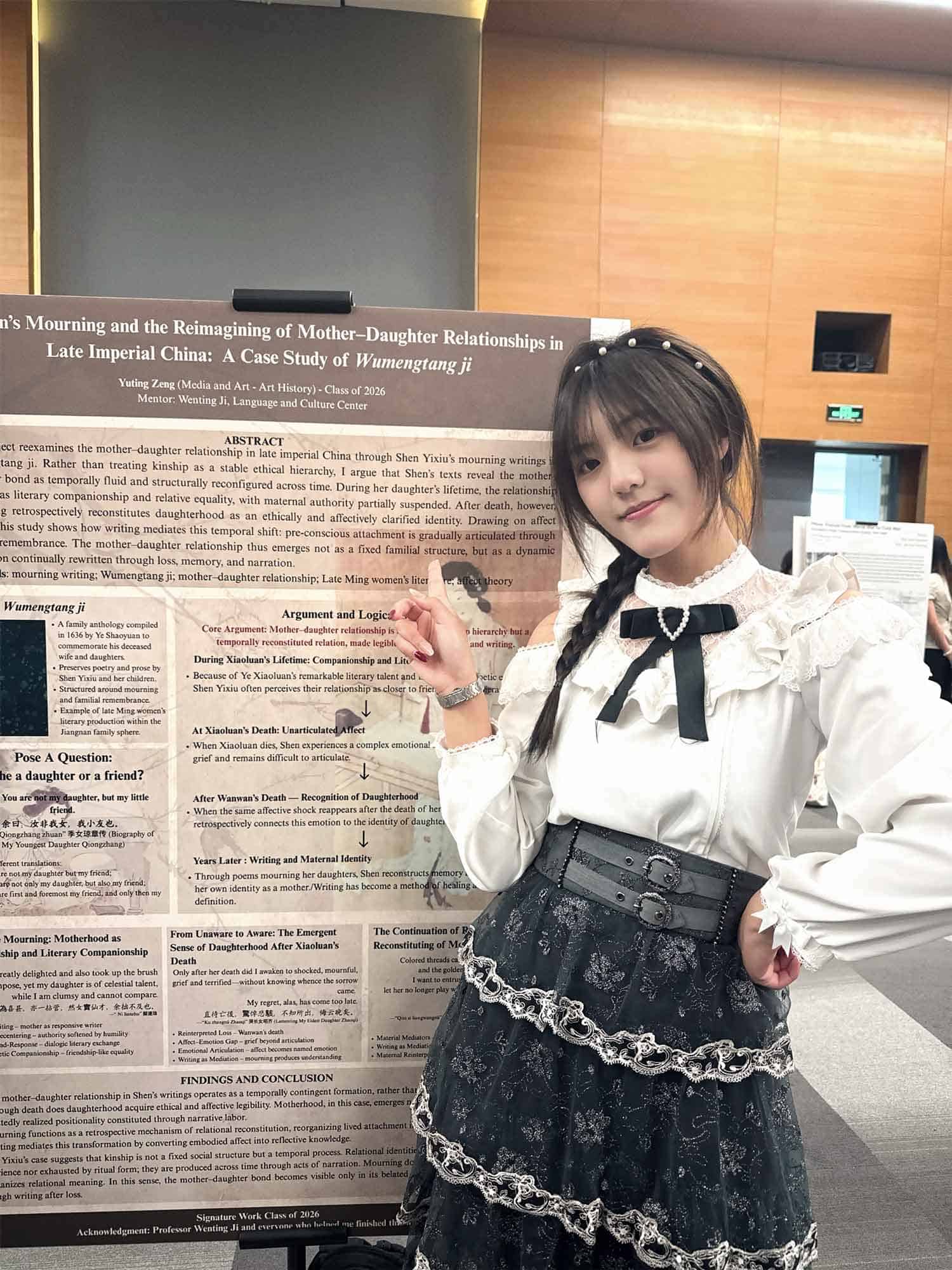
When the paper was finished, her mother read it.
Academic research no longer seemed so remote from ordinary life. For Zeng, the grief of a mother writing centuries ago also offered a new way to understand a relationship close at hand.
“I felt I had brought what I was learning into my own life,” she said.