
As artificial intelligence reshapes classrooms around the world, educators from across Asia gathered at Duke Kunshan University to consider a question: What should remain distinctly human about teaching and learning?
The 2026 Global Education Innovation Forum, held April 24-25 at DKU, brought together scholars, university leaders and educators for two days of discussions on AI, liberal arts education, critical thinking and the changing role of faculty. The forum’s theme was “The Future of Teaching: Judgment, Authenticity, and Innovation in Asian Higher Education.”
In opening remarks, DKU Chancellor Yaolin Liu said AI is already changing higher education, from the responsibilities of faculty to the ways students learn and the ways knowledge is created and shared. He also noted that the technology brings ethical and moral challenges.
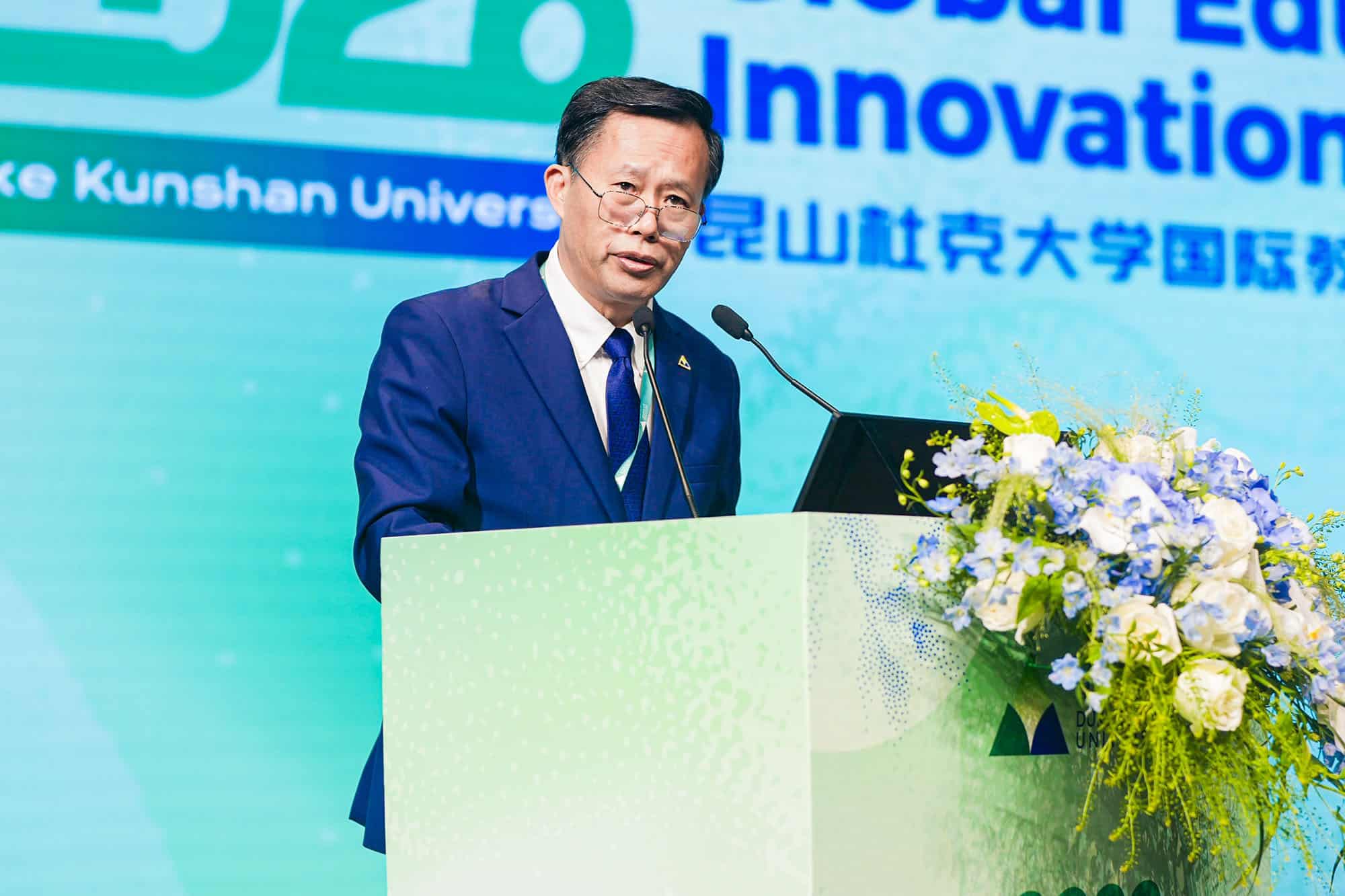
Liu said liberal arts education helps students make connections across fields and build critical thinking and problem-solving skills. AI, he said, can support that work by making learning more personalized, adaptive and immersive, while offering new ways to assess students’ progress.
Together, Liu said, liberal arts education and AI could create “a new learning ecosystem.”
John Quelch, DKU’s executive vice chancellor, said the university’s identity as a Sino-U.S. joint venture makes cross-cultural exchange central to its mission. He said DKU aims to be “the premier liberal arts college in Asia” and to prepare students to become “global leaders, critical thinkers, and agile problem solvers in a world that is evolving by the minute.”
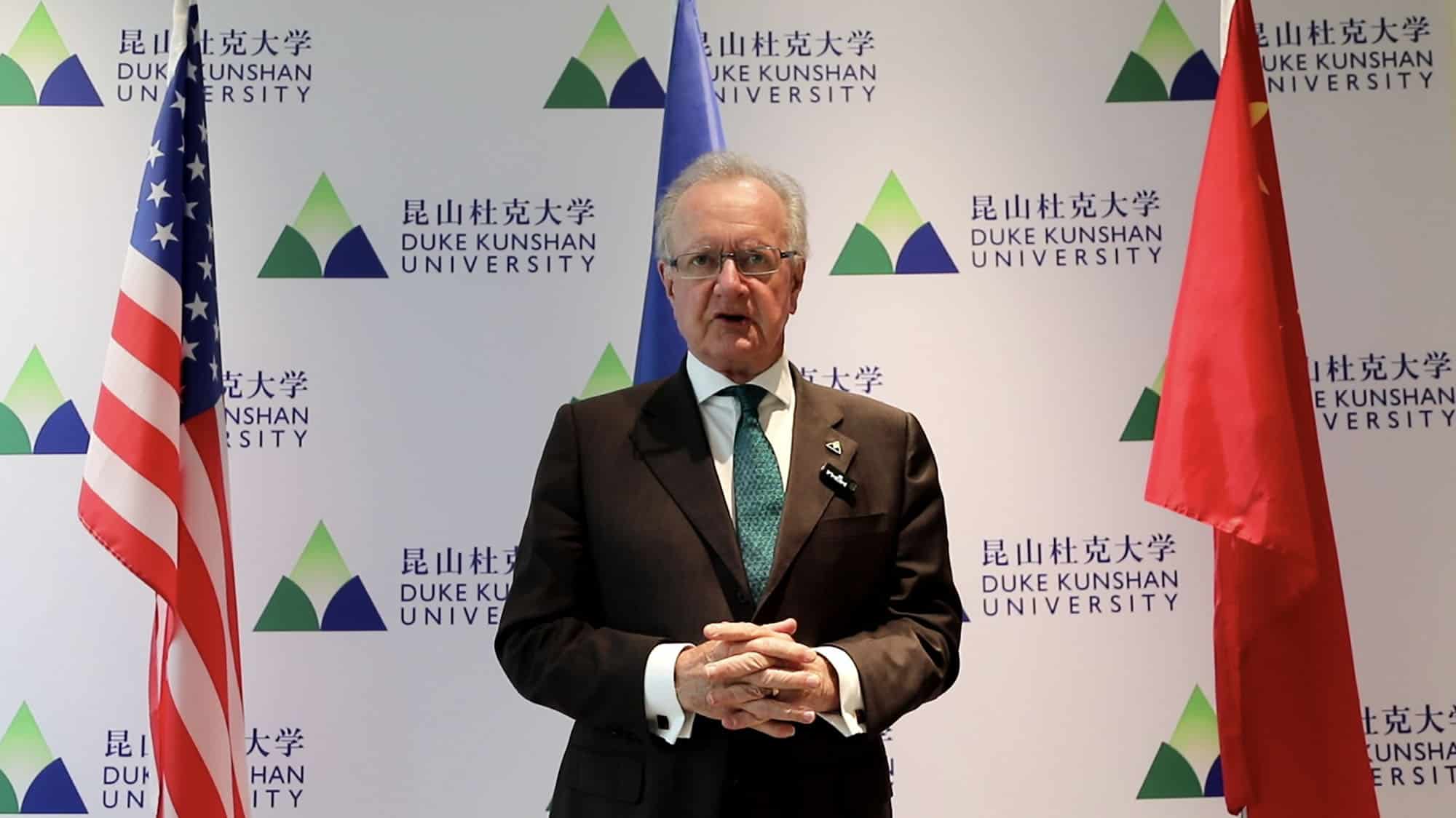
For Quelch, that mission now includes responding to one of the most powerful forces reshaping education.
“AI is not just a new tool; it is a fundamental paradigm shift,” he said. “The technology is developing at breakneck speed, with potential to radically transform how we teach and, most importantly, how our students learn.”
The forum centered on a practical question: how universities can use AI without losing the human relationships, judgment and intellectual effort that make learning meaningful.
Scott MacEachern, DKU’s vice chancellor for academic affairs, said the rise of AI should sharpen, not replace, the university’s focus on core human abilities.
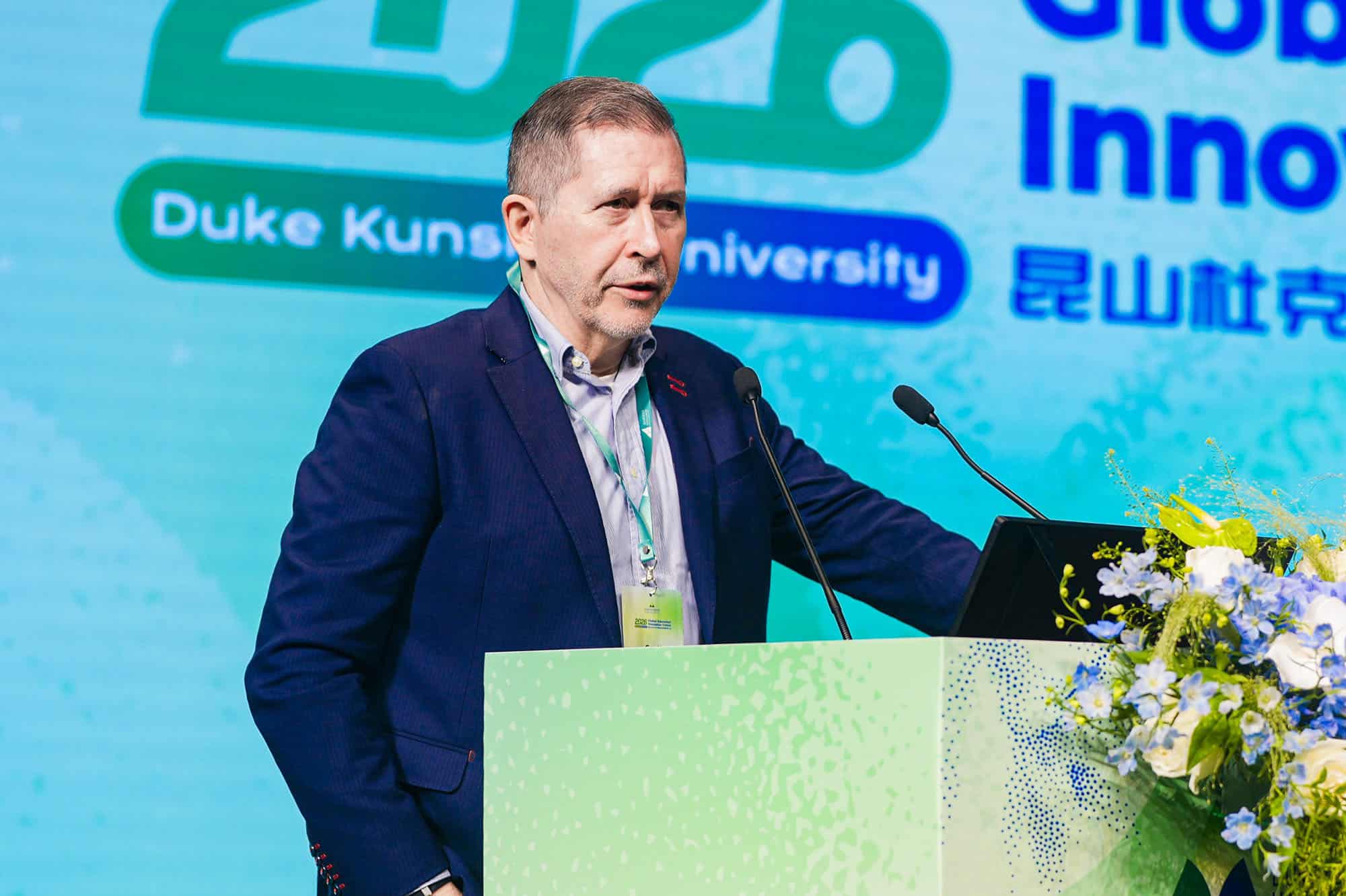
The values DKU wants to develop in students, he said, include “evaluative agency,” “cognitive independence” and “critical thinking.” The abilities to make sound judgments, think independently and question information matter in any era, he said, but they are even more important as AI changes the information environment.
MacEachern also warned against treating AI as the only defining feature of the university’s future. DKU’s success, he said, will depend on adapting while holding on to its values of “critical thinking,” “support for our students,” “engagement” and “good pedagogy.”
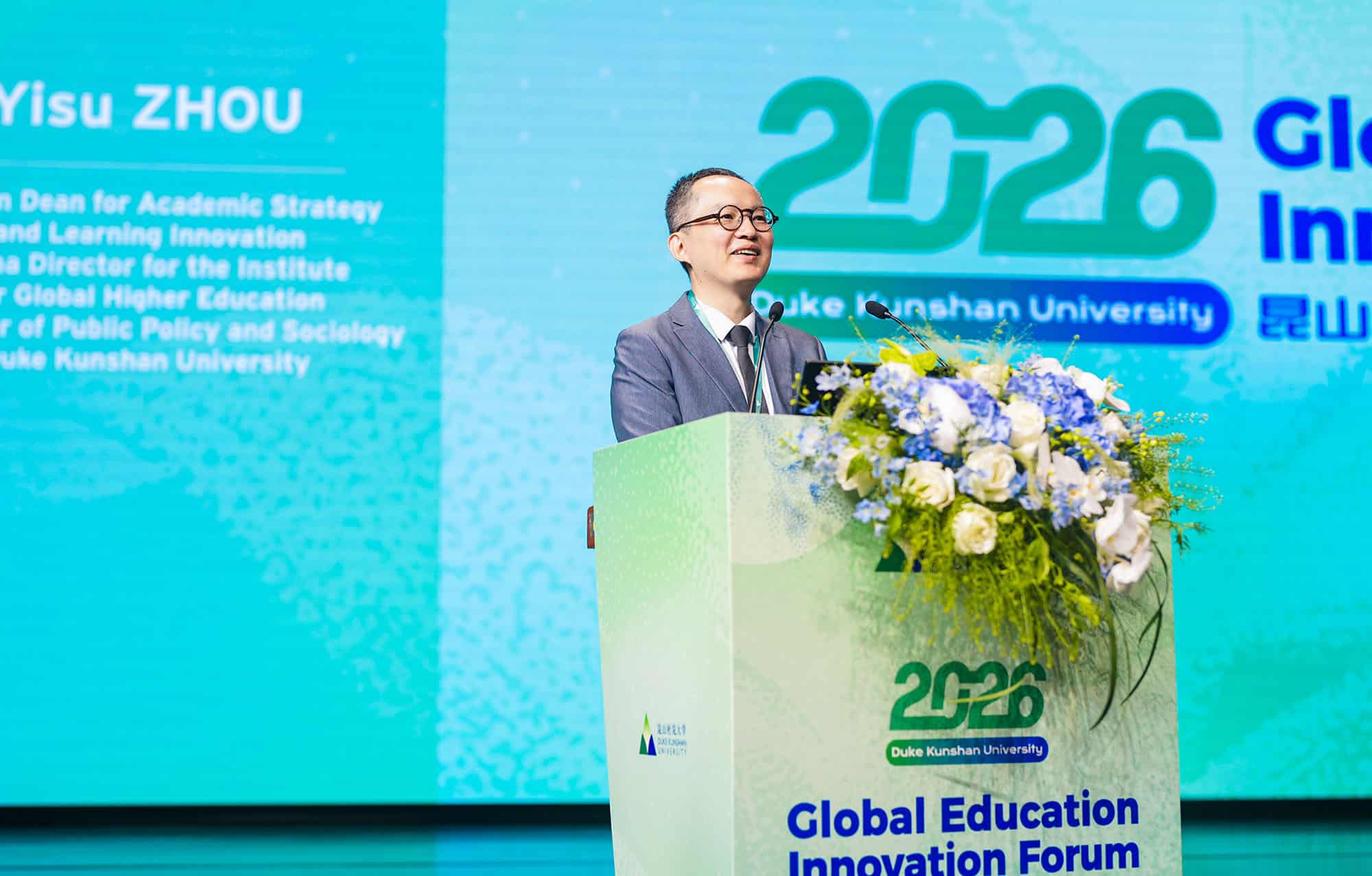
The opening ceremony was hosted by Yisu Zhou, interim dean of academic strategy and learning innovation at DKU and China director of the Institute for Global Higher Education.
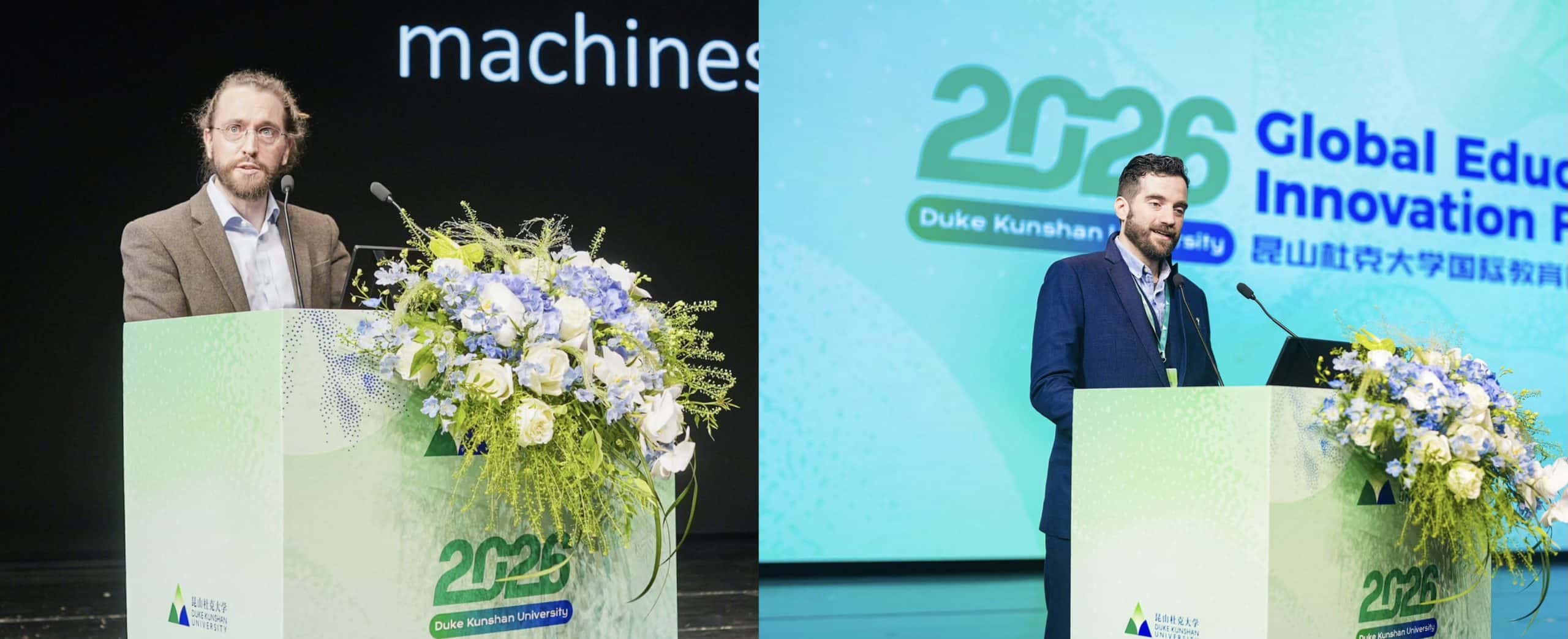
Sebastian Sunday Grève, associate professor of philosophy at Peking University, delivered the keynote address on AI and the human mind, exploring what it means to remain human in an age of increasingly capable machines.
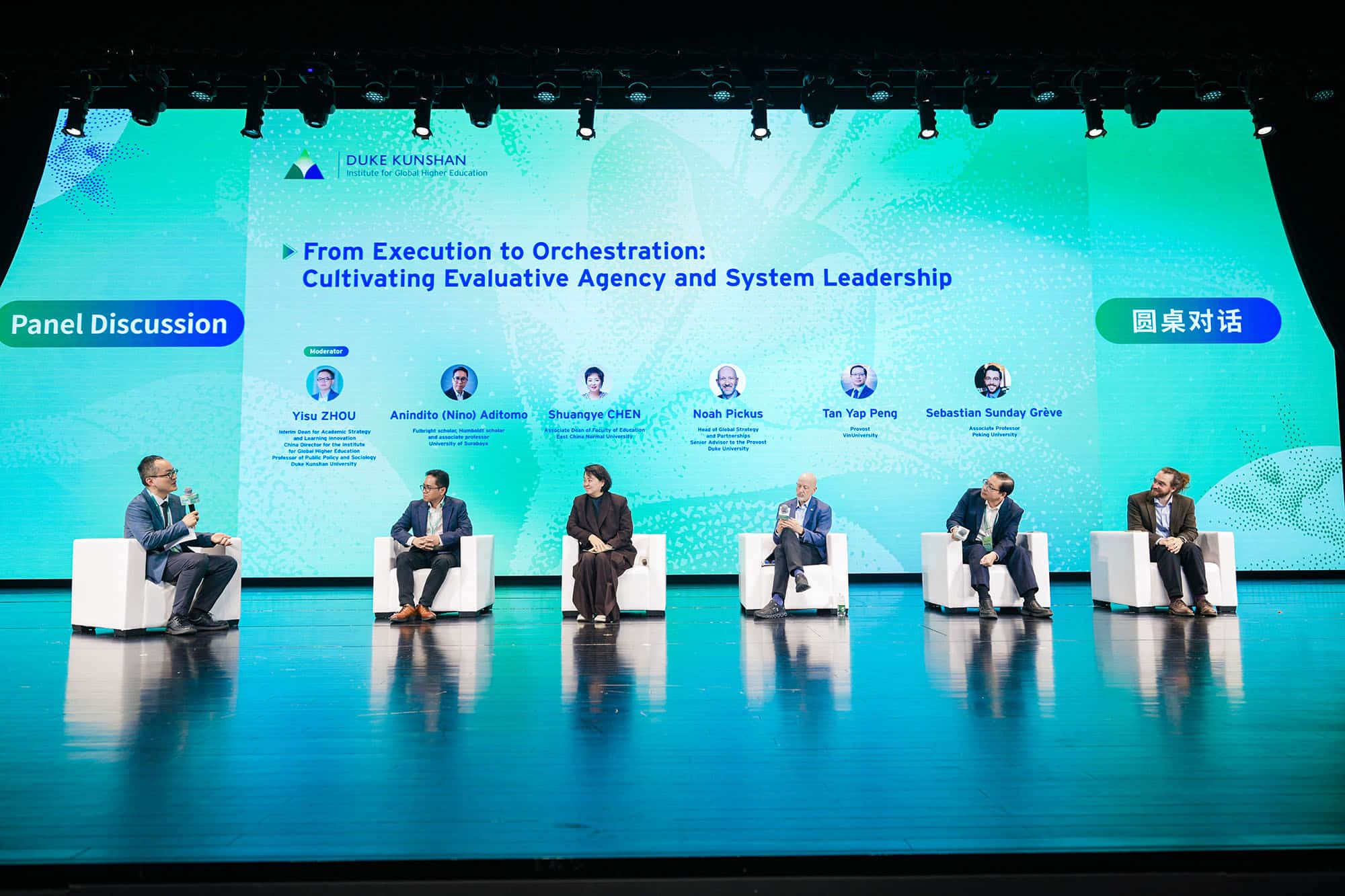
A plenary session with the title “From Execution to Orchestration: Cultivating Evaluative Agency and System Leadership” focused on a question: If AI can do more routine work, how should universities teach students to judge, guide and check that work? The session included a student demonstration by Jiesen Huang, a DKU undergraduate in the Class of 2026.
Panelists included Anindito Aditomo, associate professor at the University of Surabaya; Shuangye Chen, associate dean of the Faculty of Education at East China Normal University; Noah Pickus, head of global strategy and partnerships and senior adviser to the provost at Duke University; Grève of Peking University; and Tan Yap Peng, provost of VinUniversity. Zhou moderated the discussion.
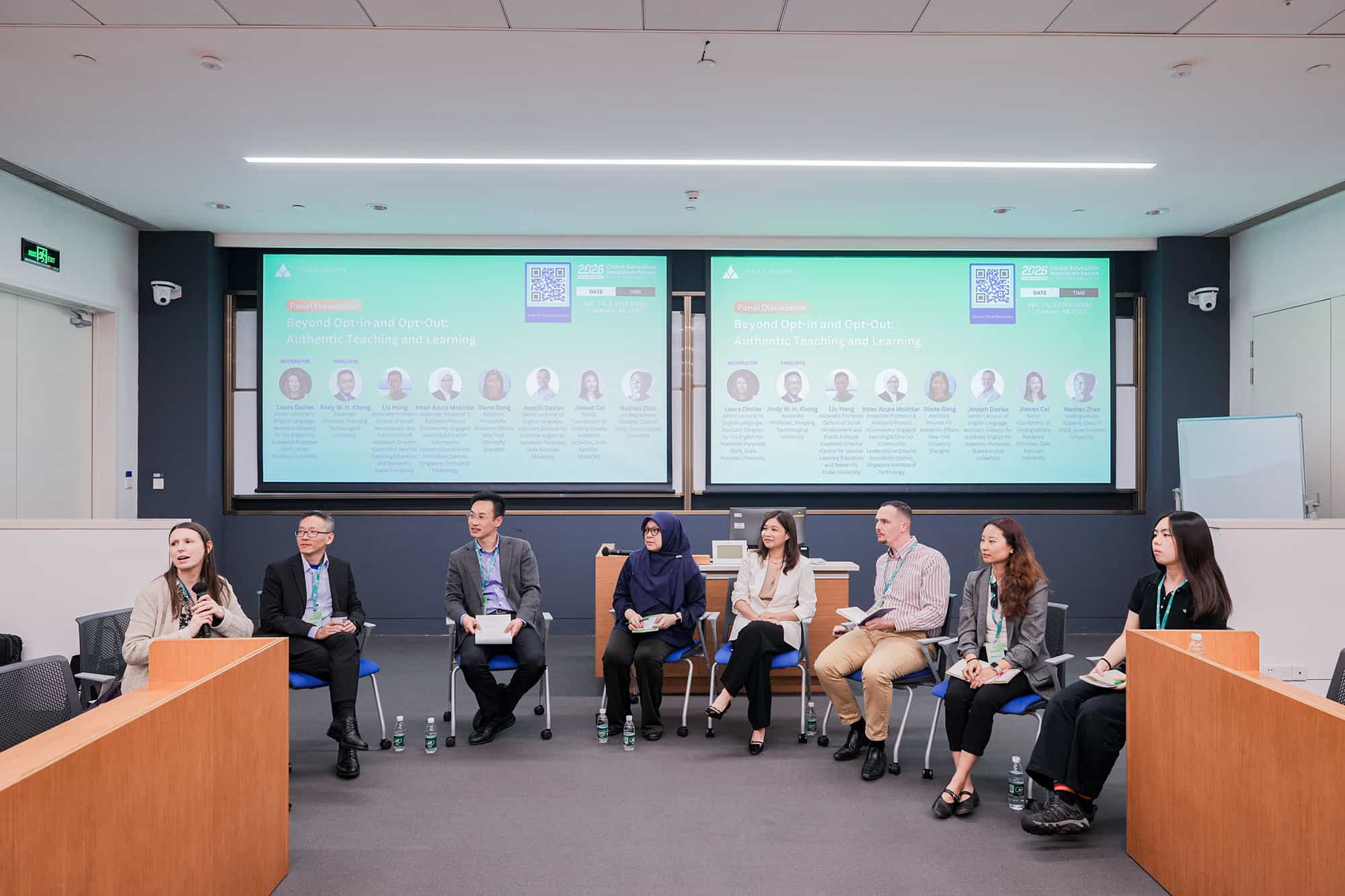
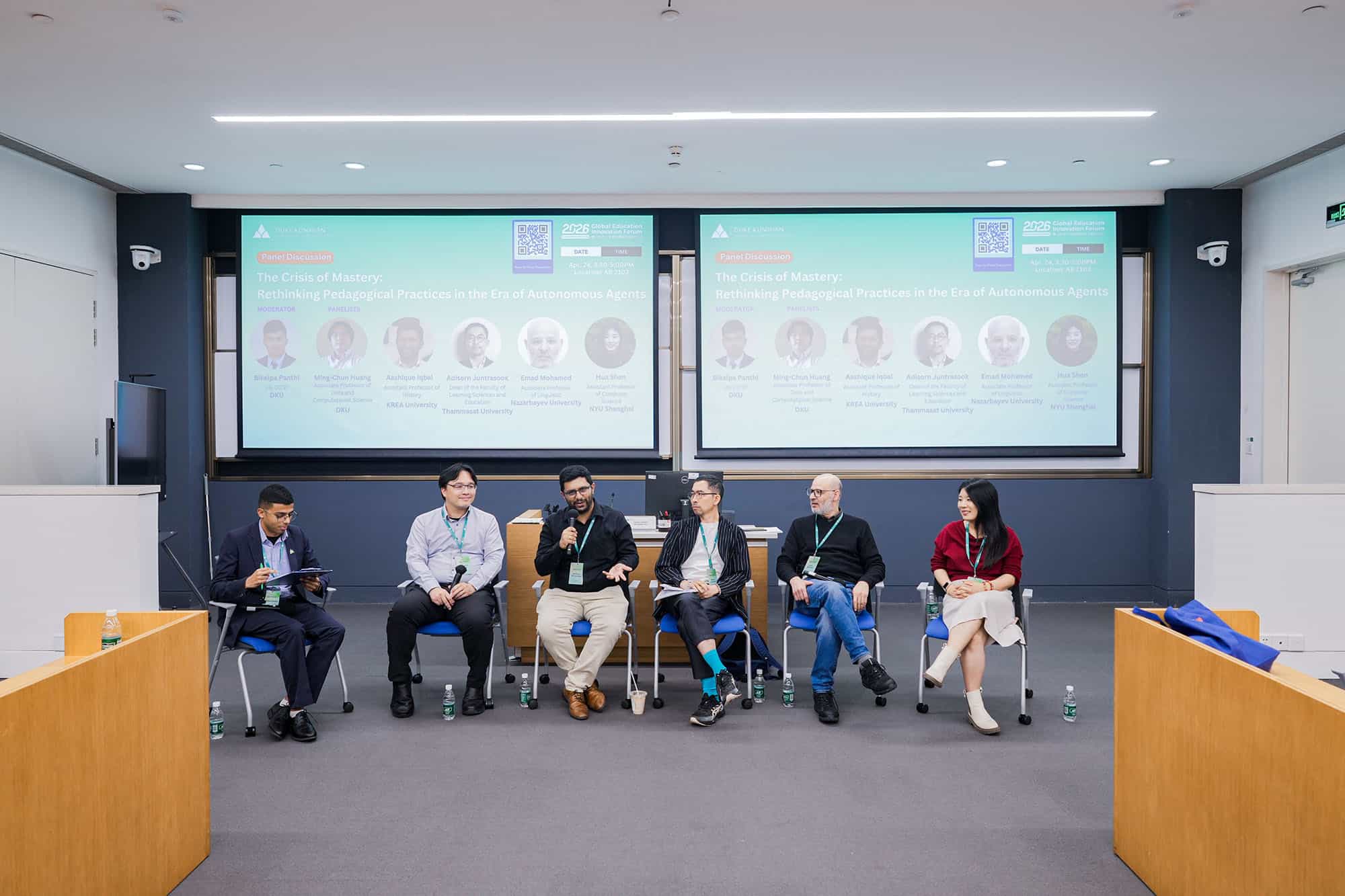
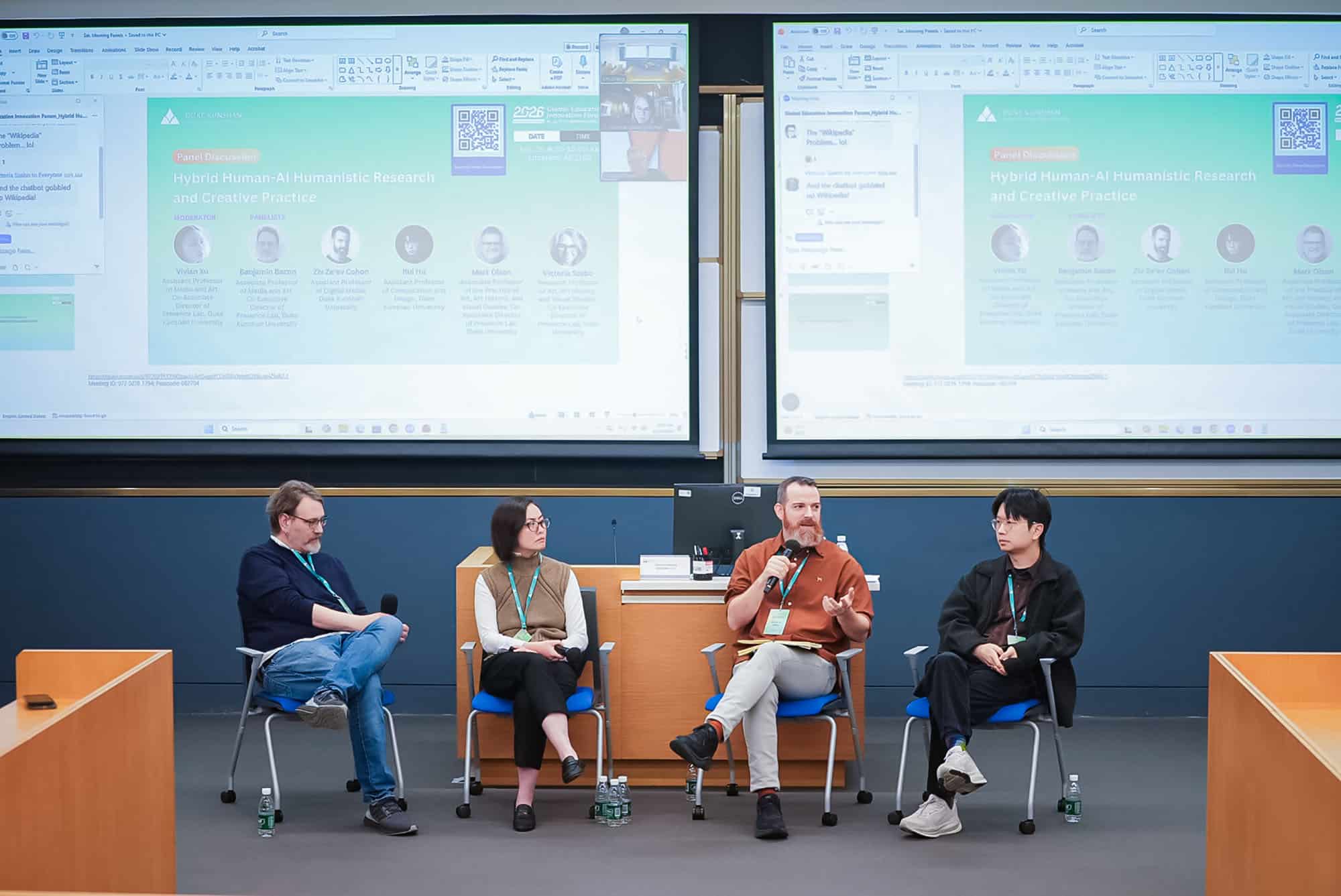
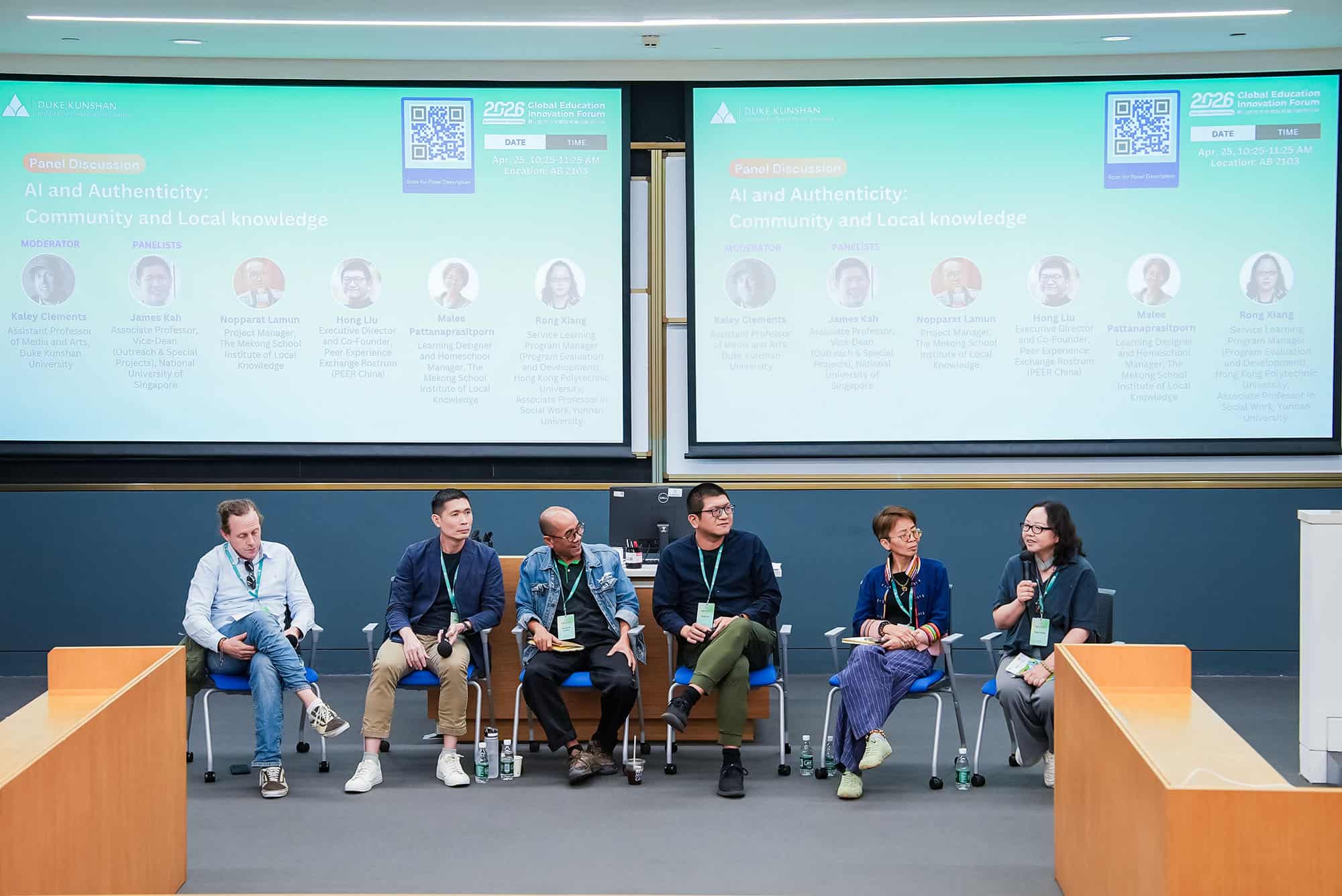


Click the left or right arrows to browse through the photo slides
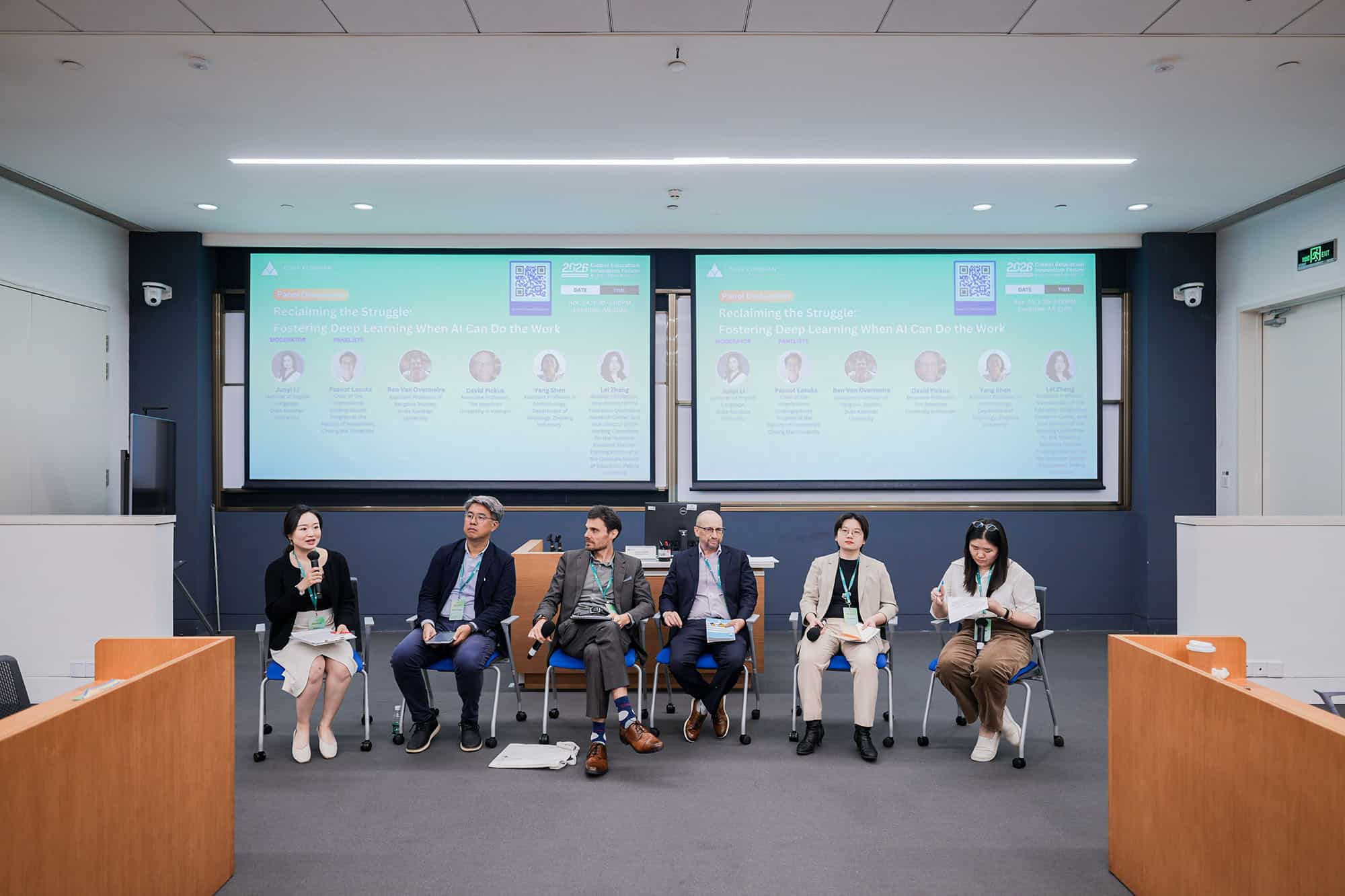
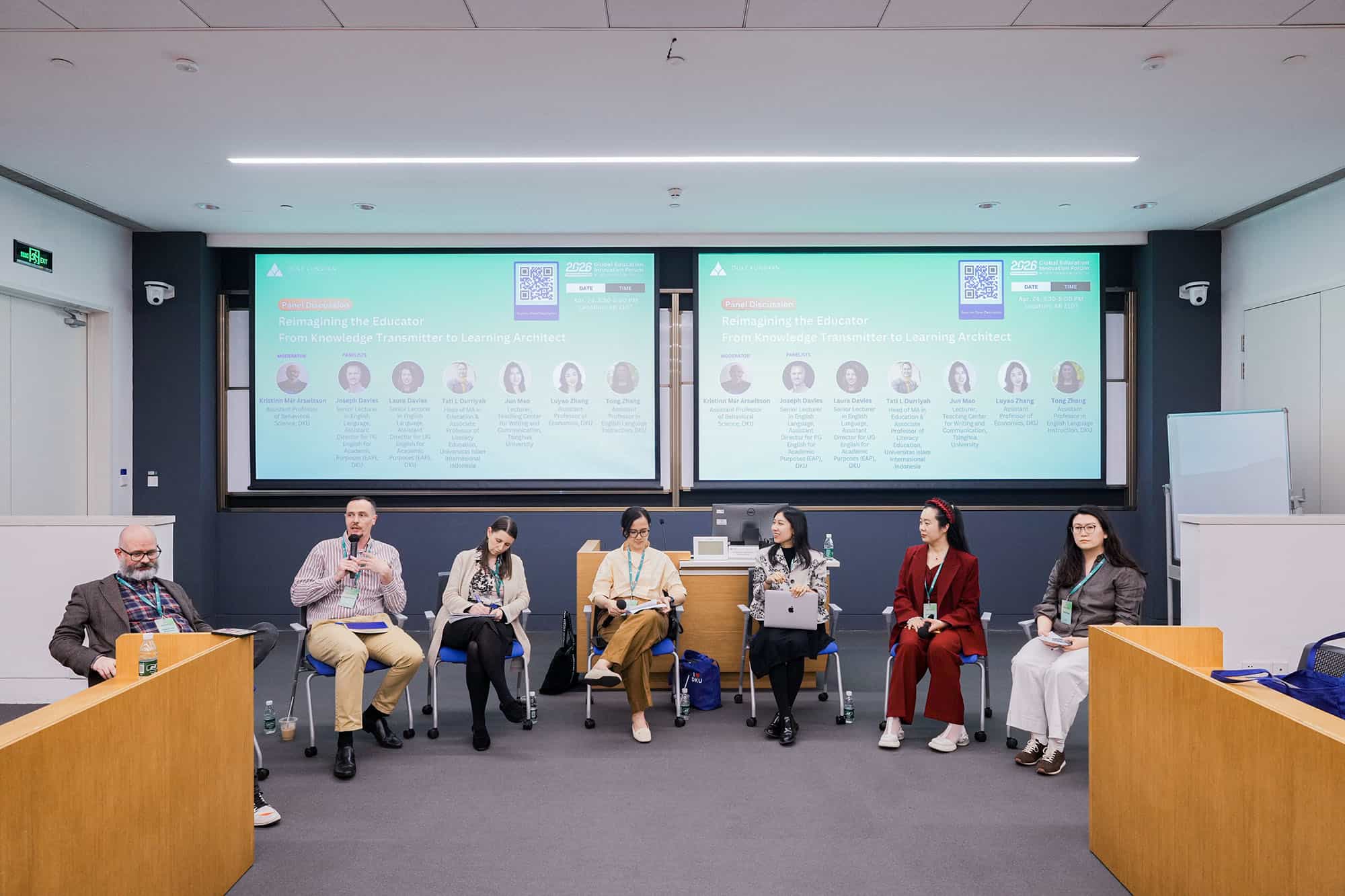
Across six sessions, participants explored how teaching and learning should change now that AI can write, summarize, calculate and analyze. Some discussions focused on when students should work without AI so they can build skills through in-person exchange, hands-on practice and sustained effort. Others looked at how faculty can use AI without letting it take over the learning process, and how universities can help students develop the knowledge and judgment needed to assess AI-generated work.
Participants included scholars and educators from Duke University, Peking University, Tsinghua University, NYU Shanghai, Nanyang Technological University, National University of Singapore, VinUniversity, the University of Surabaya and other universities across Asia, as well as DKU faculty members and students.
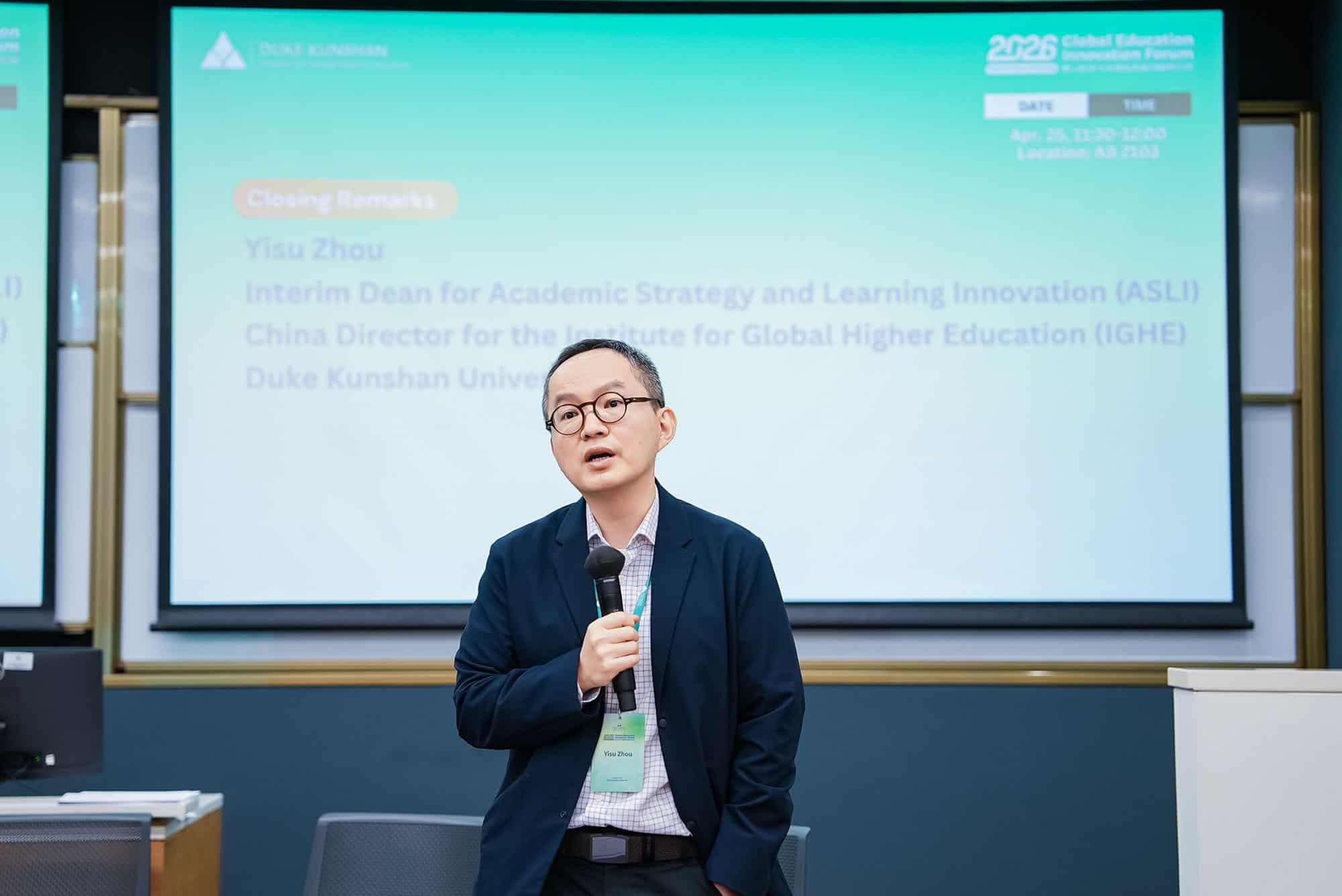
In closing remarks, Yisu Zhou said the forum did not produce one simple answer, but it clarified many of the questions educators now face: whether struggle helps students learn, how to separate useful knowledge from noise, and when students should use AI or step away from it.
“Our ultimate vision of an educated person is someone who possesses a fearless mind, capable of both critique and creation,” he said.