
As artificial intelligence advances, much of the talk has focused on how machines might replace humans. Yechen Wang and two fellow Duke Kunshan University (DKU) alumni asked a different question: How can AI protect human creators?
Their answer became OfSpectrum, a California-based startup that embeds hidden but trackable watermarks in audio to help creators safeguard copyrights.
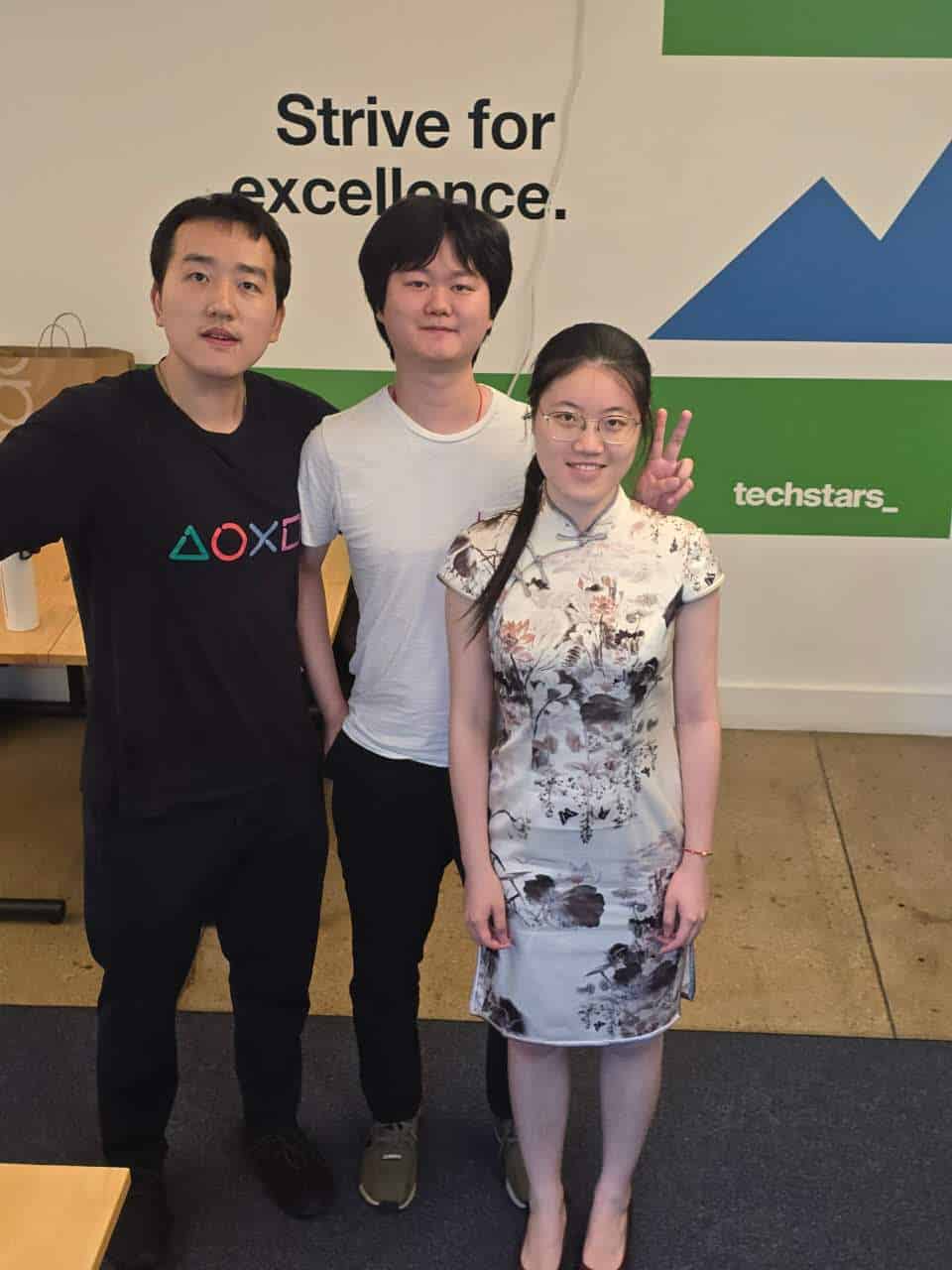
A watermark hidden in sound
“We’re basically hiding a watermark in audio,” said Wang, co-founder and CEO of OfSpectrum. “The goal is to protect audio.”

He described a common case: A music company releases a song. Someone uses it as background music in a video and profits. Under U.S. copyright law, the uploader may have to take it down or pay licensing fees — if the rights holder can find the use of it and prove ownership.
OfSpectrum’s pitch is that enforcement shouldn’t rely on slow searches and manual review.
Once the watermark is embedded, the company says it can still be detected even after compression, background noise, re-recording and edits. And it’s more than a simple flag. The watermark can carry information that can be decoded to help identify where the audio came from and what it’s tied to.
OfSpectrum has joined the Techstars accelerator. It has been testing the technology with music-industry partners and working with generative AI firms that want a way to label and trace AI-generated audio.
Wang said the approach starts with a basic point about perception: the ear isn’t as precise as people think.
“There’s a field called psychoacoustics,” he said. “Two signals can be numerically very different, but to your ear they sound the same.”
OfSpectrum uses that gap, between what is mathematically different and what sounds the same, to embed information without changing the listening experience. The team trains models to generate watermark patterns that stay decodable while remaining imperceptible.
The goal, Wang said, is to detect misuse fast enough to cut down on unauthorized distribution before it spreads.
From a DKU lab to a startup’s first product
Wang, part of DKU’s first undergraduate cohort (Class of 2022), studied data science and traces his technical foundation to the university, including research experience in the Speech and Multimodal Intelligent Information Processing Lab (SMIIP Lab) led by Professor Ming Li. After DKU, he continued speech research and later pursued graduate study at the University of Southern California.
The lab work mattered, he said. But the bigger question was what to build as generative AI began reshaping creative industries.
“Generative AI has been hot for years. A lot of people are thinking about how AI replaces humans,” Wang said. “We were thinking: How do we use AI to protect humans?”
The first year was trial and error.
“The biggest difficulty is that you don’t know what you don’t know,” he said. “You think your idea is right, you spend months, and then you realize it doesn’t work.”
He compared it to Netflix’s early days: constant experiments, plenty of failures and a willingness to test ideas quickly.
One idea that finally held
Before watermarking, the team tried other approaches to protect voice.
One was what they called “anti-AI encryption” — adding imperceptible noise so voice-cloning systems would fail. The concept was promising, they said, but hard to make reliable across many different cloning methods. The business case was also unclear.
They also explored deepfake detection for banks, insurers and telecom firms trying to prevent fraud and identity theft. The need was real, they said, but selling into heavily regulated industries can be slow and difficult for a young startup without established relationships.
They kept searching.
By April 2025, after several major attempts, they decided inaudible watermarking was the most viable path — and the one most likely to be needed in the years ahead.
“If in five or 10 years this kind of technology must exist,” Wang said, “I want us to be the ones who build it.”
Three founders, one bet
The company’s survival has depended not only on the technology but also on how its founders handle uncertainty.

Linxi Li, the CTO and a DKU classmate of Wang’s, came from computer vision and later studied at the University of Illinois Urbana-Champaign. He said the transition to speech was manageable and, to him, more interesting.
“When the results come out, you get that feeling — like electricity,” Li said. “Goosebumps.”
He has worked long hours on the technical side and said a startup can’t be treated as a fallback option.
“If you’re doing this half-heartedly, it’s hard for a company to survive the first year or two,” he said.
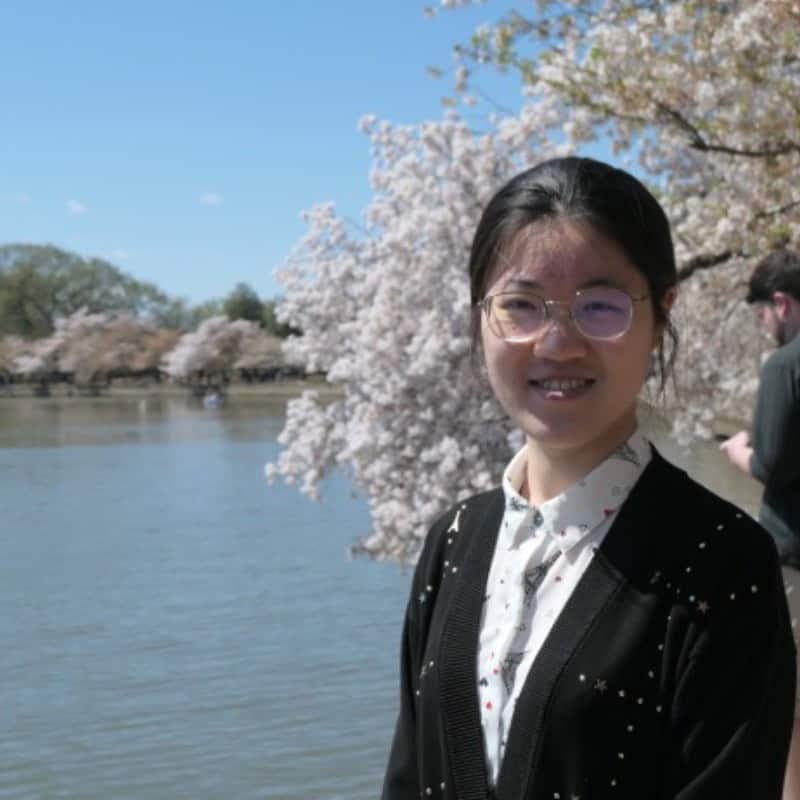
Yishu Huang, who has carried much of the nontechnical work, described a different kind of grind: outreach, contracts, compliance and the unglamorous tasks that keep a startup standing.
In the early months, she said, she could send dozens of emails and hear nothing back. She learned to treat silence as data — adjust the pitch, change the target list, and, if there’s still no response, question the direction.
With limited funding and a small team, Huang has handled much of what sits outside the algorithm: customer discovery, marketing, legal documents and user agreements.
She once clicked “agree” without reading. Now she writes the agreements — line by line, risk by risk.
“It’s time-consuming,” she said. “A lot of it isn’t fun. But to make the company work, you force yourself to learn.”
Her interest in entrepreneurship was shaped partly by family history. Her parents later built a business from scratch, and she grew up surrounded by the language of markets and risk. They advised her to work for established firms and learn how organizations run, then start a company. Huang understood the logic, but she chose to move earlier.
“The opportunity came,” she said. “I wanted to grab it.”
What they’re really selling
OfSpectrum’s work isn’t only about music piracy. The founders also see demand from generative AI firms that need a credible way to label and trace AI-generated audio, especially as synthetic voices become harder to distinguish from real ones.
They imagine a future in which more content, whether human-made or AI-generated, carries some form of traceable marker, not for aesthetics, but for trust.
For most listeners, they said, the benefits are indirect. But the founders argue that stronger protections help creators keep creating and make deception harder as audio becomes easier to fake.
What DKU left them with
All three founders said Duke Kunshan University’s mix of liberal arts and research training made it easier to move between disciplines — and to stay comfortable when the ground shifts.
Wang said that mattered once they entered the U.S. startup world, where each city can feel like its own ecosystem, with different habits, networks and investor tastes. He and his co-founders learned by showing up — founder meetups, accelerator sessions, industry events — listening, comparing notes and adjusting without getting too attached to any single script.
Entrepreneurship also forced a more personal shift, Wang said.
In college, he focused on technical problems and assumed results would speak for themselves. In startup life, he found himself negotiating with partners who had their own incentives and politics — and realized he needed to get better at persuasion and human dynamics.
So he turned, unexpectedly, to Chinese historical dramas, watching how characters communicate, survive power struggles and navigate competing interests.
“I didn’t used to care about that at all,” Wang said. “But you need to understand the world.”
By Chen Chen
