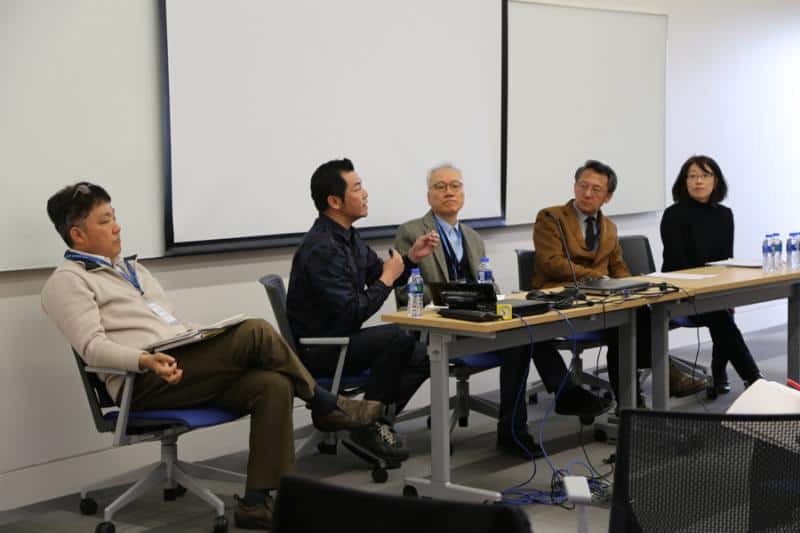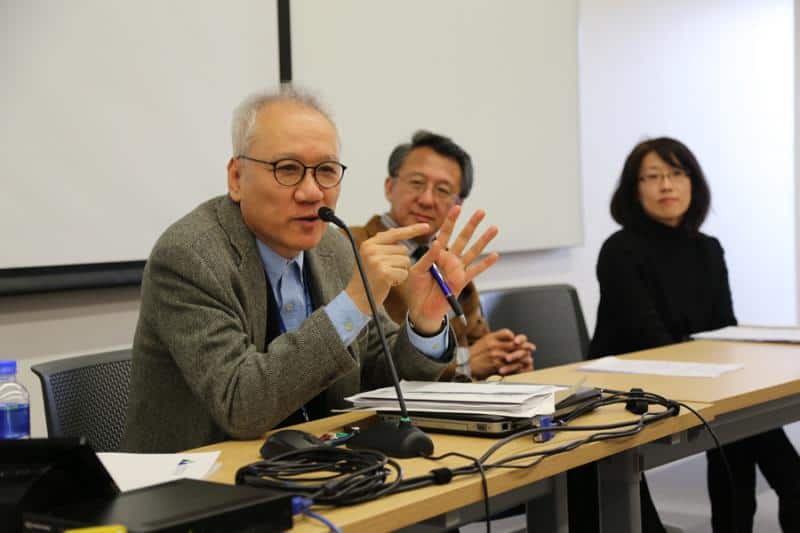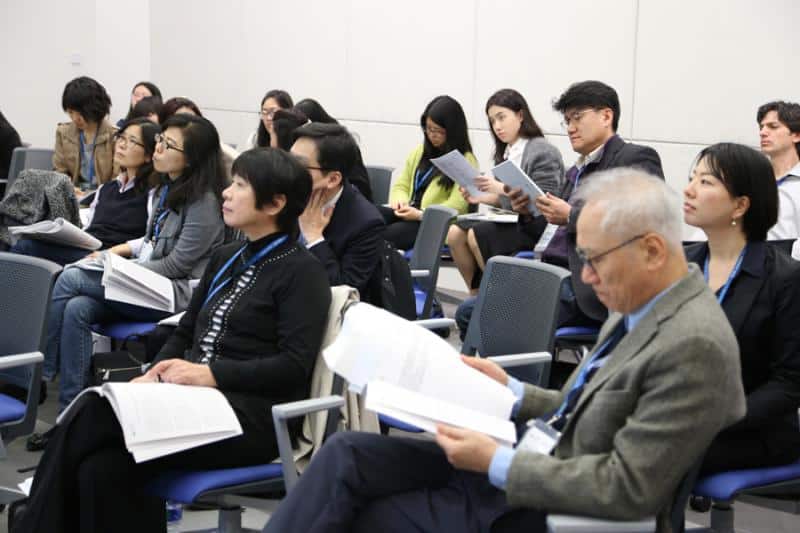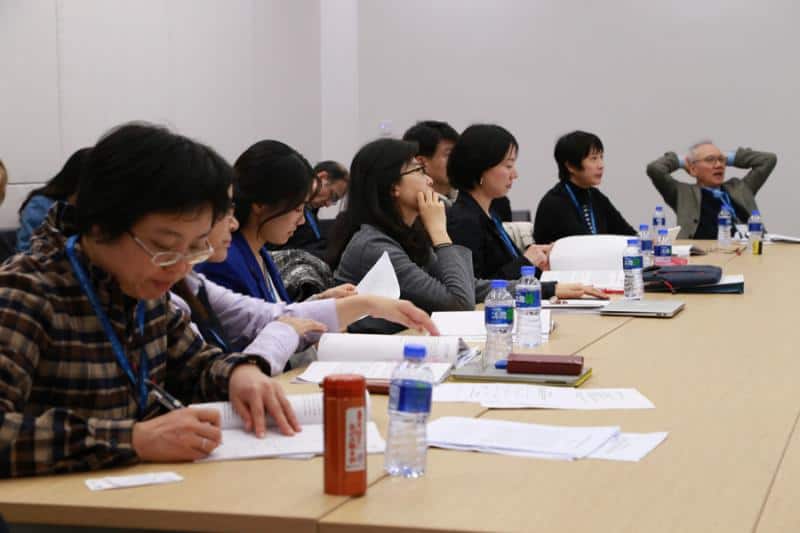
On March 12, an international workshop, ‘Empire and Language: Trans-lingual Inter-Asia,’ examining the contested legacies of the Japanese empire in East Asia, was held at the Academic Building of Duke Kunshan University. This one-day workshop invited scholars from mainland China, Taiwan, Korea, Japan and the United States, and was presented in diverse forms such as presentations, Q&A sessions, film screenings, and a round table discussion. It was exciting for teachers and students at DKU to witness such a trans-national, trans-lingual, and trans-generational dialogue, which aimed to reconsider historically-controversial encounters in the realms of language and culture, and asked whether a renewed and less contested future might be imagined together.
The workshop was mainly divided into four sessions: Linguistic Borderlines Translating Cultures, Mass Media and Untranslatability, and Voice and Silences. In addition, film screenings of ‘China Nights’ and ‘Forgotten Imperial Soldiers’ followed by related discussions between sessions. Four professors, from The University of California, Davis, Duke University, Musashi University and Nihon University chaired each session, helping to organize three or four presentations, and hosting the Q&A sessions afterward as well. Each scholar chose the language in which he or she preferred to present which did not necessarily correspond to their ‘mother tongue.’ In fact, some chose to present in their second or third language, based on various factors such as their academic writing backgrounds or in their consideration of the global audience at DKU. The discussions following each panel were translated into English and Chinese by student volunteers and into other languages by other bilingual or even trilingual professors. The entire workshop was filled with amity and enthusiasm with lively discussions, as the trans-lingual dialogues continued during the coffee breaks and over meals.
Another highlight of the workshop was that the working languages covered English, Chinese, Korean and Japanese in order to fit the theme of ‘trans lingual inter-Asia’. During the workshop, student volunteers and bilingual/trilingual scholars helped one another to translate the conversations. A few weeks leading up to the workshop, students from Duke University and DKU’s own Global Learning Semester program worked as volunteers in preparation for the workshop. The students helped translate the abstracts of the conference papers into each of the four conference languages (Chinese, Japanese, Korean, and English), to prepare the conference proceedings.
Professor Nayoung Aimee Kwon comes from Duke University, and she has been teaching at DKU this semester. As the organizer and one of the participants of this workshop, she thanks the student volunteers for their extraordinary efforts leading up to and throughout the conference: DKU’s Aidi Bian, Youyou Wu, Yufei Niu, Ruikai Hou, Cindy Lai, Jiale Yuan, Zeyu Wang, and Yunmeng Su, and from Duke University, Ling Jin. Professor Kwon added, ‘Each of the translators devoted substantial time to learning about the papers they were asked to translate in order to better interpret for the participants and audience members throughout the day. In both form and content, the conference engaged with the possibilities and challenges of communicating across languages and cultures, so the efforts of the translators in particular were absolutely essential to its success. I especially appreciate the collaborative spirit involved in everyone’s team effort in facilitating the day’s conversations.’
Around 6 p.m., all the guest scholars attended a one-hour round table discussion after listening to 14 presentations, which wrappd up this inspiring international workshop. Professor Chia-ning Chang, a visiting professor at Fudan University from UC, Davis said:’ I was enlightened about other parts of Asia and its literatures and films during the workshop. In addition, the most enjoyable and wonderful experience was to interact with students, as they are bright, curious, and above all intellectually and culturally adventurous–all enviable qualities and prerequisites for future success as global citizens.’