
Environmental scientist Binbin Li of Duke Kunshan University has been named one of five global recipients of the 2026 Rolex Awards for a project working with local communities to develop a sustainable approach to livestock grazing that protects wild pandas and their habitat in central China.

The 2026 group — five women from China, the United States, Indonesia, Nigeria and Peru — was announced as Rolex marked the program’s 50th anniversary.
Founded in 1976, the awards support new or ongoing projects with the potential for lasting, real-world impact in environmental conservation and in areas such as science, health and technology. The program has backed 165 recipients whose projects have been carried out in more than 67 countries, according to Rolex.
Candidates are identified through the company and its global network, then invited to apply. Applications can be submitted in English, Spanish or Chinese and are reviewed with input from experts in relevant fields.
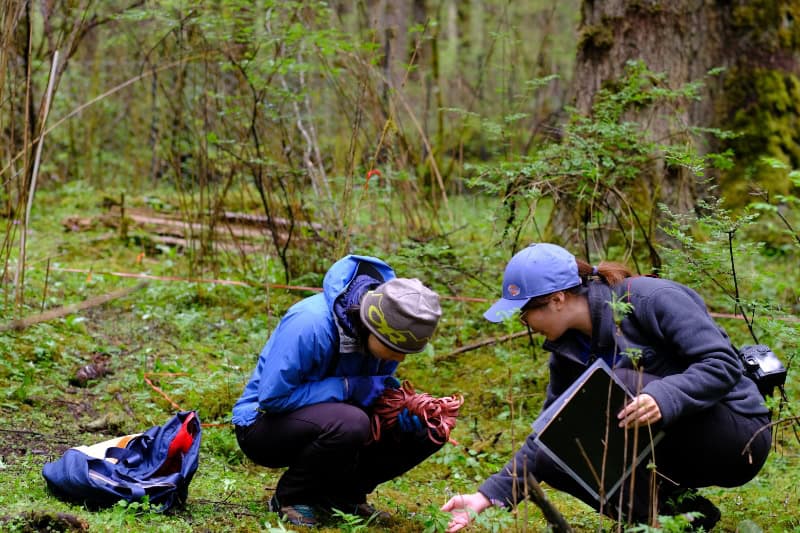
Li’s project uses community-based grazing management to protect panda habitat while sustaining mountain livelihoods. Her team works with local partners to develop, pilot and scale more sustainable grazing practices across multiple mountain ranges in China.
“With this support, we’ll refine our sustainable grazing approach and expand the community co-management model to more mountain regions,” Li said. “Our aim is a win-win: healthier panda habitat and stronger local livelihoods.”

China’s latest national giant panda survey estimated 1,864 giant pandas living in the wild. Giant pandas’ forest habitat in central China can overlap with areas used for grazing, adding pressure to fragile mountain ecosystems. Li’s project aims to ease that pressure while supporting local livelihoods.
She added that conservation “is never a solo effort,” and that lasting protection depends on “bringing conservation and development into the same rhythm,” so communities can be both participants in — and beneficiaries of — protection efforts.
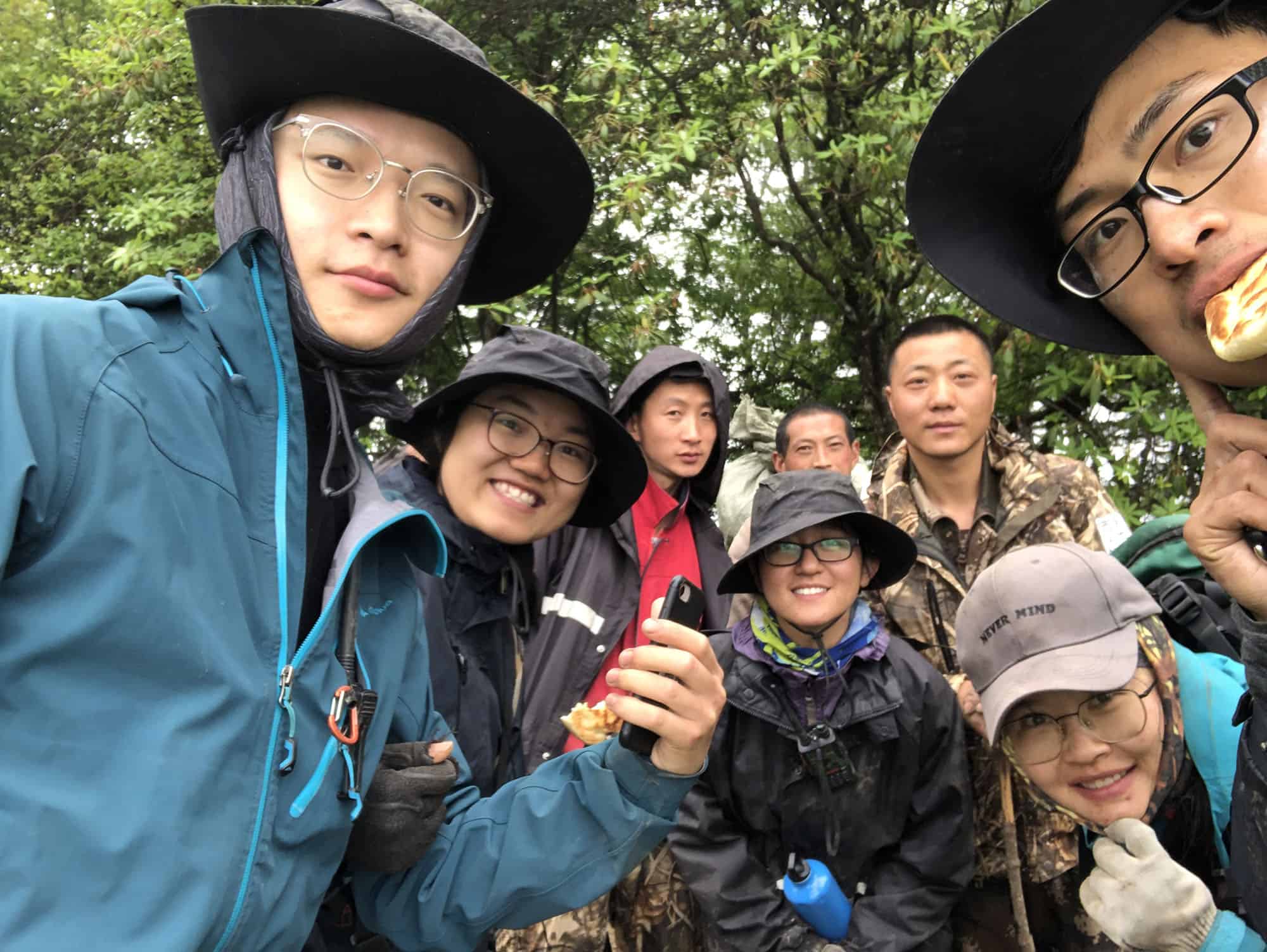
Li is an associate professor of environmental sciences at Duke Kunshan University’s Environmental Research Center and holds a secondary appointment with Duke University’s Nicholas School of the Environment.
At DKU, her research focuses on biodiversity conservation and on translating field science into practical, community-linked solutions. She has helped advance biodiversity-focused work on campus, including efforts that combine habitat restoration, citizen science and environmental education.
Her team has also been working toward aligning the DKU campus with the standards of an “Other Effective Area-Based Conservation Measure,” or OECM — a framework for recognizing places that deliver long-term conservation outcomes outside formal protected areas.
Beyond panda conservation, Li has worked on biodiversity projects in Yunnan, southwestern China, where her team has partnered with local communities on tea-growing approaches aimed at restoring habitat and supporting more sustainable livelihoods.
In cities, she has helped build a citizen-science effort to document and reduce bird-building collisions — work discussed in international research alongside programs such as FLAP Canada and Lights Out Texas.