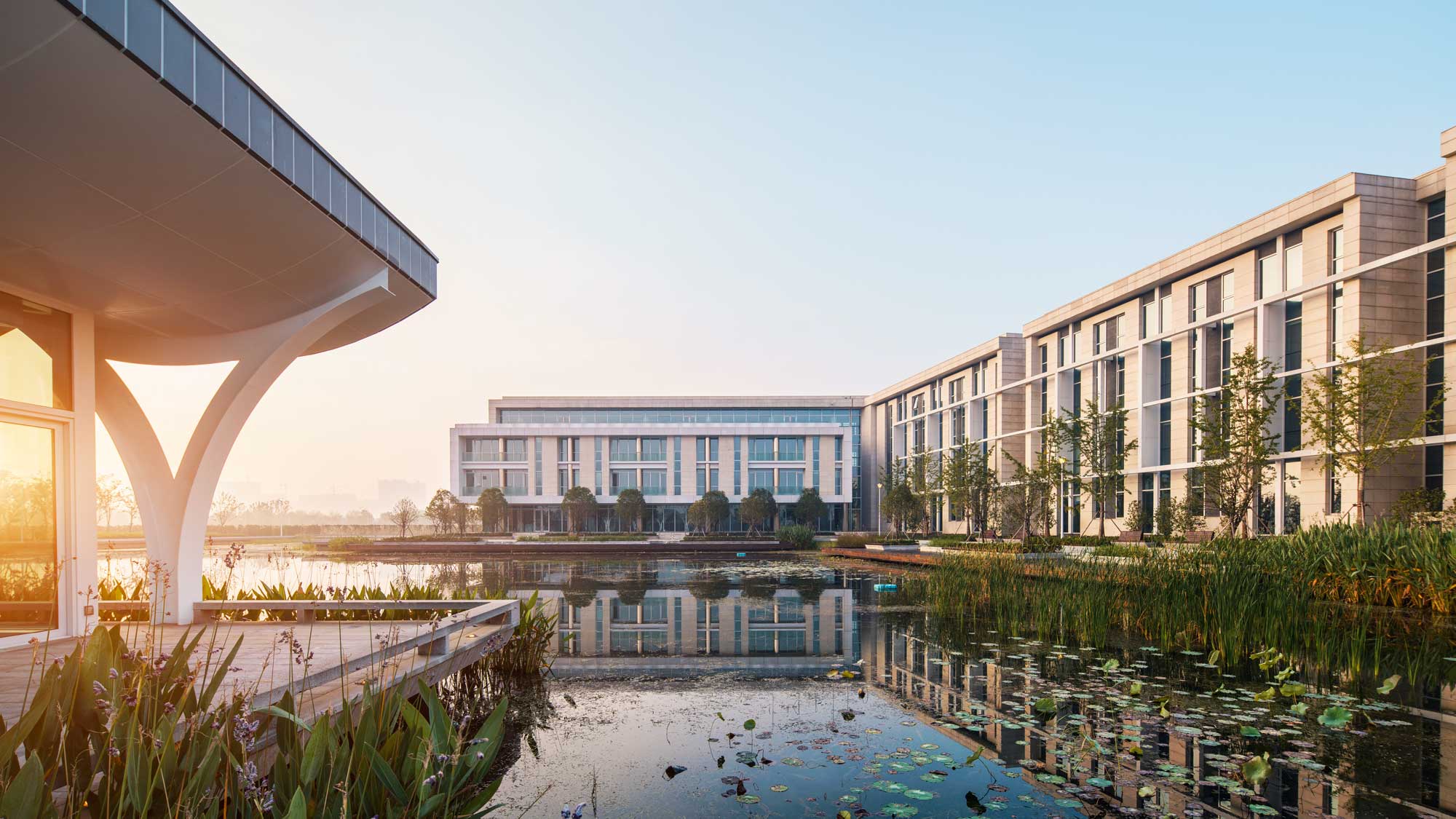
Duke Kunshan University has become the first institution in Chinese mainland to earn dual Leadership in Energy and Environmental Design (LEED) certifications for both building design and construction as well as operations and maintenance, marking a new milestone in sustainable campus development.
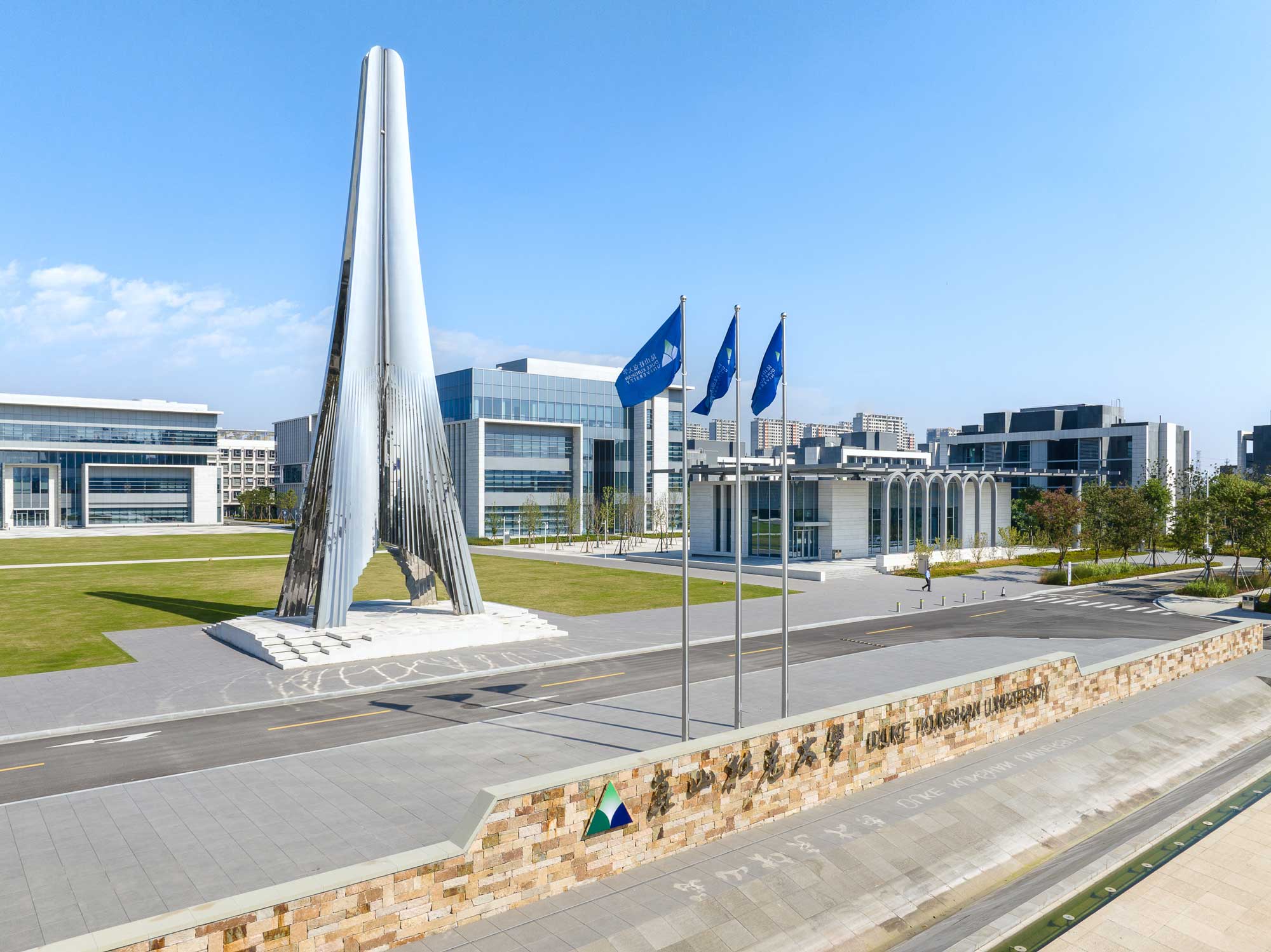
LEED, a globally recognized framework developed by the U.S. Green Building Council (USGBC), assesses buildings that have been operational for at least a year.
The university received LEED Operations and Maintenance (O+M) certification for five buildings on its Phase Two campus, confirming that they meet or exceed international standards in energy and water efficiency, waste management, indoor environmental quality and overall operational performance. The recognition follows earlier LEED Building Design and Construction (BD+C) certifications awarded to both phases of the campus.
DKU’s first construction phase earned BD+C Gold and Silver ratings in 2016 for its Academic Building, Conference Center, Student Residence and Faculty Apartments. Its expanded Phase Two campus, completed in 2023, became the first in mainland China to earn LEED Campus certification, signaling international recognition of its green design and construction practices.
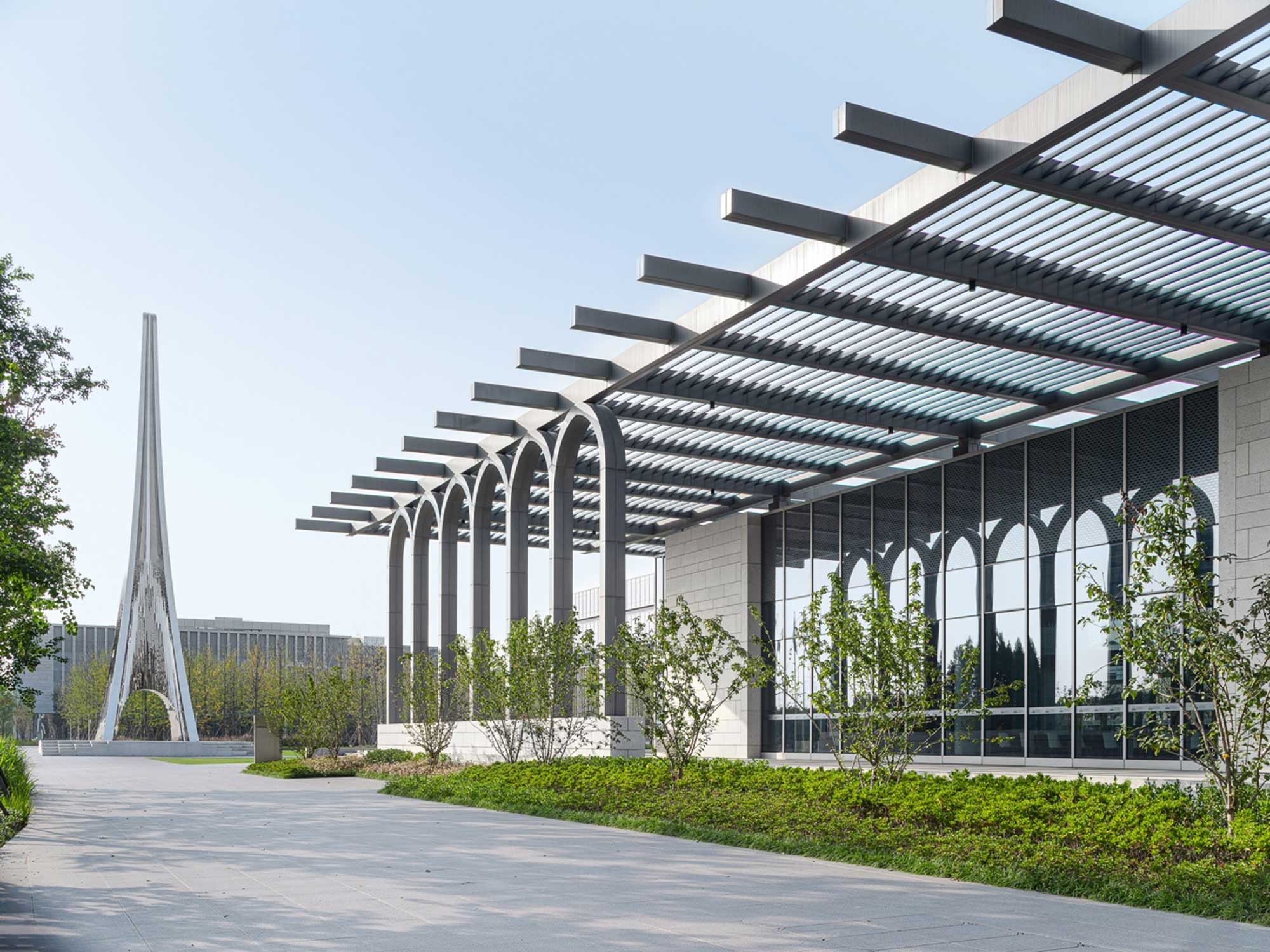
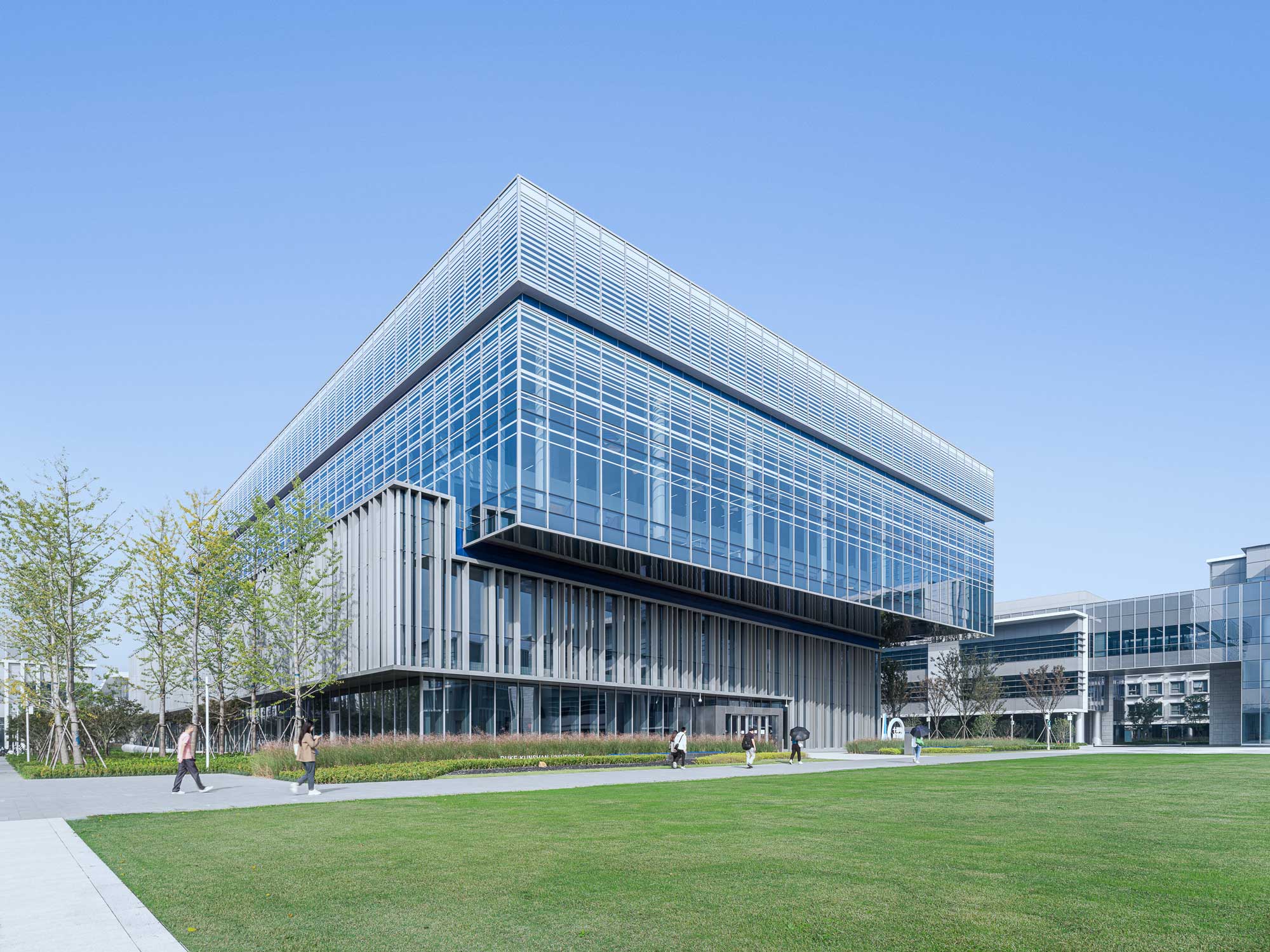
In the latest round of assessments, the Visitor Center and Administration Building achieved O+M Platinum, the highest rating in the LEED system, while the Library, Student Residence and Sports Complex received Gold. The Visitor Center was also named a “Sustainable Pioneer” for 2024 by USGBC for its exemplary operational performance.
At a ceremony held at DKU, Jing Wang, USGBC’s vice president for North Asia, presented the certifications to John Quelch, DKU’s executive vice chancellor.
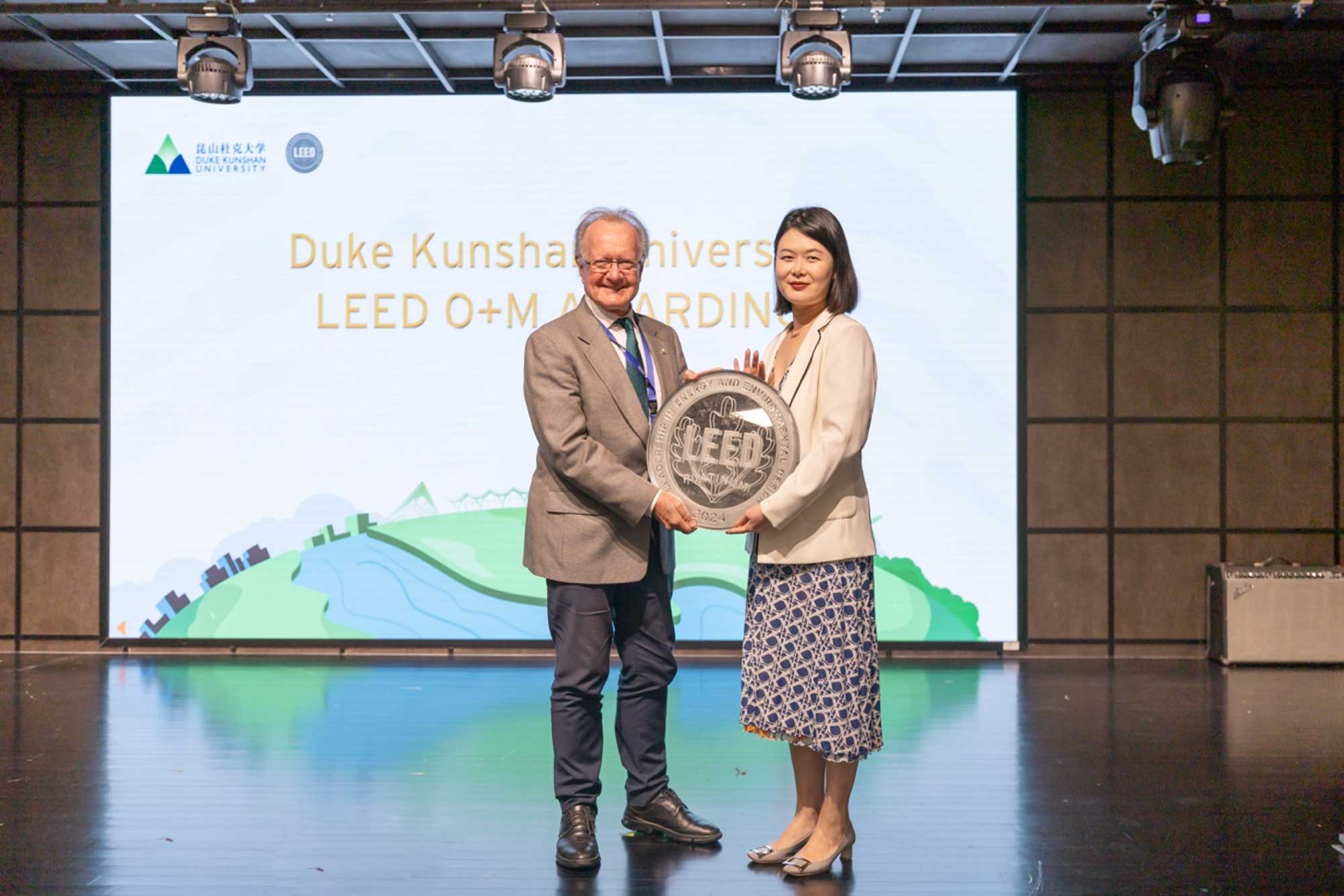
“The achievement reflects DKU’s commitment to sustainability,” said Quelch. “We have integrated environmental awareness not only into our buildings, but also into our teaching, research and community engagement.”
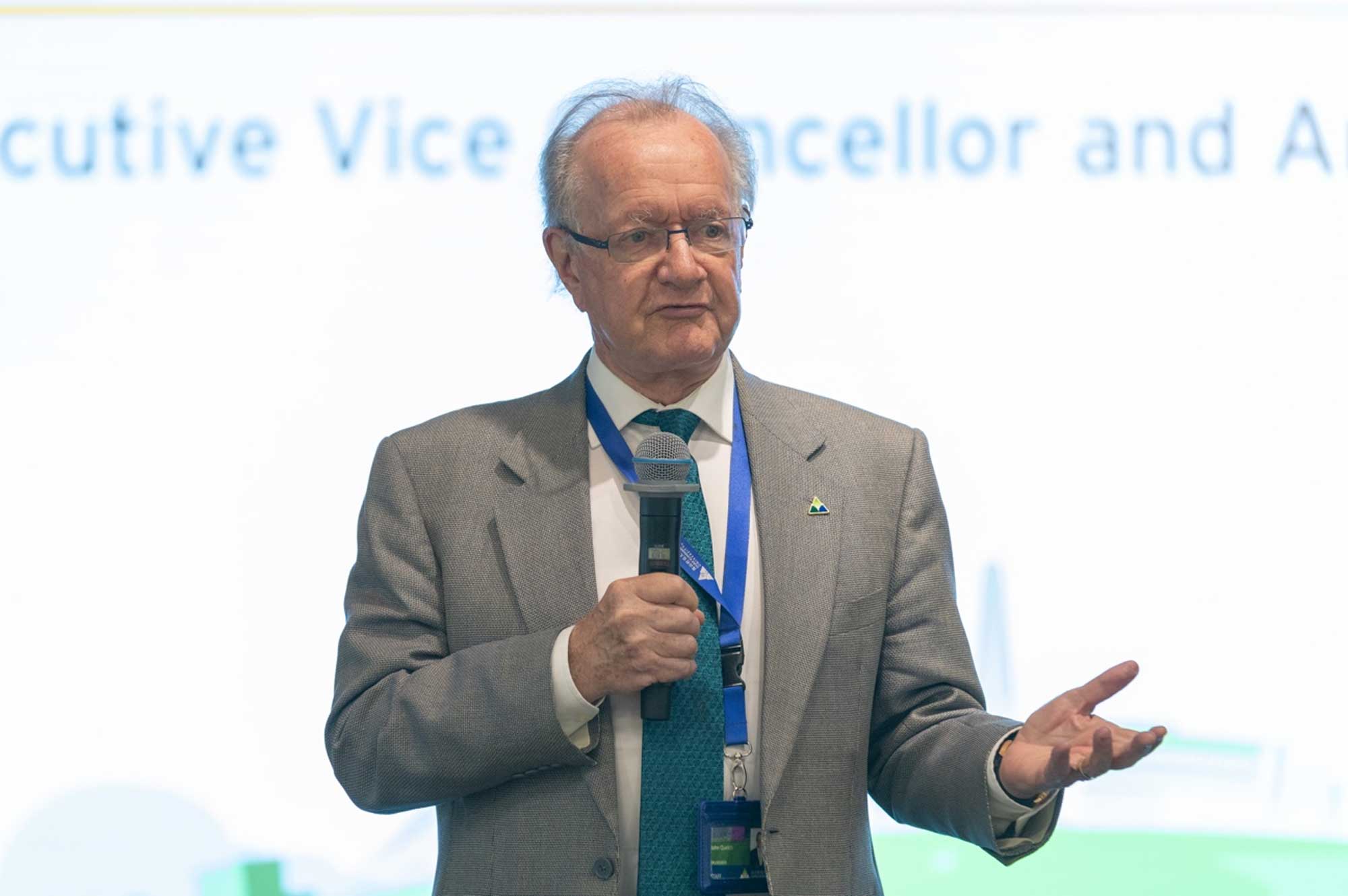
“This is more than just a certification,” said Wang. “It shows a belief that the places where we live and learn shape how we think and behave. DKU has built a community where sustainability is part of daily life, grounded in measurable results and continuous improvement.”
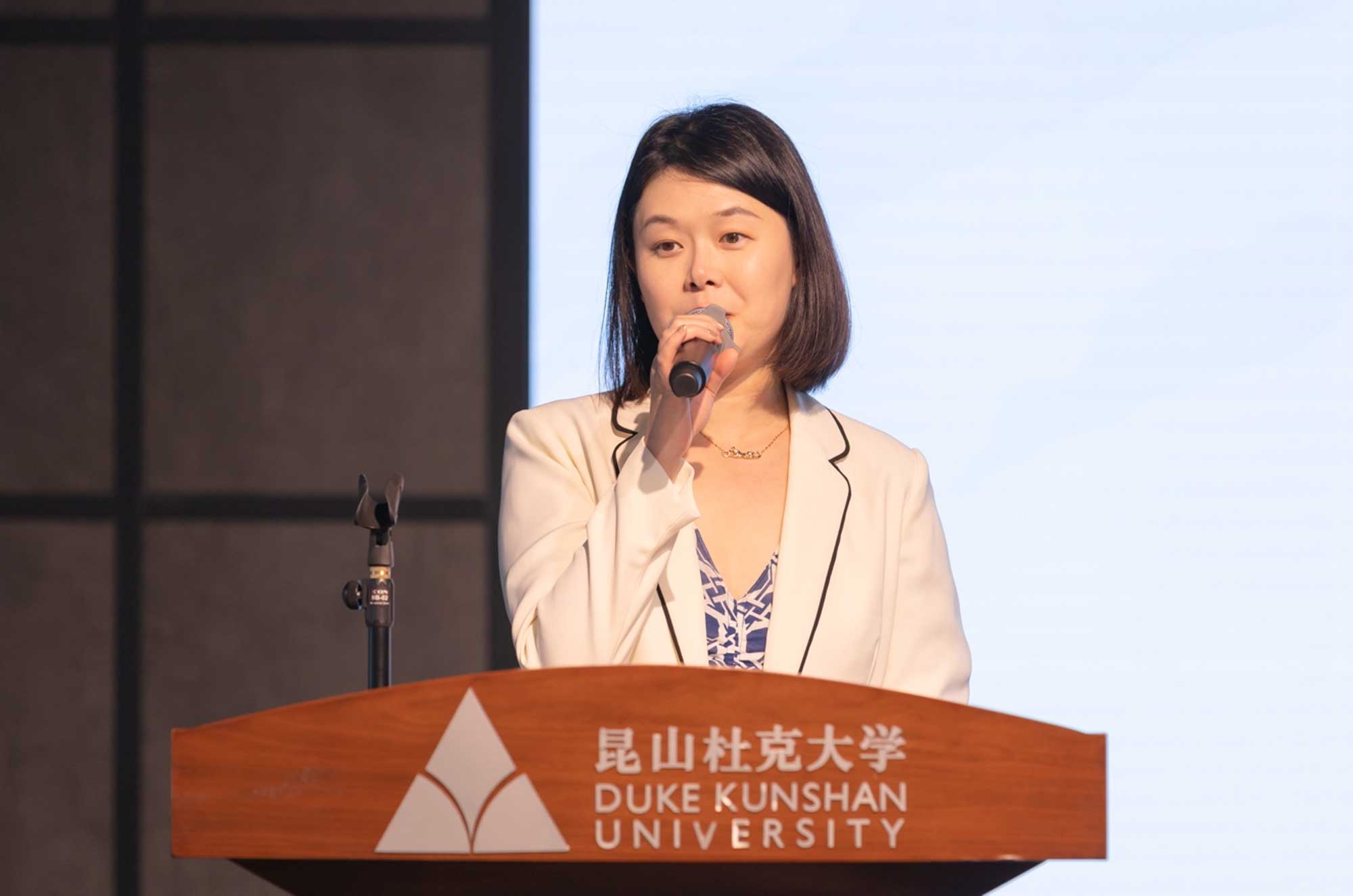
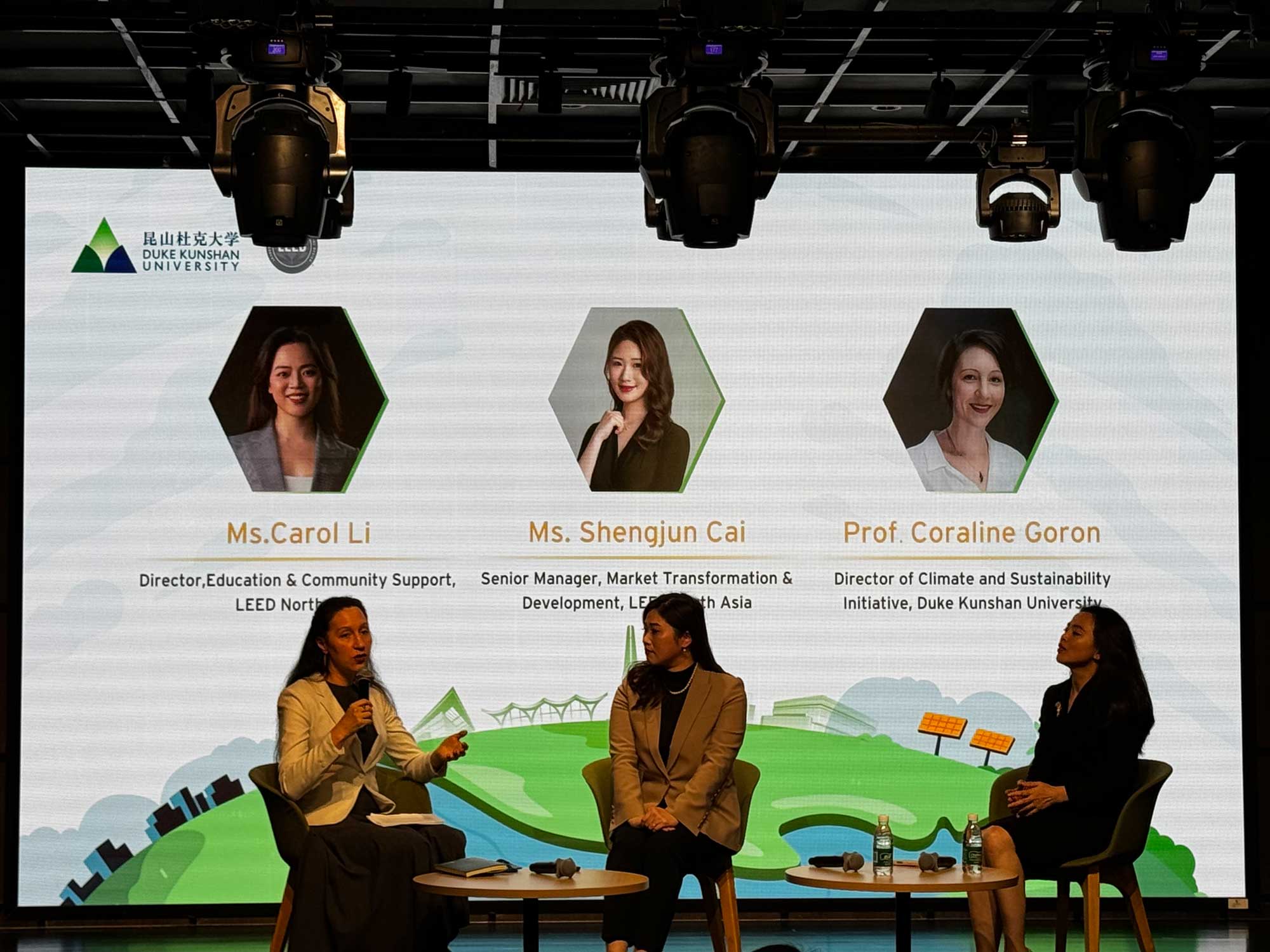
Coraline Goron, director of DKU’s Climate and Sustainability Initiative, discussed her early involvement in the LEED accreditation process and how she incorporated the work into student-led research projects, using DKU’s campus as a living lab where infrastructure supports academic research and community engagement.

USGBC experts joined faculty and students for a workshop on sustainable building trends, the evolution of LEED standards and emerging green career pathways.
Beyond its campus infrastructure, the university incorporates sustainability into academic programs and research. It offers more than 20 undergraduate courses on climate change, environmental policy, biodiversity and environmental economics, and hosts graduate programs in international environmental policy and global health.
DKU is also a national leader in bird-collision prevention campaigns and helped establish China’s National Bird Strike Prevention Action Network. The university partners with organizations, including Yufengdao Organic Farm in Kunshan, to advance sustainable agriculture projects.
Established in 2013 as a partnership between Duke University, Wuhan University, and the city of Kunshan, DKU has grown significantly since its first construction phase in 2010. Phase Two, completed in 2023, tripled the campus’s size while integrating with existing facilities, including the sports complex featuring a swimming pool, basketball courts, taekwondo, and squash halls.